A zero waste bathroom does not require replacing everything you own with expensive alternatives. The more practical approach is to reduce unnecessary disposables, reuse what already works, and replace products gradually when they are genuinely needed.
The best zero waste bathroom essentials are therefore not a fixed shopping list. They are everyday items that help reduce packaging and disposable waste while still being practical for your hygiene, cleaning, storage, and water-use needs.
What Does a Zero Waste Bathroom Actually Mean?
Zero waste is best treated as a direction rather than a claim that a household will literally produce no waste. Bathrooms involve products, packaging, water, wastewater, and items that eventually reach the end of their useful life.
A practical goal is to prevent waste where possible. Reducing consumption, reusing durable items, repairing what can be repaired, and recycling suitable materials are generally more useful than focusing only on what happens after something becomes trash.
This approach also prevents a common mistake: buying a completely new set of “eco-friendly” bathroom products when the items already at home are still perfectly functional.
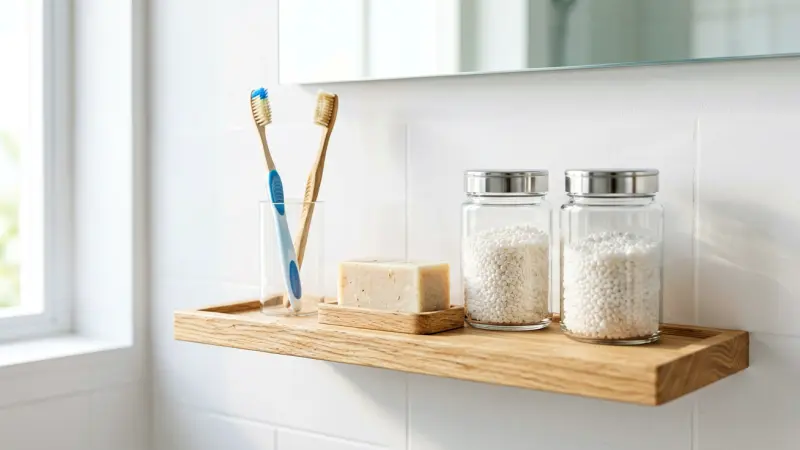
Start With the Bathroom You Already Have
Before buying anything, look through your bathroom cabinets and identify what you already use regularly. Separate genuine needs from products that were purchased because they seemed convenient, attractive, or environmentally appealing.
Pay attention to disposable products and packaging because these are often easier places to reduce waste than durable objects. A reusable item only makes sense when you will actually use it repeatedly.
Use Up Existing Products First
Replacing usable products immediately can create unnecessary consumption. If you already own shampoo, soap, cleaning supplies, toothbrushes, or containers, there is usually little reason to discard them simply because a lower-waste alternative exists.
When an existing product reaches the end of its useful life, evaluate the replacement options. That creates a natural opportunity to reduce packaging without turning waste reduction into a reason for more shopping.
Reusable Bathroom Essentials
Reusable items can be useful when they replace disposable products without creating a new routine that is difficult to maintain. The best choice depends on what you already use and what your bathroom can accommodate.
Reusable Washcloths
Washable cloths can replace some disposable wipes or paper-based cleaning materials. They can be used for cleaning surfaces or other appropriate household tasks and then laundered for another use.
Keep bathroom cleaning cloths separate from personal-use cloths. Allow reusable cloths to dry properly between uses and follow appropriate laundering practices for the material and task.
Reusable Soap and Shampoo Containers
A durable pump or container can support refill systems when compatible products are available locally. The key advantage comes from continuing to use the container rather than replacing it whenever the contents run out.
Before buying a new dispenser, look around your home. A suitable container you already own may perform the same function without another purchase.
Reusable Storage Jars
Glass or other durable containers can organize items such as cotton accessories, hair tools, or small bathroom supplies. Their value comes from repeated use rather than from their appearance.
Choose containers that are easy to clean and appropriately sized for what you actually store. A collection of empty “zero waste” containers can become clutter if you do not have a practical use for them.
Low-Waste Toothbrush and Oral Care Choices
Oral care can generate several disposable components, so it is a logical place to examine your routine. When choosing alternatives, keep the primary function of the product in mind.
A toothbrush with a replaceable head can reduce the amount of material discarded when only the brush head needs replacement. Another option is a toothbrush made from a different material, provided its construction and disposal route make sense for your circumstances.
Do not choose an oral-care product solely because its handle uses a material associated with sustainability. The complete product, including replacement parts and disposal options, matters more than one material choice.
Keep Dental Care Practical
Dental hygiene should not be compromised for the sake of reducing packaging. Follow the care advice associated with your dental products and replace components when they are no longer suitable for their intended use.
If a lower-waste product makes your normal routine unnecessarily difficult, it may not be a good fit. A practical system that you consistently use can be more useful than an idealized system that you abandon.
Bar Soap and Other Solid Bathroom Products
Solid products can sometimes reduce the need for bottles or other liquid-product packaging. Bar soap is a familiar example, and solid forms of other personal-care products are also available.
The packaging savings depend on the particular product and how it is sold. A solid product wrapped in unnecessary layers of packaging may not provide the same packaging reduction as a minimally packaged alternative.
Storage also matters. Keep solid products where they can drain and dry between uses. This can help prevent a bar from becoming unnecessarily soft and being used up faster than expected.
Choose Refill Systems When They Actually Work for You
Refilling can be a practical way to reuse containers rather than repeatedly purchasing new ones. Some household and personal-care products are available through refill systems, although availability varies by location and product category.
Look at the complete routine before committing to a refill system. Consider where refills come from, how far you need to travel to obtain them, how much storage they require, and whether the product works for your household.
A refill system that fits naturally into your normal shopping routine is easier to maintain than one that requires special trips or complicated storage.
Zero Waste Bathroom Cleaning Essentials
Bathroom cleaning can generate packaging from sprays, wipes, bottles, and other disposable products. A lower-waste cleaning setup can focus on reusable tools and products that are suitable for the surfaces being cleaned.
Reusable Cleaning Cloths
Washable cloths can replace some disposable cleaning wipes. Use separate cloths for different cleaning tasks when appropriate, and clean them according to the level of soil and the material involved.
Durable Cleaning Brushes
A sturdy brush can be useful for repeated cleaning of suitable bathroom surfaces. Look for a design that can be cleaned and stored easily rather than choosing one simply because its materials sound environmentally appealing.
Refillable Cleaning Bottles
A reusable spray bottle can reduce the need to replace the container each time you purchase a compatible cleaning solution. Label containers clearly so their contents are not confused with other products.
Do not mix household cleaning products unless the product instructions specifically permit it. Some combinations can create hazardous fumes or other dangerous reactions.
Think About Water as Part of Bathroom Waste Reduction
Waste reduction is not limited to solid materials. A bathroom also consumes water, and reducing unnecessary water use can be part of a broader lower-impact routine.
Simple habits include turning off the tap while brushing your teeth or shaving and avoiding unnecessarily long showers. Water-efficient fixtures can also reduce water use when replacing or upgrading bathroom equipment.
For example, the U.S. Environmental Protection Agency’s WaterSense program identifies bathroom faucets and other fixtures that meet specified efficiency and performance criteria. Local product standards and availability can differ, so use the relevant guidance for your location.
Fix Leaks Instead of Working Around Them
A leaking faucet or toilet can waste water continuously. If you notice a persistent leak, investigate the cause and repair it when practical rather than treating the wasted water as an unavoidable part of bathroom use.
For plumbing problems that are beyond your skills or involve concealed pipes, getting appropriate professional help can be more sensible than attempting an uncertain repair.
How to Choose Zero Waste Bathroom Essentials
The material printed on the package should not be the only factor in your decision. Consider the item’s expected use, durability, packaging, maintenance, and eventual disposal together.
Lifecycle thinking is useful here. An item’s environmental effects can occur during material extraction, manufacturing, transportation, use, and disposal, so a single feature rarely tells the whole story.
| Bathroom item | Lower-waste approach | What to consider before switching |
|---|---|---|
| Toothbrush | Consider a durable handle or replaceable-head design | Replacement availability, oral-care needs, and disposal |
| Soap | Consider bar soap or a refill system | Packaging, storage, personal preference, and local availability |
| Shampoo | Consider refillable or solid formats | Hair-care requirements, packaging, and ease of use |
| Cleaning wipes | Use washable cleaning cloths where appropriate | Laundering, hygiene, and the cleaning task |
| Cleaning spray | Reuse a suitable bottle with compatible refills | Product instructions, labeling, and refill access |
| Storage | Reuse durable containers you already own | Cleaning, size, and practical storage needs |
| Bathroom fixtures | Consider efficient replacements when existing fixtures need replacement | Performance, compatibility, installation, and local standards |
Do Not Replace Durable Items Just for the Aesthetic
A common trap in sustainable living is treating a visual style as proof of environmental responsibility. A bathroom full of matching wooden accessories may look attractive, but replacing functional items creates additional consumption.
If your existing plastic soap dispenser, storage container, or brush holder works well, continuing to use it can be a perfectly reasonable choice. The lowest-waste replacement is often the one you do not buy.
Be Careful With “Compostable” and “Biodegradable” Claims
Words such as compostable and biodegradable can sound straightforward, but they do not automatically describe what will happen to a product in your local waste system.
Some materials require particular composting conditions, while others may not belong in a household compost system at all. Check the disposal guidance for the specific product and your local waste service before putting an item into a compost or recycling stream.
When the disposal route is unclear, avoiding unnecessary purchases can be simpler than buying an alternative based only on environmental wording.
Recycling Is Useful, But Reduce First
Recycling has an important role when reduction and reuse are not practical. However, recycling should not be treated as a reason to buy disposable products without considering the waste created.
Recycling rules differ between communities and materials. A package that carries a recycling symbol may not necessarily be accepted by your local collection program.
Check local guidance for bottles, tubes, pumps, containers, and other bathroom packaging. When a material is not accepted locally, do not assume that placing it in the recycling bin will make it recyclable.
Build a Zero Waste Bathroom on a Budget
You do not need to buy a complete collection of sustainable products. Start with changes that require little or no spending.
Use existing containers, finish products you already own, wash reusable cloths, turn off unnecessary water flow, and avoid buying products you do not need. These steps can establish the basic habits before you spend money on replacements.
Replace Items Only at the End of Their Life
When a toothbrush, dispenser, cleaning tool, or other bathroom item genuinely needs replacement, compare lower-waste options at that point.
This approach spreads purchases over time and prevents the common problem of accumulating a drawer full of “better” products while the original items were still usable.
What About Toilet Paper?
Toilet paper is a personal and household necessity for many people, so the practical options depend heavily on local infrastructure, plumbing, preferences, and availability.
Some households use bidet fixtures or water-based cleaning alongside or instead of some toilet paper use. If you consider changing your setup, make sure the equipment is appropriate for your plumbing and that anything flushed is compatible with the system.
Do not flush materials simply because they are marketed as flushable without considering your local wastewater guidance and the product’s instructions.
Reduce Bathroom Packaging at the Source
Packaging reduction can sometimes be easier than finding a replacement material. Look for products that use less unnecessary packaging, refill existing containers, or are sold in formats that fit your normal purchasing habits.
Buying larger quantities can reduce packaging in some situations, but only when you can use the contents before they become unusable. A larger package that is partly wasted does not solve the underlying problem.
Bulk purchasing also needs practical storage. Do not create a crowded bathroom simply to avoid a few smaller packages.
Common Zero Waste Bathroom Mistakes
Buying Too Many Sustainable Products
It is easy to turn waste reduction into another shopping hobby. New alternatives can be appealing, especially when their packaging and appearance suggest a simpler lifestyle.
Keep the focus on reducing consumption. A product that you already own and can continue using may be more useful than a new alternative waiting in a cupboard.
Ignoring Maintenance
Reusable products require care. Cloths need laundering, brushes need cleaning, containers need washing, and some refill systems require planning.
If maintenance is inconvenient, the system may fail. Choose reusable items that fit your actual routine rather than an ideal routine you rarely follow.
Assuming One Material Is Always Better
Bamboo, glass, metal, paper, and other materials each have different characteristics and lifecycle considerations. Material substitution alone does not provide enough information to judge the entire product.
Consider how long you will use the item, how it is packaged, how it is transported, and what happens when it reaches the end of its useful life.
Forgetting About Water and Energy
A bathroom’s environmental footprint is not limited to the objects sitting on its shelves. Water use and the energy associated with heating water can also matter.
That is why simple habits such as turning off the tap when it is not needed can belong in a zero waste bathroom plan alongside reusable products.
A Simple Zero Waste Bathroom Starter Plan
You can begin without buying anything. First, identify the disposable items and packaging that appear most often in your bathroom waste.
Next, choose one item that can be reused and one purchasing habit that can be changed. For example, you might replace disposable cleaning wipes with washable cloths and choose refillable packaging when a current product runs out.
After several weeks, reassess the routine. Keep changes that are convenient and genuinely reduce waste, and adjust anything that creates unnecessary difficulty.
Keep a Small Bathroom Waste Audit
For a short period, notice what repeatedly ends up in your bathroom bin. You do not need precise measurements. The purpose is simply to identify patterns.
If empty bottles dominate, investigate refill or solid alternatives. If disposable wipes are common, consider washable cloths. If packaging is unavoidable for a particular product, focus your efforts elsewhere.
Frequently Asked Questions
What are the most useful zero waste bathroom essentials?
There is no universal starter kit. Useful options can include washable cleaning cloths, durable storage containers, refillable dispensers, reusable tools, and products that reduce unnecessary packaging.
Do I need to replace all my bathroom products?
No. Using existing products until they reach the end of their useful life can avoid unnecessary consumption. Replace items gradually when they actually need replacement.
Are bamboo bathroom products automatically more sustainable?
No material automatically makes an entire product sustainable. Consider durability, manufacturing, packaging, transportation, use, and disposal rather than judging an item from one material alone.
Is zero waste the same as plastic-free?
No. Zero waste focuses broadly on preventing and reducing waste, while plastic-free living focuses specifically on avoiding plastic. A practical lower-waste bathroom may use some plastic items for a long time rather than replacing them unnecessarily.
Should I buy refillable bathroom products?
Refillable products can be useful when the container is durable and refills are practical to obtain. Compare the complete system with your current routine before making the switch.
Can I make my bathroom completely zero waste?
A completely waste-free bathroom is difficult to achieve because personal-care products, packaging, water systems, and local disposal options vary. A more practical goal is continuous waste prevention and reduction.
Final Thoughts on Zero Waste Bathroom Essentials
A lower-waste bathroom begins with consumption habits rather than a shopping list. Use what you already own, reduce unnecessary disposables, reuse durable items, and replace products gradually when they reach the end of their useful life.
When you do buy something, look beyond the material or environmental wording on the package. Consider how the product will be used, maintained, refilled, and eventually discarded.
The most practical zero waste bathroom essentials are the ones that solve a real need and remain useful for a long time. A simple system that fits your everyday routine is easier to maintain than a bathroom full of products chosen mainly because they look sustainable.