Cork backed coasters look simple enough that most people assume there is nothing to learn. You put a drink on one and move on. Yet a surprising number of people place them cork side up, soak them in the sink, or run them through a dishwasher and then wonder why the cork is crumbling and the table still has a ring on it.
The correct use is straightforward once you understand what each layer is doing. This guide explains which side faces the table, why that orientation works, how to clean and store cork backed coasters so they last, and the situations where they are the wrong choice entirely.
The Short Answer: Cork Side Down, Decorative Side Up
Place the cork against the table surface and the decorative face upward to receive the glass. That orientation is not arbitrary. The cork is there to grip, cushion, and absorb, while the top layer is there to look good and provide a stable, wipeable surface for the drink.
If you flip it, you lose most of the coaster’s function. The hard top layer slides on smooth tables, and the cork, now facing up, collects condensation directly and stays wet for far longer than it should.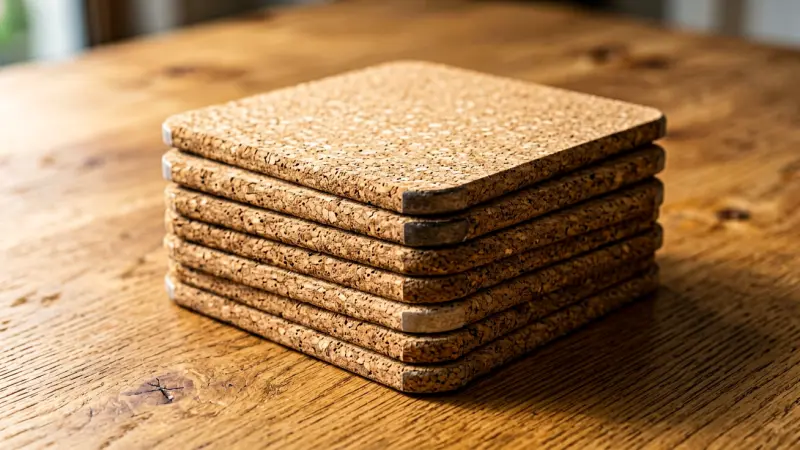
Why the Cork Belongs Against the Table
Cork is a natural material made from the bark of the cork oak. Its structure is full of tiny air-filled cells, which gives it three useful properties in this context: it grips, it insulates, and it absorbs a limited amount of moisture.
Grip and Stability
A glass of cold water on a bare wooden table will slide if you nudge it. Cork creates friction against wood, glass, stone, and laminate, which keeps the coaster and the drink in place. This matters most on glossy surfaces where a sliding coaster can scratch the finish underneath.
Thermal Insulation
Cork’s air pockets slow heat transfer. A hot mug placed on a cork backed coaster will not pass its heat straight through to the table the way it would if you set the mug down directly. The cork layer buys you time and reduces the risk of heat marks.
Moisture Management
Condensation is the real enemy of wooden furniture. A cold glass left on bare wood can leave a white ring that soaks into the grain and is difficult to remove. Cork absorbs some of that moisture before it reaches the table. It is not waterproof, and it will not hold unlimited water, which is why prolonged contact still causes problems.
Cushioning
Cork is slightly compressible. That gives a small amount of give under a heavy mug or a bottle, which reduces the chance of chipping the base of the glass and softens the contact with the table.
Common Mistakes That Ruin Cork Backed Coasters
Most damage to these coasters comes from a handful of habits that seem harmless at the time.
Putting Them in the Dishwasher
Dishwashers combine heat, water, and detergent. Cork does not respond well to any of those. It swells when soaked, warps as it dries, and can separate from the decorative top layer. Hand washing is the only sensible approach.
Soaking Them in the Sink
Even without a dishwasher, leaving coasters to sit in water causes the cork to absorb more moisture than it can release evenly. The result is usually a curled edge or a crumbly base. Wipe them instead.
Placing Them Cork Side Up
This is the most common error. It usually happens because the decorative side looks like the “back” and the cork looks like the “front.” Once you know the cork is the functional layer, the orientation becomes obvious.
Setting Them on an Already Wet Surface
If there is a puddle of water or spilled wine on the table, the coaster will draw that moisture into the cork from below. Always wipe the table first, then place the coaster.
Stacking Them While Damp
Stacking wet coasters traps moisture between layers. Over time this encourages mold and causes the cork to degrade. Let them air dry flat before putting them back in a stack or holder.
Using Them Under Hot Cookware
Cork backed coasters are designed for drinks, not for pots and pans straight off the stove. A heavy hot pan can scorch the decorative layer and damage the cork. Use a proper trivet for cookware.
How to Clean Cork Backed Coasters Properly
Cleaning takes under a minute if you do it routinely, and far longer if you let stains set.
Wipe the surface with a soft damp cloth and a small amount of mild dish soap. Do not submerge the coaster or run it under a heavy stream of water. Dry it immediately with a towel, then let it air dry flat for a few hours before stacking.
For sticky residue, a barely damp cloth usually does the job. Avoid abrasive sponges and harsh chemical cleaners, which can dull the decorative top and break down the cork’s surface. If the top layer is stone or ceramic, check whether the manufacturer specifies anything different, since some decorative finishes are more sensitive than others.
How to Tell Which Side Is Which on an Unfamiliar Coaster
Some coasters are obvious. Others, particularly those with a thin cork base bonded to a fabric or leather top, can be ambiguous when you first unbox them.
Look at the edge. The cork layer usually has a visibly different texture, often lighter in color with small flecks and a matte, slightly grainy appearance. The decorative layer is typically smoother, more uniform, and either glossy or distinctly fabric-like. If you still cannot tell, press a fingernail gently into each side. The cork will give slightly. The other side will not.
Matching Coasters to Your Table Surface
Different table materials respond differently to heat, moisture, and friction. The table below outlines what to expect when using cork backed coasters on common surfaces.
| Table Surface | How Cork Backed Coasters Behave | What to Watch For |
|---|---|---|
| Oiled or waxed solid wood | Cork grips well and protects against heat rings and light scratches | Trapped moisture can still mark the wood if a wet coaster sits for days |
| Lacquered or varnished wood | Good protection; the cork layer prevents sliding and scuffing | Standing water around the coaster edge can cloud the finish over time |
| Glass | Cork adds friction and prevents the coaster from sliding across the surface | Thin coasters may still allow condensation rings to appear underneath |
| Marble, granite, and stone | Coasters protect against etching from citrus, wine, and acidic drinks | Stone feels cold and can amplify condensation; check underneath occasionally |
| Laminate and veneer | Prevents scratches and reduces the risk of heat marks | Edges can lift if moisture sits against the seam for long periods |
| Metal patio tables | Cork keeps the coaster from sliding in wind and insulates against heat | Metal heats up quickly in direct sun; cork helps but is not a full barrier |
Storing Cork Backed Coasters So They Last
Storage matters more than most people expect. Coasters stored loose in a drawer get knocked around, and the cork edges chip. A small holder or a shallow box keeps them protected and makes them easier to grab when you need one.
Stack them only when fully dry. If your coasters have a decorative top that scratches easily, alternate the direction so the cork faces the cork and the decorative face rests against the next decorative face, or use a holder that keeps them slightly separated. Keep them away from prolonged direct sunlight, which can fade the top layer and dry out the cork over months.
When Cork Backed Coasters Are the Wrong Choice
They are excellent for everyday drinks, but they are not universal.
Do not use them as trivets for hot cookware, baking dishes, or slow cookers. The heat can exceed what the cork and decorative layer can handle. Do not use them outdoors in heavy rain, since saturated cork takes a long time to dry and may never return to its original shape. And do not rely on them to protect a table from a leaking vase, a sweating pitcher, or a spilled bottle, because the volume of water involved will overwhelm the cork’s absorption capacity.
If you live somewhere very humid, cork can stay damp longer than it would in a dry climate. In that case, rotate between two sets so each has time to dry fully between uses. Small home adjustments like this fit naturally into a broader effort to make your living space calmer and easier to maintain, an idea explored in this guide to creating a more comfortable home environment.
Everyday Habits That Make Coasters Work Better
A few small routines keep cork backed coasters in good condition without any real effort.
Wipe the table before setting a coaster down. Empty and dry the coaster at the end of the day rather than leaving a glass sitting on it overnight. Rotate your set so no single coaster takes all the wear. If you notice the cork starting to lift at one corner, stop using that coaster and let it dry completely before deciding whether to repair or retire it.
If you like the idea of building small, deliberate rituals around your day, a few minutes spent on these habits pairs well with a structured start to the morning. A simple mindful morning routine checklist can help you notice the small details, like where you set your coffee and how you treat the surfaces around you.
There is a broader point here about attention. The way you handle ordinary objects tends to reflect how you handle everything else. Small practices like writing a few lines in a journal or setting your drink down on a properly oriented coaster are not really about the object. They are about the pause. If that idea appeals to you, the practice of gratitude journaling and its everyday benefits follows a similar logic.
Frequently Asked Questions
Which side of a cork backed coaster goes down?
The cork side goes down against the table, and the decorative side faces up to hold the drink. This orientation gives you grip, insulation, and moisture protection where they are needed.
Can cork backed coasters go in the dishwasher?
No. Dishwasher heat, water, and detergent will cause the cork to swell, warp, and separate from the top layer. Hand wipe with a damp cloth and dry immediately.
Can I use cork backed coasters for hot pots and pans?
They are intended for drinks, not cookware. A hot pan can scorch the decorative surface and damage the cork. Use a proper trivet instead.
Do cork backed coasters work on glass tables?
Yes. The cork creates friction that keeps the coaster from sliding, and it prevents the base of the glass from scratching the glass surface. Check underneath occasionally, since condensation can still pool if the coaster is thin.
How do I remove a stain from the cork side?
Light stains often lift with a barely damp cloth and a little mild soap. Avoid soaking the cork, and do not scrub with anything abrasive. If the stain has soaked deep into the cork, it may not come out completely.
How long do cork backed coasters last?
With hand washing, prompt drying, and careful storage, a good set can last for years. Exposure to water, heat, and direct sunlight shortens that considerably.
What if the cork starts peeling away from the top layer?
Stop using it and let it dry fully. If the separation is small and the coaster is otherwise in good shape, a thin layer of suitable craft adhesive can reseal it. If the cork has crumbled or warped, replacement is usually the better option.
What Matters Most
The rule for using cork backed coasters comes down to one decision: cork down, decorative side up. Everything else, from hand washing to dry storage to avoiding hot cookware, follows from respecting what the cork layer is actually for.
Treat the cork as a functional component rather than an afterthought, and the coaster will do its job for years. Ignore it, soak it, or flip it, and you will end up with a crumbling base and a table that still bears the marks you were trying to prevent.