Waking up to the sharp, piercing drone of a cicada inside your bedroom is a jarring experience that many homeowners face during the warmer months. Unlike the gentle hum of a cricket or the erratic buzzing of a housefly, cicadas are large, loud, and often mistaken for dangerous insects by those who have not heard them before. If you have a cicada stuck in your house, the primary goals are to remove it safely without harming the insect, stop it from making noise, and prevent future entries.
This guide covers how to identify the intruder, the most effective methods for catching it, and practical steps to seal your home against these summer flyers.
Why Cicadas Enter and Stay Indoors
Cicadas are not typically considered pests in the traditional sense, as they do not bite, sting, or carry diseases to humans. However, they are opportunistic invaders driven by sensory instincts and environmental cues. Understanding why they find their way into your living space can help you anticipate their behavior when one becomes trapped.
Phototaxis and Nighttime Navigation
Many cicada species are attracted to artificial light at night, a behavior known as positive phototaxis. When they fly toward your illuminated windows or doors, they often become disoriented. Once inside, they lose their visual reference points and rely on their flight patterns, which can lead to them crashing into walls or furniture.
Because they are diurnal but active at dusk and dawn, they are most likely to enter when you are closing up the house for the night.
Warmth Seeking Behavior
In cooler regions or during early spring, cicadas may seek out warm indoor environments to regulate their body temperature. They are ectothermic, meaning their body temperature depends on the environment. If your home is significantly warmer than the outdoors, a cicada may intentionally fly through small gaps or open screens to enter.
Once inside, the lack of natural air currents makes it difficult for them to gain altitude, leading to a “stuck” state where they remain on the floor or ceiling for hours.
Identifying the Intruder: Is It Really a Cicada?
Before attempting removal, it is crucial to confirm the insect is a cicada and not a similar-looking but potentially more harmful species like a large beetle or a wasp. Misidentification can lead to safety risks or ineffective removal strategies.
Visual Characteristics
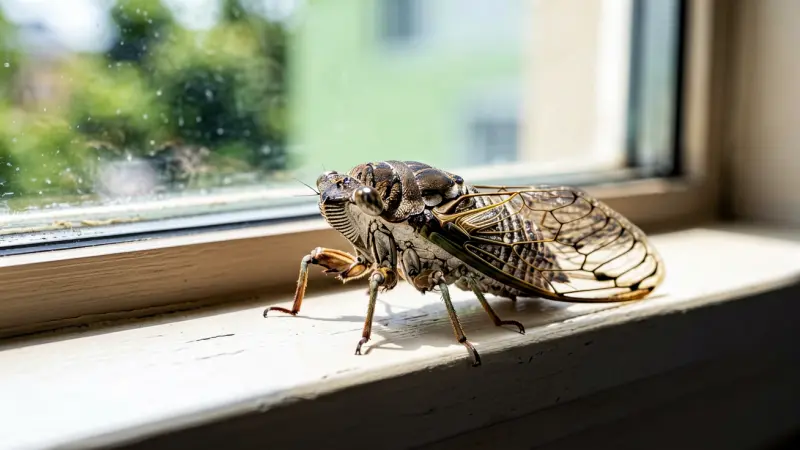
Cicadas are easily recognizable by their large, oval-shaped body, prominent eyes, and two pairs of transparent, membranous wings that rest roof-like over their backs. Their coloration usually ranges from brown to greenish-brown, helping them blend into tree bark. A mature male cicada can range from one to three inches in length.
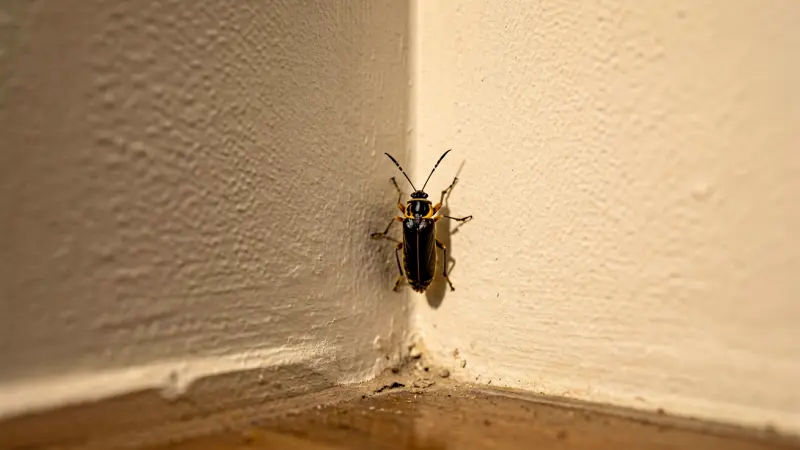
If the insect has a distinct waist like a wasp or hard, shell-like exoskeleton segments like a beetle, it is likely not a cicada. Cicadas have a soft abdomen and distinct wing venation that creates a lace-like pattern.
Audio Cues
The most distinct identifier is the sound. Male cicadas produce a high-pitched, continuous buzzing or whining sound by vibrating their abdominal tymbals. This noise is incredibly loud relative to the insect’s size and can be heard from a surprising distance.
If the sound stops when the insect is moved, it confirms it is a cicada, as they control this sound mechanically. The noise is not a sign of distress but a biological function used for mating calls.
Safe Removal Strategies for a Stuck Cicada
Once you have identified the insect, the next step is removal. You want to act calmly and efficiently, as cicadas can flap their wings rapidly and may startle you. They are harmless to humans, but their large wings can look intimidating. The best method depends on where the cicada is located in your home.
The Light Trap Method
If the cicada is stuck in a dark corner or under furniture, use the power of light to your advantage. Turn off all other lights in the room and shine a flashlight or phone light at the cicada. Cicadas are strongly attracted to light.
When they see a new source, they will often fly directly toward it. This gives you a predictable trajectory to intercept them. Hold a large bucket or jar in front of the light source, ready to cover the insect as it flies.
The Jar and Card Technique
For cicadas that are stationary or moving slowly on a vertical surface, the jar method is the most reliable. Take a large-mouthed glass or plastic jar and gently invert it over the insect. Slide a piece of cardboard or stiff paper under the jar, trapping the cicada inside.
Once secured, take the jar outside and open the lid away from any vegetation. Allow the cicada to fly away. Do not shake the jar, as this can damage the insect’s wings and may agitate it, making it harder to control if it escapes.
When the Cicada is on a Ceiling
Removing a cicada from a high ceiling is difficult without knocking it down. Do not hit the insect with a rolled-up newspaper or broom; this often damages the wings, leaving the cicada grounded and unable to fly away, which prolongs the problem. Instead, try to lure it down.
Create a dark corridor by closing blinds and turning off lights, then shine a bright light on the floor in a clear area. The cicada will likely descend toward the light. Alternatively, you can use a long-handled sticky trap designed for insects, but ensure the adhesive is non-toxic if you have pets or small children in the home.
Comparison of Removal Methods
Choosing the right method saves time and reduces stress. The table below compares the most common approaches to removing a cicada from a home environment, highlighting their pros and cons.
| Removal Method | Best Scenario | Pros | Cons |
|---|---|---|---|
| Light Luring | Dark rooms, corners, under furniture | Predictable insect movement, low effort | Requires patience, ineffective in daylight |
| Jar and Card | Stationary insects on walls or floors | Humane, secure containment | Difficult if insect is fast or high up |
| Suction Vacuum | Small insects, hard-to-reach spots | Fast, contains debris | Can damage wings, requires hose attachment |
| Manual Netting | Open spaces, large rooms | Immediate capture | Requires skill, risk of escape |
While using a vacuum cleaner might seem quick, it is generally not recommended for cicadas unless you are prepared for the potential damage to their delicate wings. A cicada that has been sucked into a vacuum may survive, but it will likely be unable to fly, causing it to remain in your vacuum bin until you empty it. If you must use a vacuum, attach a paper bag or filter and empty it immediately outside to release the insect.
Preventing Future Cicada Invasions
Dealing with one cicada is manageable, but preventing a repeat occurrence is key to maintaining a quiet home. Cicadas are most active during the day and early evening, so proactive measures should focus on these times.
Screens and Seals
The first line of defense is ensuring all window screens are intact. Inspect your screens for tears or holes, especially along the corners where frames meet. A single small gap is enough for a cicada to enter.
Check your exterior doors for seals; a deteriorated weatherstripping can allow insects to crawl in. Since cicadas are strong flyers, they can also push through slightly warped screens. Replacing old screens with new, fine-mesh material is often the most effective long-term fix.
Lighting Management
Redesigning your outdoor lighting strategy can significantly reduce the number of cicadas attracted to your home. Use warm-white LEDs instead of bright white or blue-toned lights, as insects are less attracted to longer wavelengths. Install motion-sensor lights on exterior fixtures so they are only on when a human is present, rather than all night.
If you have a porch light that stays on all night, consider adding a shield to direct the light downward toward the ground rather than upward into the sky.
Landscape Maintenance
Trim trees and shrubs that overhang your roof or touch your windows. Cicadas often live on trees and can drop into your home from overhanging branches. Creating a buffer zone of at least three to four feet between vegetation and your siding makes it harder for them to access entry points. This also improves airflow and reduces other pest issues associated with leaf litter and humidity.
Common Mistakes to Avoid
In their eagerness to remove the noise, homeowners often make mistakes that complicate the situation or harm the insect unnecessarily.
Killing the Cicada
Many people assume they should kill the cicada to end the noise. While this stops the sound, it does not address the underlying issue of how it entered your home. More importantly, cicadas are beneficial insects that help pollinate trees and are part of the local ecosystem.
Unless it is infested or you have a strong aversion to insects, it is better to release it alive. A dead cicada can also release fluids that are unpleasant to clean up.
Using Chemical Sprays Indoors
Do not use insecticide sprays inside your home to deal with a single cicada. This exposes you and your family to unnecessary chemicals and does not stop the cicada from flying into other rooms. If you must spray, ensure it is a targeted, food-grade contact insecticide, but note that cicadas are large and may withstand brief exposure.
It is far more effective to physically remove the insect than to try to poison it indoors.
Ignoring the Entry Point
If you remove the cicada but do not find the hole or open window it used to enter, you are setting yourself up for another intrusion. After removing the insect, walk around the room to look for signs of exit or entry. Check window sills, door thresholds, and any gaps around air conditioning units. Finding the source is just as important as removing the guest.
Handling Multiple Cicadas or Seasonal Spikes
During certain years, cicada populations explode, particularly in areas where periodical cicadas (such as MagicICada species in North America) emerge. In these cases, you may find more than one cicada in your home. The strategies remain the same, but you may need to be more persistent.
If you are in a region experiencing a mass emergence, the noise outside can be deafening. Closing windows and using white noise machines indoors can help mask the outdoor drone if you cannot stop the insects from entering. However, always prioritize removing indoor insects to prevent them from nesting or dying inside walls.
When to Call a Professional
Usually, a cicada is not an issue that requires a pest control professional. However, if you find cicadas in unusual locations, such as inside your wall insulation or air ducts, you may have a more complex problem. This could indicate a significant gap in your home’s envelope that is allowing not just cicadas but also other pests and moisture to enter.
In this case, a professional inspector can help identify and seal structural gaps. If you are overwhelmed by the number of insects or have a health condition that makes dealing with them stressful, a pest management service can provide efficient removal and preventive treatments.
Frequently Asked Questions
Do cicadas bite or carry diseases?
Yes, cicadas do not bite humans or carry diseases. They are completely harmless to people and pets. Their large size and loud noise are their only drawbacks when inside a home. You can safely handle them if necessary, though it is easier to use a container to avoid direct contact.
How long can a cicada survive indoors?
Cicadas can survive for several weeks indoors if they have access to water or moist air. They do not need to eat while in their adult stage, as their feeding phase occurs in the larval stage when they drink tree sap. However, without humidity, they will dry out and die. Releasing them outside is the best option to ensure their survival.
Why is the cicada so loud?
The loud noise is produced by the male cicada using internal muscles to vibrate membranes called tymbals. This vibration creates the buzzing sound. Females do not make this noise. The volume can reach up to 90 decibels, which is similar to a vacuum cleaner, making it very disruptive in a quiet house.
Can I keep a cicada as a pet?
It is not recommended to keep cicadas as long-term pets. They are designed for a short adult lifespan of only a few weeks to a couple of months. They require specific environmental conditions and do not interact well with humans. It is best to enjoy their presence briefly and then release them back into their natural habitat.
Final Thoughts on Managing Home Intruders
Dealing with a cicada stuck in your house is a temporary inconvenience rather than a long-term problem. By identifying the insect correctly, using humane removal techniques like light luring or jar traps, and sealing potential entry points, you can maintain a quiet and comfortable living space. Focus on prevention by managing your outdoor lighting and maintaining window screens, and you will likely avoid future encounters.
Remember that cicadas are beneficial to the environment, so the goal is to remove them gently and release them, rather than trying to eliminate them.
If you find yourself dealing with persistent insect issues or want to explore other household management topics, check out our guide on retro gaming culture shifts for a different angle on household habits, or read about managing pet-related home clutter if you are looking for broader home organization tips. Keeping your home free of unwanted visitors, whether it is a noisy cicada or disorganized clutter, contributes to a more peaceful living environment.