What are the hazards driving at night? What are the differences when you’re driving in the dark, and will I be all right? “I’m worried” are my most frequently asked questions right now.
When you just start driving or you simply don’t drive too often, it might feel very terrifying to drive at night. People get very nervous, and I was in the same boat as well. Trust me, when I just started driving, I was avoiding night driving as much as possible. It is normal to hate driving at night initially, but now driving at night is one of my favorite things to do behind the wheel.
Night Mode vs. Light Mode
The intention of this post is to show you that driving at night is exactly the same as driving in the day; it just looks slightly different. The best way I can describe it is when you switch from light mode to dark mode on apps—it works the same, it behaves the same, everything is the same, it just looks different.
Driving at night is something that you’re going to have to do. In wintertime, it gets dark at ridiculous times like 3:00 or 4:00 p.m., so if you’re driving home from work, it’s going to be dark.
Visibility: What You Can See
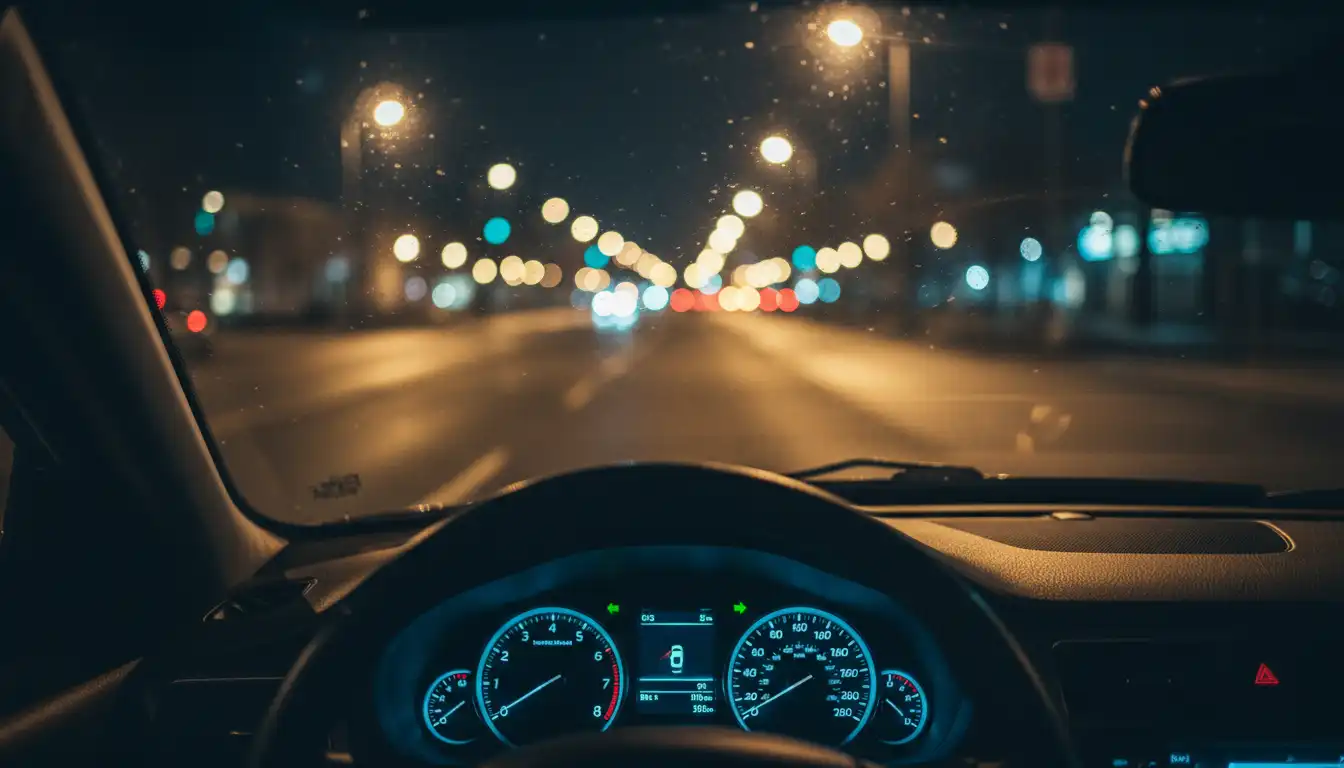
Hopefully, when you’re driving at night, the things that you need to see are lit up, with some exceptions. All of the cars ahead are lit up. When you go past signs, because they’re reflective, my lights are reflecting off them and the light is bouncing back at me. So everything that you need to see is either lit up or reflective. Look at the number plate of that gray car on the left—it’s reflective, so the light’s bouncing back at me, and that works for every road sign so it should be quite easy to see.
Not that other things are difficult to see; look at the road markings on the floor. I can still see them. The street lights massively help. It does look different driving at night, but essentially it works exactly the same.
Overcoming the Fear
Driving at night and on your own is going to be a new experience because it looks different; it is different, but essentially it’s the same so you shouldn’t need to worry about it. I don’t think it’s really necessary to take a driving instructor and ask them to help you drive at night. Driving lessons cost a lot of money and I hope you can see that driving at night is pretty easy—it’s the same, it just looks different.
If you recently said “I passed my driving test,” don’t let the sunset stop you from hitting the road.
Using Your Headlights Correctly
When you’re planning ahead in the daytime, you look to the end of the road. I can still see to the end of the road. Luckily, the roads in London are lit up by street lights. If you’re in an area that doesn’t have street lights, though, then you’re going to do this: full beam headlights. That’s what they’re there for.
When you’re driving on a road without street lighting and with no vehicles coming towards you, that’s when you activate your main beam headlights. Practice before you set off turning on your dipped headlights and then pushing that left stalk away from you. That’s how you activate your main beam lights.
Just be mindful, though—if a vehicle does come towards you, dip them. Dip your main beam headlights so that you don’t then blind them. If you blind someone, you might find yourself saying “it wasn’t my intention” after a near miss.
Practice that. It will be slightly disconcerting at first because you’ll activate your main beam headlights and trust me, it works so well. It illuminates it like floodlights the entire road so you can see everything 100-200 meters away. But as soon as there is a vehicle coming towards you and you deactivate your main beam headlights on a road with no street lighting, your vision drops to like 20, 30, 40 meters away, however far your dipped headlights reach.
The Hazards of Night Driving
The hazards that we’re looking for at night are potentially different to the ones in the day. In the daytime, the road would be really busy. In the nighttime, it’s not, so we don’t have to worry about the traffic so much. The hazards just change slightly, so we just have to change the way we’re working.
Cyclists and Pedestrians
I said everything that you need to see is lit up, with the exception of a few things. A cyclist is one of them. Yes, they are lit up, but because they’ve got different style lights, it’s difficult to see them. Look at the lights that we’re used to seeing: car lights really bright illuminating lights, street lights bright and illuminating, and traffic lights—they’re deep bold lights that you just cannot miss.
Because your brain is working to spot those kind of lights, it’s so easy to miss the lights of cyclists. Really, really easy. If you are a cyclist, I would recommend the only thing that I’ve noticed that’s a really good light for cyclists is the flashing ones because you just can’t miss them.
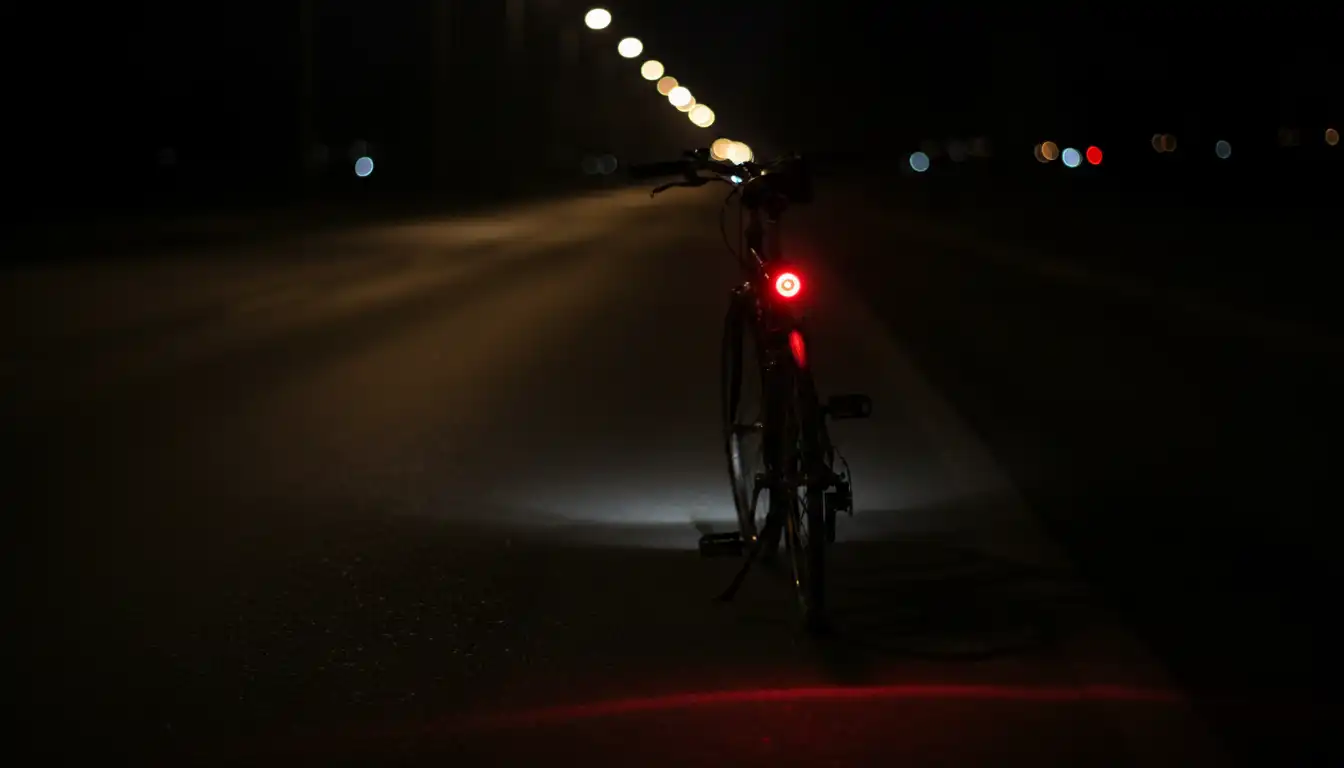
The other thing that’s not lit up at night that you really need to pay attention to are pedestrians. Because they’re not lit up, you can’t see them so well. You really need to take extra care of pedestrians, especially around town centers where people might be stumbling out of the pub not really thinking too well about cars and vehicle safety.
It’s really important to look out for them and keep them safe, especially when you’re not looking at the pavements because the pavements aren’t going to be lit up—just the road is lit up.
The Statistics of Danger
First of all, let’s actually talk about some statistics. It is three times more likely to get into an accident during the night than during the day. The other fact is that only a fourth of our driving is done during the night, but at least 50% of accidental deaths on road occur after dusk. So this is why we have to be extra cautious while driving at night to make it more enjoyable and safe.
Essential Night Driving Checklist
Before you hit the road, let’s start with the checklist.
1. Check Your Lights:
One of the most important things is your lights. Please make sure to turn on your headlights whenever you start driving at night. Also, one of the good things to check is to actually go outside and see if your headlights are working properly and your tail lights as well. Check your turning lights and make sure your indicators work all over your car because it’s very and very important to be able to signal people what you’re doing especially at night.
2. Clean Your Windows and Mirrors:
The other good thing to check, and I figured it out the hard way, is making sure your windshield, your windows, your side mirrors, your rear view mirror is clean. Our visibility is already poor at night, so if you would like to add even more poor visibility by having a dirty mirror, a dirty window, or dirty windshield into the mix, it’s just going to get worse.
3. Dim Interior Lights:
The other good thing to check is to make sure your interior lights are off because it can actually cause glare and you can blind yourself and maybe not see a pedestrian or a car in front of you. The other great feature that hopefully your car has is this physical switch for dimming your digital cluster and your screen. Just make sure it’s not too bright to blind you and cause glare.
4. Know Your Route:
The other good tip I have for you is to make sure you know the roads you are driving at. It could be dangerous to drive at the roads you don’t know since you don’t know any potential hazards that can happen and it’s sometimes very hard to recognize the place during the night when you even know it during the day.
5. Driver Condition:
Finally, the most important thing is to make sure you’re not tired, you’re not under an influence of alcohol or any potential drugs. This is one of the most disgusting and irresponsible things to do in your life and there’s so much of unneeded risk of someone else’s life and your life so please don’t do this ever.
Defensive Driving Tactics
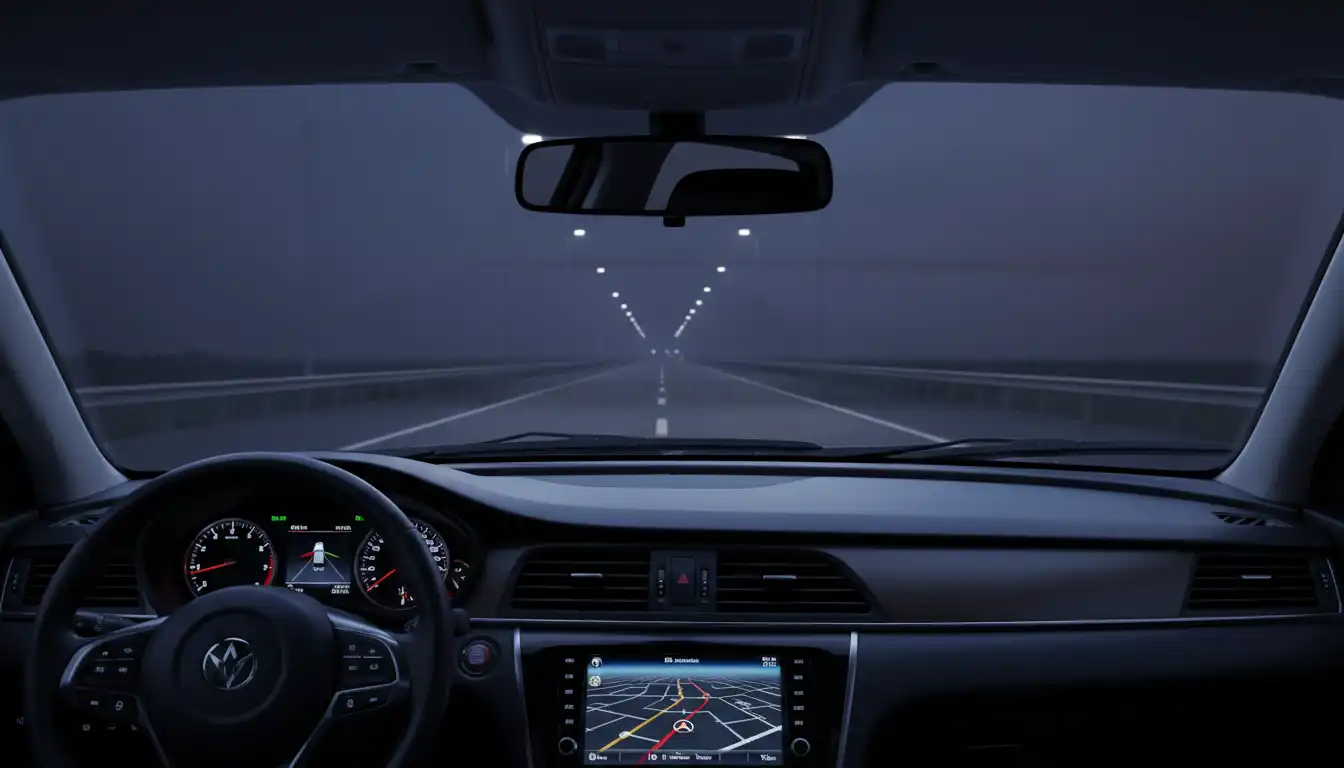
The first obvious hazard when you’re driving at night is poor visibility. It is good when you live in a city where you have this great lightning at night so your whole road is greatly lit and it’s very easy to see what’s going on. But there are some roads where you see much, much less and one of the greatest hazards is animals and pedestrians.
Since you only see the road, you don’t see any potential animals that going to cross the road or you don’t see any people crossing the road because they’re out of your sight. That is why we have to account for that. We have to be more cautious; we have to go slower.
Speed Management
It is very logical because whenever we have less visibility we have less reaction time, so that is why we have to be slower. Let’s say you are coming towards an unfamiliar area for us. We can already see that it’s probably some kind of residential area so we don’t know if any people like to walk here at night maybe walk their dogs or play with their children. We don’t know right so we can’t just slam through here at like 80 km per hour.
If you can’t see anyone walking here it doesn’t mean there is nobody here; you just have no visibility. Even though my headlights are on, it’s still limited right. I cannot see everything. I think a good rule of thumb is to go slower. Just go 5 to 10 miles per hour slower as a rule. It’s just going to save you lots of reaction time.
Avoid Distractions
Also during the night, it’s very important to be not distracted. This is the worst time to go to your phone, text with someone, watch a video. This is the worst time. We have already discussed that we have less reaction time so if you are distracted at the same time it’s just a recipe for a bad time.
Watch Out for Others
The other thing that I’m thinking about all the time when I’m driving at night is that even though we have decided that we are not going on a drive when we tired when we are drunk or high, but trust me not everybody thinks like that. It is more likely to encounter people who are impaired or tired during the night.
Just make sure you leave enough room in front of you, enough room from your back or from your sides because you don’t know if the person next to you is in a good condition to drive. Just play defensive when you’re driving at night. This is one of the greatest rule of thumb.
Reckless Drivers
The other thing is that during the night people are more reckless on the road. They can perform some very dangerous act; they can cut you off on the highway, you know, they could be tailgating you or they could just simply not follow the rules because they think, you know, it’s much much safer to not follow the rules at night. People are more reckless at night. Remember that all the time and you’ll be safer if you just know that and you play defensive.
Traffic Lights and Intersections
Be more careful on the traffic lights and stop signs because it is much more likely to encounter a person who is not following the traffic lights or stop sign during the night. So let’s say you are passing the green light here; just make sure to check your left or right wherever the hazard is coming from to make sure nobody is running the red light.
Don’t just blindly go on a green light during the night. You basically can get T-boned in a car but just going on the green during the night so make sure you check for any potential reckless drivers around you.
I always like to scan around me all 360° every maybe 5 seconds or so to make sure I know every single car’s position around me. I feel much more comfortable knowing that I am aware of my positioning on the map. If you think about it in 2D, just imagine yourself as a car on a 2D map and you just want to know all of the other positions of other cars around you. When you do that it’s much much easier to be safe and just enjoy yourself.
Night Driving Hazard Awareness
| Hazard Type | Nighttime Characteristic | Defensive Action |
|---|---|---|
| Cyclists | Dim, low-powered lights | Scan actively, look for flashing lights |
| Pedestrians | Silhouetted, dark clothing | Watch pavements, slow down in towns |
| Road Markings | Less visible without street lights | Use high beams when safe, follow reflectors |
| Traffic Lights | Risk of runners | Check left/right even on green |
| Other Drivers | Potentially impaired or reckless | Leave extra space, assume recklessness |
Why I Love Driving at Night Now
If you are going out with friends, being the designated driver can actually be a relaxing experience once you master these skills. While we are driving right now at night, I don’t feel nervous actually very relaxed as can hear from my voice because I’m aware of all the situation going around me.
I’m aware you know there could be impaired drivers and as you can see there’s less traffic. It’s calm, it’s very cozy. You can play some your favorite music. I love driving at night. It’s actually one of the best therapy things you can do to yourself whenever I have a bad day or whenever you know I’m so tired of my work during the day. I just like coming out for a good relaxing night drive. It’s such a great thing to do to unwind yourself from a daily routine.
I wanted to make this to maybe encourage more people to be more responsible when they’re driving at night and enjoy themselves more. Enjoy driving more.
If by some chance you’ve read this and you feel like driving at night is unmanageable, remember it takes practice. Go on local area roads where you know the area, you know what’s going to come up next, you know the hazards that you’re going to come up against. Life is good. Stay safe out there and I’ll see you in the next one.