It’s in the air; love is in the air. It’s the perfect time to learn about the cat “I love you.” Are you guys ready to get catified? Let’s go!
If you love your cat so much it hurts, you probably want to express that love in a way they truly understand. Just like humans, cats experience a wide range of emotions and are not immune to having their feelings hurt. Even though they might have you think otherwise, that’s why it’s important to understand how your actions impact your cat to ensure you can build a strong, trusting relationship with them.
Understanding the “Cat I Love You”
What is the cat “I love you,” you ask yourself? If you’ve watched My Cat From Hell even at all, you’ve probably seen me walk around talking to cats by blinking at them—a slow blink. I mean, believe me, I know a lot of people know about this now because you walk up to me in the street and you blink at me, which is weird but totally cool because the concept is everyone’s getting to know the language of cat.
Way back in the early 90s, I was learning how to be a cat boy. I was working at an animal shelter and I learned that cats liked me. I was so obsessed with these guys and obsessed with learning about their world. So I started reading, and one of the books that jumped out at me in the beginning made me feel like there might be a community of people who think like me or who are obsessed the way I am.
The Origin of the Slow Blink
In this book, I was reading about the cat “I love you” and basically, the author was talking about how she learned this by walking down the streets on the Upper West Side of New York and just looking in the windows of the brownstones and seeing cats in there and noticing that they were kind of blinking.
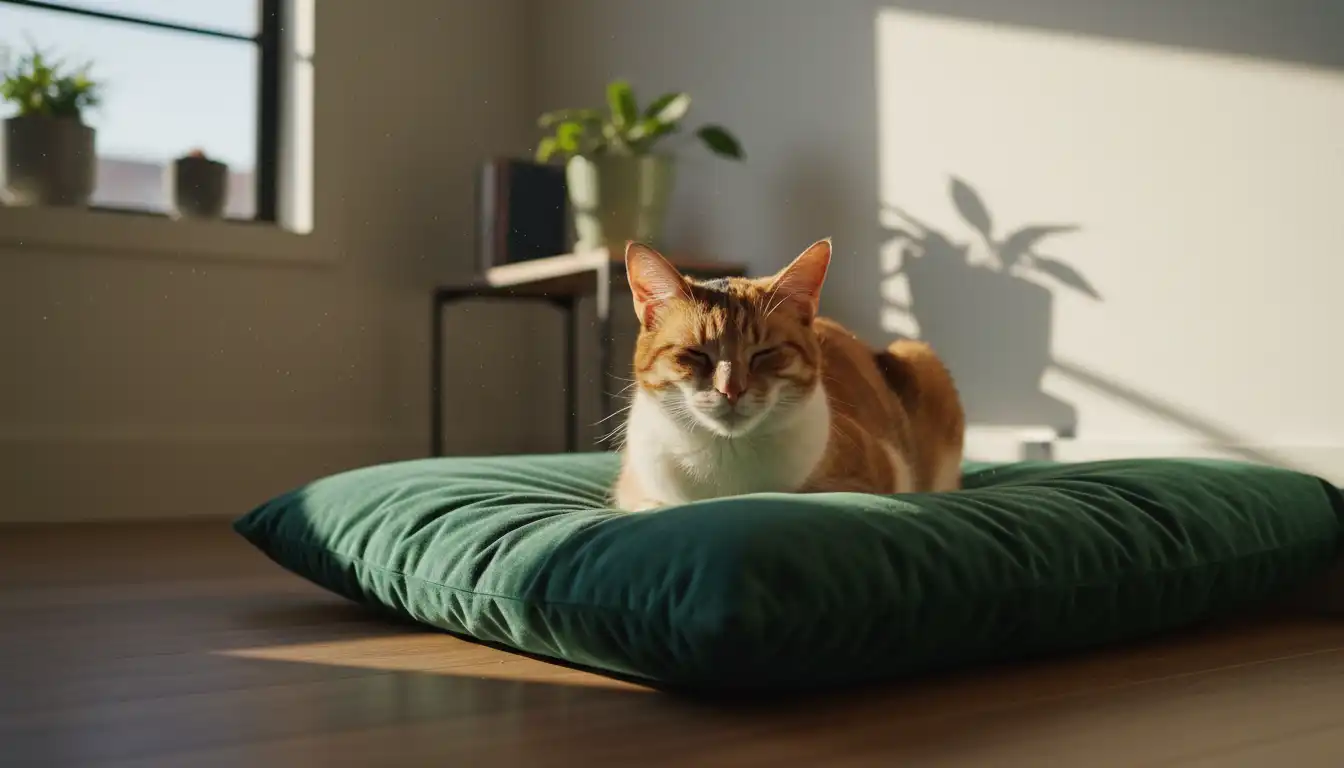
“What is that?” she wondered. So she would blink back at them, and suddenly there was a language between her and these cats. That became the cat “I love you.” They’re letting you know that they are vulnerable to you. These are prey animals—animals that sleep with one eye open, almost literally cat-napping because they don’t want to be preyed upon in the wild.
The concept of closing their eyes to you in a slow way is not something that they would do very willingly unless they’re trying to tell you something.
How to Perform the Slow Blink
In the spirit of love, now I’m going to teach you how to do the cat “I love you.” If you stare at people, they tend not to trust you very much. When you do this stare—nom nom nom—and even let’s remove my facial expressions, it is not very inviting. Sometimes, we stare without realizing it, and if your cat runs away, you might think “it wasn’t my intention” to scare them, but staring is aggressive in cat language.
So the secret is to relax. Relax your face. Do this with me: a little scrunch up, good little Gilbert Gottfried ear, and then release it. Now you got it. Now we’re softening our eyes. This is the way that we want to approach a cat—with soft eyes. We’re not staring at them.
Steps to the Perfect Cat Blink:
- Soften Your Gaze: When you look, you soften.
- Use Your Inside Voice: Then behind your ear, your vocal box, don’t use your words. Just think of “I’m not speaking right now, I’m thinking.” You’re hearing my inside voice right now: I love you.
- Take Your Time: Take your time with that. That’s kind of key.
When your cat does that to you, remember they are showing vulnerability. In which case, we’re not just going “I love you! Oh what? I love you! Oh, are you still there?” That shows lack of trust. Trust is really closing your eyes to the world. Practice that with your cat.
More Ways to Say “I Love You”
The “How You Doing” Head Nod
What about the cat “I love you, how you doing?” When you walk into a room and your cat sees you, tell me your cat doesn’t do the “I… how you doing?” I just did it. So let’s incorporate the cat “I love you” with the “how you doing,” which is the cat “I love you, how you doing?” originally enough. So you go try it. I’m telling you, you feel stupid doing it, but try it.
The Cat Bow
Now let’s try the bow. The bow is you’re literally just bowing to your cat. But you don’t necessarily have to go all the way down, and in the same way you don’t have to do the all-the-way blink. The “I love you” bow is like this: it’s almost as if in the back of your head you’re saying, “Yeah, I love you. Yeah.”
15 Things That Hurt Your Cat’s Feelings
Now let’s discuss 15 things that seriously hurt your cat’s feelings. If you truly love your cat so much it hurts, you need to avoid these common mistakes.
1. Ignoring Them:
Though cats have a reputation for being aloof or reserved, most cats actually strongly dislike being ignored. So if your cat is left alone or ignored for extended periods, they may grow to feel lonely or unloved. Even though your cat may not express it in a way you are used to, they do enjoy your company. Implement regular playtime into your schedule and designate time specifically to spend with your cat.
2. Forcing Them to Socialize:
Like humans, cats vary in temperament and personality. While some cats are sociable and outgoing, others are more introverted and shy. Forcing your cat to meet someone new or socialize with others can be distressing and anxiety-inducing. It is important to respect your cat’s boundaries and let them take the lead in social situations.
3. Not Providing Enough Stimulation:
Cats need mental and physical stimulation to stay happy and healthy. Cats are very intelligent animals and they enjoy games, toys, and playtime. An under-stimulated cat may easily become bored and even start to exhibit symptoms of depression.
4. Sudden Changes to Their Routine:
Cats are creatures of habit and they tend to thrive when their days are scheduled and routine. Sudden changes to their routine can be distressing and uncomfortable. As much as possible, avoid surprising your cat with sudden changes.
5. Neglecting to Clean the Litter Box:
Cleaning the litter box is no one’s favorite chore, but it’s an important one. Cats are quite meticulous, especially when it comes to their personal hygiene and cleanliness. A dirty litter box is very distressing to a cat. Additionally, cats have a very keen sense of smell—14 times stronger than a human’s.
6. A Loud Environment:
Cats are very sensitive to noises, so a loud environment could be particularly detrimental to their emotional well-being. Common household objects like vacuums or televisions can be distressing to a cat if they are too loud. Cats can hear sounds up to three times higher than humans.
7. Strong Smells:
Just as loud sounds can be distressing for a cat, so too can strong smells. While humans only have around 5 million scent sensors in their noses, cats have around 200 million. Strong odors can be overwhelming and overstimulating to a cat.
8. Lack of Personal Space:
While ignoring your cat can be very hurtful to them, giving them too much attention can be equally as harmful. Cats value their personal space and privacy. Don’t try to force affection or cuddles on your cat as they will likely respond negatively.
9. Forcing Them to Wear Clothes:
While you may think your cat would look adorable in a Halloween costume or a little outfit, it is a bad idea. The truth is that cats find wearing clothing very distressing and uncomfortable. They can easily feel confined and restricted.
10. Ignoring Their Reactions:
Cats often show you how they feel, though you may need to learn cat body language to understand what they are trying to say. If your cat is displaying fearful or anxious behaviors, don’t ignore them. Instead, identify the source of their fear and try to resolve the situation as soon as possible.
11. Teasing Them:
Teasing your cat by pulling their tail or blowing in their face is never a good idea. While this may seem harmless and even humorous to you, your cat will not perceive it that way. Instead, your cat will probably interpret these behaviors as flat-out rude and agitating.
12. Leaving Food Out:
Leaving your cat’s uneaten food out may seem harmless at first, but it can actually be harmful to their overall well-being. Just like humans, cats don’t enjoy eating old food. Plus, if you leave food sitting out, it has a greater chance of going bad.
13. Neglecting Health Care:
Going to the vet can be a hassle, especially if your cat doesn’t like to go. However, ignoring yearly checkups or other general cat healthcare can be very detrimental to your cat in the long run.
14. Punishing Them:
One of the quickest and most severe ways that you can hurt your cat’s feelings is by punishing them. Punishing your cat is never the correct response. Inflicting physical or emotional pain on your cat is an unacceptable behavior. Contrary to popular belief, cats do not understand punishment as a form of correction.
15. Declawing:
Declawing, though included on this list, is not just something that will seriously hurt your cat’s feelings; it is extremely harmful to a cat’s physical and mental well-being. This practice is widely condemned for being excruciatingly painful and entirely unnecessary.
The 3-Step Handshake: Asking Permission
Let me teach you about the 3-step handshake. The 3-step handshake is using the cat “I love you” in succession with some other things. People are always wondering why they can’t pet a cat—because you didn’t ask permission, that’s why. This is how you ask permission: the 3-step handshake.
Step 1: The Blink
First, we’re going to try the blink. Yeah, throw away. Yeah, how you doing? Throw in the bow.
Step 2: Present Your Scent
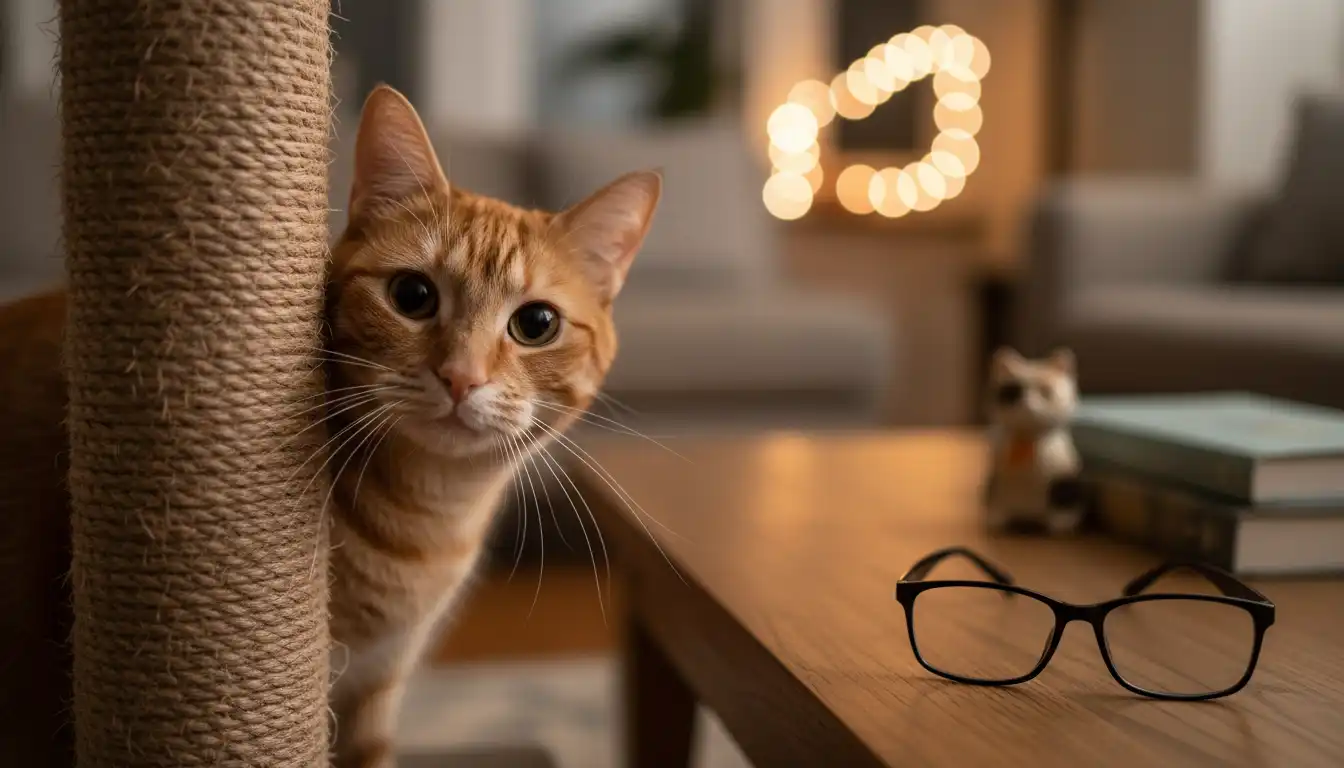
Next thing you do is you present something with your scent on it for them to explore. Often I will use these bad boys (glasses).
Step 3: The Finger Nose
Finally, step 3 of the handshake—the real “how you doing”—is offering your hand to your cat. Now the thing that I will always do is extend my hand in a very relaxed way. I’ll treat this finger like a nose because cats often will nose to nose. There’s my nose; I will present to them.
Often what they will do once they trust you is allow them to pet you. They will then push their nose up towards the third eye here and down. These are universal signs that your cat has fed you over and over again. And if you just use them up a little bit, don’t feel silly. Hi. I mean literally we’re behind closed doors here, just you and me and the cat cave. Try it and try with your cat.
Cat Communication Cheat Sheet
| Action | Meaning in Cat Language |
|---|---|
| Slow Blink | “I trust you. I am vulnerable. I love you.” |
| Staring | Aggression, threat, challenge. |
| Head Bow | Acknowledgement, greeting, affection. |
| Finger Nose | Friendly greeting, “Let’s shake hands.” |
| Rubbing Head | Claiming you, showing affection, trust. |
Conclusion: A True Expression of Love
A true expression of your love for a cat is saying “I will communicate on your terms.” The cat “I love you,” the 3-step handshake, the “how you doing,” the bow, the finger nose—all those things are going to their side of the fence.
Sometimes, when I’m home alone with my cats, I realize with friends it’s great, but nothing beats the silent bond with a feline companion.
Go and try the cat “I love you” with