Oversized luggage often leads to unnecessary weight and packing anxiety. A minimalist approach to a seven-day trip focuses on versatility and high-quality basics rather than quantity. This guide provides a concrete, actionable checklist for packing light, helping you travel with only what you truly need.
Traveling lighter is not just about grabbing fewer items; it is about selecting pieces that work together. By curating a small set of functional goods, you reduce decision fatigue at the airport and in your hotel room. You will find that carrying less allows you to move through your week with more freedom and less stress.
The Philosophy of One-Week Minimalist Packing
True minimalism in travel relies on the concept of “mix and match.” Instead of packing two complete outfits for every day, you pack a cohesive base layer system. This involves choosing items that share a similar color palette, typically neutrals like black, white, navy, or beige. This strategy ensures that any top goes with any bottom, drastically reducing the total number of garments required.
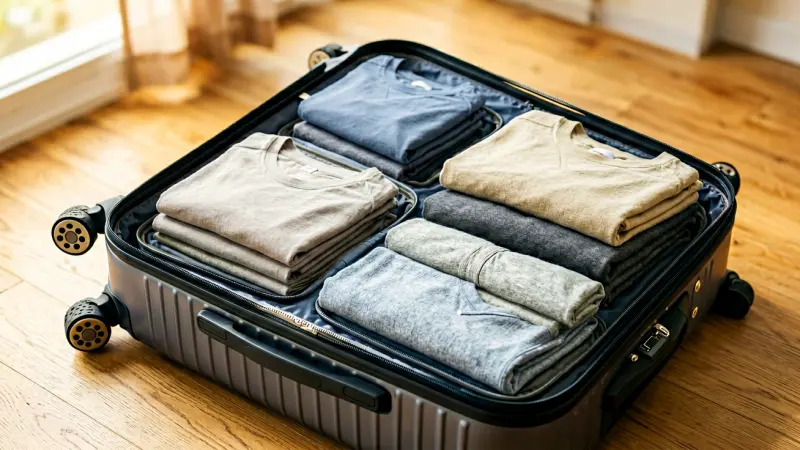
The goal is to fit everything into a personal item or a small carry-on bag. Airlines have strict limits on cabin baggage, and a lightweight setup avoids the risk of checked luggage fees or delays. When you pack only what is essential, you also eliminate the clutter of unused items. This mental clarity extends to the trip itself, as you are not constantly guarding a heavy suitcase.
For those new to this style, understanding the benefits of a capsule wardrobe can be highly beneficial. The principles of owning fewer, higher-quality items translate directly to travel packing. A well-constructed home wardrobe makes it significantly easier to pull travel essentials without overthinking.
Building Your Clothing Base
The foundation of a one-week trip is a rotation of three items per category. If you plan to wash clothes once during the week, three tops and two bottoms are sufficient. This assumes you are not attending formal events that require distinct outfits. Merino wool is an excellent fabric choice for travel because it resists odor and remains comfortable in varying temperatures.
Footwear is the heaviest part of your luggage. Stick to two pairs of shoes that have been broken in already. One pair should be versatile walking shoes or clean sneakers suitable for most days. The second pair should be dressier, such as loafers or flat sandals. Avoid wearing heavy boots unless they are your only option, as they add bulk that you must carry into every room and transport.
The Essential Gear Checklist
Beyond clothing, specific gear makes a trip functional. Electronics, toiletries, and comfort items form the core of your packing list. The table below outlines the specific items needed for a standard seven-day trip, including their primary purpose and recommended quantity.
| Category | Essential Item | Quantity | Purpose & Note |
|---|---|---|---|
| Clothing | Shorts or Skirt | 2 | Layering base for warm days or hotel relaxation. |
| Clothing | T-Shirts / Tops | 4 | 3 for rotation, 1 extra for unexpected situations. |
| Clothing | Long Pants / Jeans | 1 | Durable option for cooler evenings or rough terrain. |
| Clothing | Underwear & Socks | 7 & 3 | Wearables don’t need to be packed; socks need rotation to prevent odor. |
| Clothing | Light Jacket | 1 | Packable puffer or rain shell for temperature control. |
| Electronics | Phone & Cable | 1 & 1 | Primary communication and map tool. Use power bank if needed. |
| Electronics | Universal Adapter | 1 | Critical for international travel; check destination plugs. |
| Personal Care | Travel Toiletries | Set | Shampoo, soap, toothbrush, deodorant. Use travel sizes. |
| Documents | Wallet & ID | 1 | Keep in a secure outer pocket or crossbody bag. |
Managing Toiletries and Hygiene
Packing toiletries is where many travelers lose space to bulky plastic bottles. Solid toiletries are a space-saving alternative that reduces liquid leakage risks. A solid shampoo bar takes up the size of a walnut, whereas a bottle of shampoo adds significant weight and volume. Many hotels provide basic amenities, so check their policy before packing your own shampoo and conditioner.
Deodorant is a necessary item, but solid sticks or spray cans are more efficient than cream. If you are traveling to a hot climate, pack a travel-size antiperspirant that absorbs sweat, as standard deodorants only mask odor. You do not need to pack a full hair styling kit.
A lightweight travel comb or brush is sufficient for most hair types, and leaving styling tools at home encourages a simpler morning routine.
Electronics and Connectivity
Minimalist packing means consolidating your digital life. Your smartphone serves as a camera, map, wallet, and entertainment hub. Unless you are a professional photographer, you likely do not need a dedicated camera.
A universal power adapter is the most important electronic component for international trips. Without it, you cannot charge your phone or other devices, rendering your connectivity useless.
Consider bringing a portable power bank if you expect to be away from outlets for long periods. However, for a standard urban trip, this is rarely necessary. Avoid packing multiple chargers.
One USB-C or Lightning cable for your phone and one for your laptop is enough. If you use a laptop for work, keep it slim and functional. Heavy gaming laptops or large tablets often contradict the minimalist ethos of keeping travel light.
Common Mistakes to Avoid
A frequent error is packing “just in case” items. This usually includes a formal dress for a dinner that may not happen, or heavy rain gear for a region that is currently dry. Check the weather forecast for your destination week.
If rain is not expected, leave the heavy umbrella at home and bring a compact one only if the forecast is uncertain. Overpacking is more likely to happen in the first week of travel as you are still adjusting to the environment.
Another mistake is forgetting the “wearable” principle. What you wear on the plane counts against your packing space. Choose your most versatile outfit for the flight. If you are wearing your only long pants, you cannot fold them into your suitcase. Instead, wear your most bulky item, like a jacket, on your body during transit. This frees up space in your bag for other essentials.
Handling Laundry and Freshness
Seven days is the threshold where clothing hygiene becomes a consideration. If you are packing for exactly one week, you will likely need to do one load of laundry. This is manageable in most cities.
Laundromats are common in urban areas, and hotel laundry services are available, though expensive. To minimize this, pack one extra top and one extra pair of underwear. This buffer prevents you from wearing the same dirty clothes for more than two days.
Travel-sized detergent packets are lightweight and easy to pack. If you are avoiding laundromats, use a sink and a travel pillow or towel to dry your clothes overnight. Merino wool items, as mentioned earlier, are ideal here because they dry quickly and resist odor.
This combination of fabric choice and a single wash strategy keeps the load manageable without requiring excessive bag space for dirty laundry.
Specific Scenarios and Adjustments
Not all one-week trips are the same. A business trip requires different items than a casual vacation. For business travel, you may need a suit or blazer.
However, you can still minimize by choosing wrinkle-resistant fabrics. A lightweight, unlined blazer can be packed flat and worn immediately without needing a full ironing setup. Carry a few travel hangers if you want to maintain the shape of your garments, though hanging is often unnecessary for just one week.
For active travel, such as hiking or festival attendance, comfort and moisture-wicking properties are more important than style. Pack technical fabrics that dry fast. In these scenarios, a backpack might replace a suitcase, and the packing list shifts toward durability.
The core principle remains: fewer, higher-quality items. You do not need multiple pairs of hiking shoes; one pair of broken-in trail runners is sufficient for the entire week.
Frequently Asked Questions
How many pairs of shoes should I pack for a week?
Two pairs is the standard minimum for a mixed itinerary. One pair for walking and casual wear, and one pair for dressier occasions. If your trip is entirely casual or sport-focused, one high-quality pair may suffice. Avoid packing fresh, unworn shoes, as they are the most uncomfortable and take up the most space.
Do I need to pack a rain jacket for a one-week trip?
It depends on the forecast. If rain is likely, pack a packable rain shell or a lightweight umbrella. A heavy raincoat is not necessary for short-term travel unless you are in a consistently wet climate. A simple poncho or compact umbrella takes up minimal space and handles most unexpected downpours.
What if I need to wash clothes during the week?
Plan for one laundry cycle mid-week. Use hotel amenities, a laundromat, or sink-wash and dry your items. Pack a small bottle of detergent or a pre-detergented wash bag. This allows you to reuse your tops and bottoms without needing to pack extra clean sets, keeping your total item count low.
Is a personal item enough for a minimalist week?
For many, a personal item (like a large backpack or tote) is sufficient. If you have more clothing or gear, a small carry-on suitcase is a safe backup. Packing only a personal item saves time at security and check-in. It also prevents the risk of lost luggage, ensuring you always have your essentials with you.
Final Review Before Departure
Before you close your bag, perform a final audit. Remove any item you
can justify not bringing. Ask yourself: “Will I miss this if it is not
here?” If the answer is no, leave it in your closet. This process
ensures you are truly packing for need, not for anxiety. A minimalist
pack should feel light when you lift it. If it feels heavy, you have
likely included too many “maybe” items.
Traveling with less is a skill that improves with practice. Start
with this checklist, and adjust it based on your specific destination
and climate. You will likely find that you need even less than the items
listed here.
The freedom of moving through a city or airport with a single bag is a
significant quality-of-life upgrade. Focus on the experience, not the
logistics, and let a streamlined pack support that goal.