Transitioning to a low-waste lifestyle often feels overwhelming because of the sheer volume of product choices available. However, you do not need to overhaul your entire home in one weekend. The most effective approach is to make small, manageable changes in the kitchen, which is where the majority of household waste typically originates.
This guide breaks down the essential low waste kitchen swaps for beginners, focusing on items that are affordable, easy to find, and genuinely useful. You will learn which products to prioritize, how to avoid common mistakes, and how to build sustainable habits that stick. The goal is not perfection, but progress.
By starting with a few high-impact changes, you can significantly reduce your trash output without compromising convenience or taste.
Understanding the Strategy: Start Small
Many beginners fail at sustainability efforts because they try to change too many habits simultaneously. This leads to friction in your daily routine, causing you to revert to old habits out of frustration. The key is to identify the “low-hanging fruit”—swaps that require minimal effort to adopt but yield significant waste reduction.
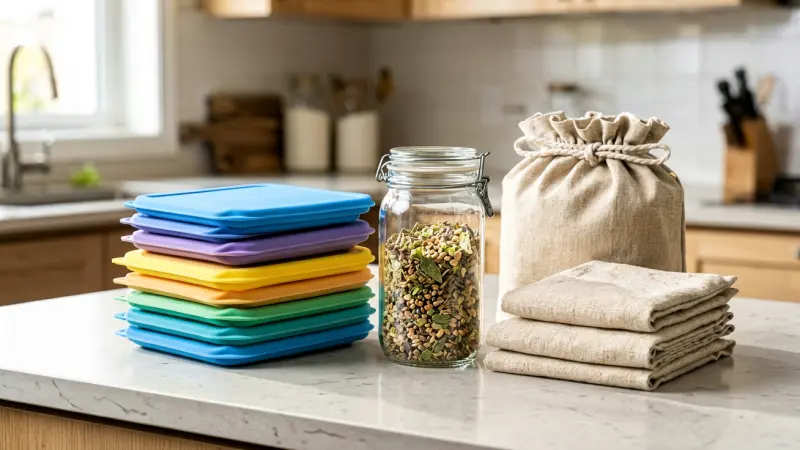
Focus on the areas where waste generation is highest and where the alternative is most accessible. For most households, this means starting with storage containers, produce packaging, and beverage containers. Once these foundations are set, you can gradually expand to other areas like cleaning supplies or personal care.
Consistency is far more valuable than intensity when building a long-term sustainable routine.
Essential Storage and Preservation Swaps
Single-use plastic wrap and cling film are among the most common sources of household waste. Replacing these with durable, reusable alternatives is one of the easiest first steps. Glass jars and silicone stretch lids offer a seamless transition that preserves food freshness just as effectively as traditional plastic.
Choosing the Right Containers
For leftovers, consider transferring excess glass jars or canning jars into your kitchen pantry. These are often free if you buy canned goods and are infinitely reusable. They work well for storing dry goods, leftovers, and marinating ingredients.
Ensure the lids seal tightly to prevent leaks and maintain freshness. You can also buy bulk items in glass jars to avoid the packaging associated with sealed containers.
Silicone stretch lids are another excellent swap for covering bowls and containers. They come in various sizes and create an airtight seal that is often superior to plastic wrap. They are easy to clean in the dishwasher and can be used thousands of times. Unlike plastic wrap, they do not tear or degrade over short periods, making them a durable investment.
| Singule-Use Item | Reusable Swap | Best For | Maintenance Tip |
|---|---|---|---|
| Plastic Wrap | Beeswax Wraps | Covering bowls, wrapping sandwiches | Wash in cool water; avoid heat sources |
| Cling Film | Silicone Stretch Lids | Sealing containers, covering leftovers | Dishwasher safe; check for tears |
| Ziploc Bags | Reusable Silicone Bags | Freezing, cooking, carrying meals | Hand wash or machine wash; dry completely |
| Juice Boxes/Bottles | Insulated Water Bottle | Daily hydration, on-the-go drinks | Rinse after each use; check seals |
Prioritizing Produce and Grocery Bag Swaps
Buying loose produce is a major hurdle for beginners because many grocery stores require you to wash items that arrive dirty or coated in wax. However, this is where cloth produce bags shine. They are lightweight, washable, and allow you to buy only what you need. This prevents the waste associated with pre-packaged fruits and vegetables that spoil before you can consume them.
Selecting Durable Produce Bags
When choosing produce bags, prioritize natural fibers like cotton, jute, or linen over synthetic microfiber. Synthetic bags can shed microplastics when washed and are not biodegradable. Natural fibers are breathable, which is better for the longevity of your produce.
Look for bags with sturdy zippers that allow you to wash them easily. A simple mesh bag is sufficient for sturdier items like potatoes and carrots, while a zipped bag is better for leafy greens that need protection from crushing.
Do not forget about grocery bags themselves. Bringing your own reusable totes for your car or trunk is a simple habit that eliminates the need for plastic or paper bags at checkout. If you live in an area where store-bags are paid for, you may already have a few reusable totes. If not, investing in two or three sturdy canvas totes is a practical, one-time expense that pays for itself quickly.
Beverages and Coffee Culture
If you buy coffee or iced drinks from cafes, the accumulation of paper cups and plastic lids adds up fast. The shift to bringing your own cup is one of the most impactful swaps for urban dwellers. Many cafes offer discounts or simply encourage customers to use personal mugs, which fosters a more sustainable community habit.
Choosing a Versatile Travel Mug
For hot coffee, an insulated stainless steel tumbler is ideal. It keeps drinks hot for hours and is resistant to rust and corrosion. For iced drinks, a wide-mouth reusable water bottle with a leak-proof lid is the best option.
It works for smoothies, juice, and sodas as well. Avoid complex mugs with multiple parts that are difficult to clean, as they tend to get neglected and end up unused in a drawer. A simple design with a wide opening for easy cleaning is the most sustainable choice in the long run.
If you drink water or other beverages at home, consider installing a simple tap filtration system if you are currently buying bottled water. While bottle recycling is possible, it is often inefficient in many municipal systems. A basic countertop or under-sink filter reduces the need for plastic bottles and can also save money on electricity if you previously boiled water for hot drinks.
Check local water quality reports to determine if a simple filter is sufficient for your area.
Addressing Food Waste in the Kitchen
Swapping packaging is only part of the equation; reducing the amount of food you throw away is crucial. Beginners often focus on storage but neglect the reality of cooking too much. To combat this, try implementing a “waste audit” for a week. Keep a log of what you throw away. You will likely find patterns, such as wilting herbs, expired condiments, or spoiled vegetables.
Practical Techniques to Reduce Spoilage
One effective technique is to separate onions and apples from other produce in your refrigerator. These items release ethylene gas, which accelerates the ripening and rotting of nearby fruits and vegetables. Using a simple fruit bowl on the counter for hardy items like apples and bananas, and keeping ethylene producers away from leafy greens, can extend their lifespan significantly.
Additionally, learn to interpret “best by” dates correctly. They are not expiration dates for food safety, but indicators of peak quality. Many items remain safe and nutritious for weeks after these dates.
Embrace the practice of “root-to-stem” cooking where feasible. Vegetable scraps like carrot tops, celery ends, and herb stems can be frozen in a container until you have enough to make a vegetable broth. This turns what would be waste into a resource.
It requires minimal extra effort and significantly reduces the organic waste going into the bin. Over time, you may find that you are shopping less because you are using what you already have more creatively.
Cleaning and Personal Care Considerations
While cleaning products are often perceived as complex to swap out, the basics are straightforward. Plastic laundry pods and detergent bottles contribute significantly to plastic waste. Switching to a standard liquid detergent in a refillable bottle or using concentrated powder detergents in glass jars is a simple step.
Liquid refills are typically sold in recyclable or reusable containers, reducing the single-use plastic associated with new bottles.
Simplifying Your Cleaning Routine
For everyday cleaning, you do not need a full arsenal of chemical products. A mix of white vinegar and water works effectively for glass and mirrors, while baking soda serves as a gentle abrasive for sinks and countertops. These ingredients are inexpensive, non-toxic, and readily available.
By reducing your reliance on specialized, single-use plastic containers for cleaning, you simplify your storage and reduce chemical exposure in your home. The key is to understand that “green” does not mean complicated. Simple, natural ingredients are often the most effective and sustainable choice.
If you are ready to explore other areas of sustainable living beyond the kitchen, you might also find guidance on how to manage energy levels and sustain your new habits without burnout. Balancing lifestyle changes with self-care is essential for long-term consistency. Additionally, building a community around these changes can be a powerful motivator.
You might want to check out resources on finding support networks for lifestyle changes, as social accountability helps maintain momentum. For those who enjoy solitary pursuits, shopping alone for sustainable goods can be a quiet, focused activity where you can carefully examine products without peer pressure.
Common Mistakes to Avoid
One of the most common mistakes is buying too many reusable products at once. It is easy to get swept up in the aesthetic of bamboo and cloth and purchase a large stockpile of items. If you do not have the habit of using them, these items will gather dust and ultimately end up in the trash.
Start with one or two items that you know you will use daily. For example, if you only drink coffee once a day, a single high-quality insulated cup is sufficient. Do not buy three “just in case.”
Another error is neglecting maintenance. Reusable items require cleaning. If a silicone bag retains odors or a cloth bag is not washed regularly, you will likely abandon them and revert to single-use options.
Establish a cleaning routine immediately. For example, wash cloth produce bags after each use or when they look soiled. Keep a small basket for dirty reusables in your kitchen so they are not scattered around the house.
This makes the cleaning process seamless and ensures your items stay hygienic and functional.
FAQs
Are reusables actually cheaper than single-use items?
Yes, in most cases, reusables become cost-effective over time. A high-quality insulated bottle costs $15–$20 but can replace hundreds of plastic bottles. The initial investment is higher, but the recurring cost of buying disposables quickly outweighs the one-time purchase.
Additionally, bulk buying of dry goods in reusable containers often saves money compared to buying individually packaged items.
What if I live in a small apartment with limited storage space?
Small living spaces favor minimalism, which aligns well with low-waste principles. Choose compact, multi-use items. A set of glass jars with lids can serve as storage, serving bowls, and measuring cups.
Stackable containers are ideal for small kitchens. You do not need a large number of items to make a difference; you just need a few reliable ones that you use consistently. Vertical storage, such as hooks for produce bags, can save counter space.
How do I handle composting if I live in an apartment?
If municipal composting is not available, you can use a countertop compost bin with a tight-sealing lid to store food scraps until you can dispose of them at a drop-off site. Many cities have community composting programs or drop-off locations. Alternatively, you can learn about vermicomposting (worm bins), which produces nutrient-rich soil and requires very little space.
Even if you cannot compost all scraps, reducing the volume of organic waste you throw in the trash is a significant step.
Final Thoughts
Implementing low waste kitchen swaps for beginners is about building sustainable habits, not about perfection. Start with one area, such as storage or beverages, and master that routine before expanding. The key is to choose items that fit your current lifestyle and to maintain them properly.
As you build confidence, you will find that reducing waste becomes second nature. Every small change contributes to a larger positive impact on the environment and your personal financial health. Focus on progress, not perfection, and enjoy the process of creating a cleaner, more efficient kitchen.