Friday nights often bring a wave of exhaustion. After a long workweek, the idea of cooking a fresh, nutritious dinner can feel overwhelming. Many people skip proper meals and turn to takeout or fast food instead. This pattern leads to energy crashes the next morning. It also disrupts overall health goals and mental clarity.
The solution is not spending hours in the kitchen every day. It is about strategic preparation. Smart meal planning reduces decision fatigue significantly. It ensures healthy options are always ready. This approach turns busy days into manageable routines. You gain back time and nutritional control simultaneously.
Why Traditional Meal Prep Fails the Busy Professional
Most meal prep guides recommend cooking all five days of food on a Sunday. This method often fails in practice. Life is unpredictable. Schedules shift, and enthusiasm wanes by Wednesday. By the weekend, the prepared food may taste stale or unappetizing. This discourages consistent healthy eating habits.
The Psychological Barrier of “Sunday Stress”
Spending four hours cooking at the end of a weekend creates stress. It steals time from relaxation and family. This negative association makes the habit hard to sustain. People associate healthy eating with chore-like tasks. This leads to abandonment of the routine within two weeks.
Furthermore, bulk cooking lacks variety. Eating the same chicken and broccoli for five days causes flavor fatigue. Palate boredom drives people back to convenience foods. Sustainability requires variety and ease. The goal is a system that works with your life, not against it.
The “Component” Strategy: Flexible and Efficient
Instead of making full, fixed meals, prepare individual components. Cook proteins, grains, and vegetables separately. Assemble the final meal fresh on the night you eat it. This technique is known as component-based meal prep. It offers maximum flexibility with minimum daily effort.
Standardizing Your Protein Base
Choose one or two protein sources for the week. Batch cook them on a specific day. For example, grill salmon and chicken thighs together. Season them simply with high-quality herbs. Keep them in airtight containers in the fridge. This eliminates the need to cook meat daily. You only need to reheat for a few minutes.
The Grain and Starch Swap
Prepare a large batch of one grain. Quinoa, brown rice, or bulgur wheat are excellent choices. These grains hold up well in the refrigerator. They provide sustained energy throughout the evening. By having the starch ready, you skip the longest cooking step. Simply add a handful to your plate in the evening. It takes less than five minutes to assemble.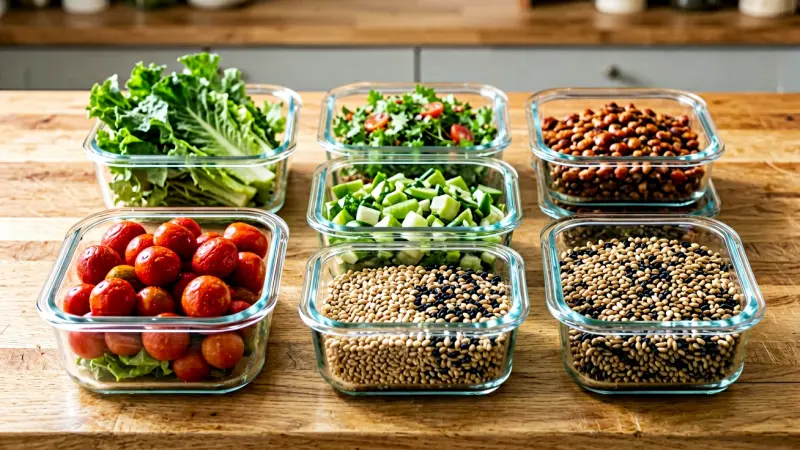
Streamlining Your Vegetable Game
Vegetables are often the hardest part to prep in bulk. Many wilts or spoil quickly when stored for five days. The key is to prepare them for different uses. Some vegetables are best eaten raw. Others require quick cooking. Understanding this distinction extends freshness and taste.
Chop-and-Store vs. Cook-and-Hold
Hardy vegetables like carrots, cucumbers, and bell peppers last well in the fridge. Chop them into chunks on Sunday. Store them in water or dry containers. They are ready for snacking or raw salads. Softer vegetables like zucchini or broccoli are better prepared fresh. Buy them in small amounts during the week. Or, blanch them quickly and freeze for later use.
| Component | Prep Day | Storage Method | Reheat/Use Time |
|---|---|---|---|
| Grilled Chicken (4 breasts) | Monday | Air-tight container, fridge (3-4 days) | 2 mins microwave |
| Quinoa (2 cups dry) | Tuesday | Air-tight container, fridge (up to 1 week) | 1 min microwave |
| Chopped Carrots & Cucumber | Sunday | Glass containers with a damp cloth | Immediate use |
| Roasted Chickpeas | Wednesday | Air-tight container, room temp (2 days) | Snack or salad topping |
Mastering the 20-Minute “Lazy” Dinner
On busy weeknights, you do not need to cook from scratch. You need to assemble. The 20-minute rule ensures you always eat a complete meal. This routine prevents the temptation to order delivery. It creates a reliable anchor for your evening health.
The One-Pan Assembly Technique
Use pre-cooked components to build a one-pan meal. Toss a bag of frozen peas or pre-washed spinach with your protein. Add the cooked grain. Drizzle with a store-bought high-quality sauce. Place in the oven for ten minutes. The heat binds the flavors together. It creates a cohesive meal that feels freshly cooked. This method requires minimal dishwashing and active attention.
Leveraging Technology and Appliances
A modern air fryer is a game-changer for busy households. It cooks pre-cut vegetables and frozen proteins faster than an oven. It uses less energy and has a smaller footprint. For those who enjoy tech integration, smart meal planning apps can automate shopping lists. They sync with your calendar to suggest prep days. This digital layer removes the mental load of planning. You focus on execution, not ideation.
Managing Energy and Mindset
Physical fatigue often accompanies a busy workweek. If you feel drained on Friday, your cooking capacity is low. This is why the component strategy is vital. It requires minimal mental effort. Consider how you end your week. If you are constantly tired on Friday, it might be time to audit your recovery habits. You can find tips on reclaiming your end-of-week energy to support this lifestyle change.
Navigating Dietary Restrictions and Allergies
Healthy meal prep must respect individual dietary needs. Cross-contamination is a hidden risk in shared kitchens. Use separate cutting boards and containers for allergen-free components. Label everything clearly. This prevents accidental ingestion and anxiety. It makes the routine safe for the whole household.
Gluten-free or dairy-free diets simplify prep further. Many natural grains and vegetables are naturally free of these allergens. Focus on whole, unprocessed ingredients. They are inherently safer and more nutritious. Check labels on sauces and condiments. Hidden additives can undermine a healthy plan. Diligence here builds long-term trust in your routine.
Dealing with “Food Fatigue”
Eating the same meals repeatedly leads to boredom. Boredom leads to skipping meals or snacking on junk. Introduce variation in your assembly phase. Keep a drawer of different spices and dressings. Rotate them weekly. The same chicken tastes different with a Mediterranean spice blend versus a smoky BBQ rub. This simple trick keeps the palate engaged without extra prep time.
The Long-Term Health and Lifestyle Impact
Consistent healthy eating supports more than just physical health. It stabilizes mood and cognitive function. Better nutrition during the workweek leads to improved focus. It reduces mid-afternoon crashes. This positive cycle enhances professional performance. You become more effective and less irritable.
Integrating healthy habits requires a broader life strategy. It is not just about food. It is about aligning daily actions with long-term goals. Consider how your diet fits into a larger framework for success. Many professionals benefit from a structured approach to their decade. A clear plan, like a blueprint for a remarkable decade, ensures that small daily choices align with major life ambitions.
Mental Health and the Kitchen
For some, the kitchen is a source of anxiety or aversion. This might stem from past experiences or specific phobias. If the thought of cooking triggers stress, it can impact eating habits. Just as one might seek guidance for managing fear-related visits, one can adapt meal prep to reduce stress. Use no-cook options for high-stress days. Salad bars and ready-to-eat protein packs can bridge the gap. The goal is consistency, not perfection.
Building a Sustainable Routine
Sustainability comes from simplicity. Choose a prep window that works for you. Maybe it is two hours on Tuesday and one hour on Thursday. Do not aim for perfection. Aim for consistency. Start with three days of prep and expand as the habit solidifies. The kitchen should feel like a tool, not a burden.
Monitor your energy levels and cravings. If you find yourself constantly hungry, adjust your portion sizes. Ensure you are eating enough fiber and healthy fats. Listening to the body is a critical skill. It allows for fine-tuning the strategy. Regular reflection ensures the routine remains aligned with health needs.
Final Thoughts on Effortless Health
Healthy meal prep for busy weeknights is a skill, not a chore. It is built on strategy and simplicity. By focusing on components, you gain control. You reduce time spent cooking. You increase nutritional quality. This approach respects the limits of a busy life. It delivers the results of a wellness lifestyle.
Start small. Focus on one improvement. Let the ease of the process guide you toward better health. Your body will thank you for the consistency. The kitchen becomes a place of empowerment, not exhaustion. Embrace the flexibility that comes with smart preparation. You have the tools. Use them to build a healthier, more balanced week.