You have likely experienced a satisfying “pop” or “crack” from your lower back or hips when you squeeze your glutes, stretch, or change posture. While often harmless, this sound can be startling if it happens unexpectedly. The phenomenon is usually related to joint cavitation, ligament movement, or muscle tension.
Understanding why your back cracks when you squeeze your bum requires looking at the complex interaction between your spine, pelvis, and soft tissues. This article explores the physiological mechanisms behind these sounds, distinguishes between normal joint noise and warning signs of pain, and provides practical guidance on maintaining healthy spinal function.
The Source of the Sound: Cavitation and Adhesion
The most common cause of cracking sounds in the spine is a process known as joint cavitation. Synovial joints, which connect your vertebrae and pelvic bones, are filled with a fluid called synovial fluid. This fluid lubricates the joint and contains dissolved gases.
When you squeeze your gluteal muscles, it can shift the position of the pelvis relative to the spine, creating a sudden change in pressure within the joint capsule.
This pressure drop causes dissolved gases to form bubbles rapidly, a process similar to popping your knuckles. As the bubbles collapse, they release sound. This is generally a sign of healthy joint mobility, not damage.
However, not all cracking sounds originate from cavitation. Sometimes, the sound comes from tendons or ligaments snapping over bony prominences. For example, a tight iliotibial band or gluteal tendon can slide across the hip joint during movement, creating a distinct “click” or “snap.”
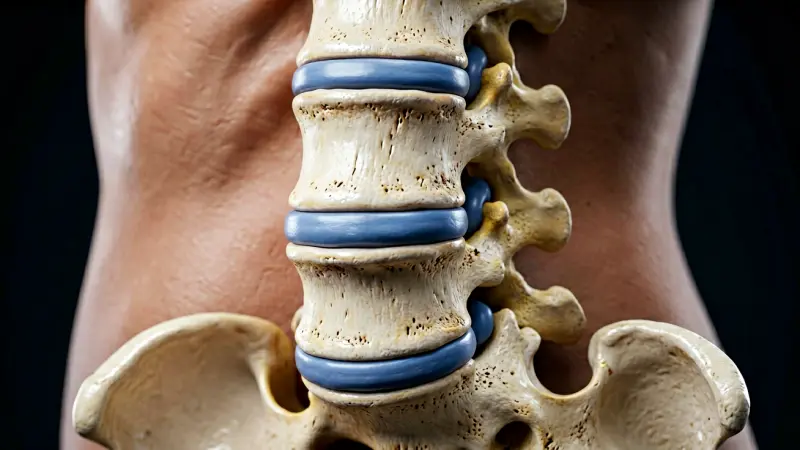
Why Squeezing Your Glutes Triggers Spinal Noise
The gluteus maximus, medius, and minimus muscles are major stabilizers of the hip and pelvis. When you actively squeeze these muscles, you are engaging the pelvic ring. The pelvis is mechanically linked to the lumbar spine through the sacroiliac (SI) joints and the lumbosacral junction.
If your pelvic alignment is slightly off, or if your muscles are imbalanced, forcing the glutes to contract can shift the pelvis into a position that stresses specific spinal joints.
Consider the scenario where your hip flexors are tight and your glutes are weak. When you consciously squeeze your bum to correct posture, the sudden engagement of the posterior chain can cause the pelvis to tilt or rotate rapidly. This rapid movement can force the facet joints in your lower back into end-range positions, triggering a cavitation pop.
Additionally, if there is any inflammation or minor dysfunction in the sacroiliac joints, the movement of the pelvis against the sacrum can produce a grinding or cracking sound.
Identifying Harmless Cracks vs. Painful Symptoms
It is crucial to distinguish between painless cracking and cracking accompanied by pain, numbness, or weakness. Painless joint noise is typically a mechanical phenomenon that indicates the joint is moving through its range. It does not imply arthritis or degeneration.
The joint surface cartilage is smooth and protected; the sound comes from the fluid and surrounding soft tissues, not the bones rubbing together. If the crack is isolated and does not cause any subsequent soreness, it is likely benign.
However, if the cracking is followed by sharp pain, a sense of instability, or radiating down the leg, it may indicate a structural issue. This could range from a minor sprain of the ligaments stabilizing the spine to a herniated disc pressing on a nerve. In such cases, the sound is often associated with a mechanical shift that aggravates the underlying pathology.
You should seek professional assessment if the noise is coupled with any form of discomfort or neurological symptoms.
The Role of Muscle Imbalance and Posture
Modern lifestyles often involve prolonged sitting, which can lead to hip flexor tightness and gluteal amnesia. When the glutes are underactive, other muscles, such as the lower back erectors, may overcompensate to maintain posture. When you finally engage your glutes by squeezing your bum, the sudden shift in load can cause the overstressed lumbar muscles to release tension abruptly.
This release can manifest as a audible pop or crack.
Furthermore, anterior pelvic tilt is a common postural deviation. In this position, the lower back is excessively arched. Squeezing the glutes is one of the few actions that can help posteriorly tilt the pelvis, correcting the tilt.
The correction forces the facet joints into a different alignment than they have been accustomed to for hours, potentially triggering cavitation as the joint spaces widen or narrow. This mechanical explanation highlights why posture correction often sounds rather than feels like “pain.”
When to Consult a Healthcare Professional
While most back cracks are harmless, certain red flags warrant a visit to a physiotherapist, chiropractor, or orthopedic specialist. If you experience chronic back pain, unexplained weight loss, fever, or loss of bladder or bowel control, these are serious symptoms that require immediate medical attention. Even without these severe symptoms, if the cracking is consistently painful, or if you feel a “catch” in your movement that restricts your range of motion, a professional evaluation is advisable.
A healthcare provider can perform specific physical examinations to determine if the source is the facet joints, sacroiliac joints, or hip joint. They may also order imaging studies if necessary to rule out fractures, significant disc herniations, or inflammatory conditions like ankylosing spondylitis. Early intervention can prevent minor dysfunctions from becoming chronic pain syndromes.
Practical Strategies to Manage Joint Noise
If you are concerned about the noise when squeezing your glutes, you can adopt specific strategies to improve joint health and reduce unwanted sounds. One of the most effective approaches is to focus on controlled, low-intensity glute activation rather than high-intensity squeezing. Progressive overload in resistance training helps strengthen the glutes without shocking the joint capsules.
Start with bridges or clamshells, which engage the muscles smoothly.
Incorporating mobility work for the hip flexors and hamstrings can also reduce the compensatory tension in the lower back. When the anterior chain is loose, the pelvis can move more freely, reducing the sudden pressure changes that cause cavitation. Additionally, maintaining a healthy weight reduces the mechanical load on the lumbar spine, lessening the stress on the joint surfaces.
Hydration is also key; synovial fluid production is supported by adequate water intake, which helps maintain joint lubrication and reduces friction.
Common Myths About Spinal Cracking
A prevalent myth is that cracking your back or hips wears down the joint and leads to arthritis. Research generally suggests that cavitation itself does not damage the cartilage. The cartilage is avascular and protected by the joint capsule.
The sound is a result of gas bubble formation, not bone-on-bone grinding. Another myth is that only people with arthritis have noisy joints. In reality, healthy individuals often have noisy joints due to varying levels of synovial fluid, joint shape, and individual biomechanics.
Noise does not equate to pathology.
It is also important to avoid forceful self-manipulation. While a gentle stretch may release tension, aggressively trying to force a crack by twisting your spine or jumping on a floor mat can injure the soft tissues. The goal is to improve mobility and strength, not to chase the sound. If you do not feel pain, there is no need to manipulate the spine to make it “crack” for therapeutic benefit.
Comparing Gluteal Squeezing to Other Movements
To better understand the mechanism, compare squeezing your glutes to other movements that cause spinal noise, such as bending forward to touch your toes. In forward bending, the hamstrings and latissimus dorsi stretch, creating tension that pulls on the pelvis and spine. Squeezing the glutes works in the opposite direction, engaging the posterior chain to stabilize and tilt the pelvis.
Both movements can trigger cavitation, but they do so through different muscle vectors. The gluteal squeeze is an active contraction that changes the pelvis’s orientation relative to the femur and sacrum, whereas forward bending is a passive lengthening of posterior muscles.
This distinction matters because it highlights the role of muscular control. If your glutes are weak, you may struggle to maintain the pelvic position, leading to erratic movements that cause noise. Strengthening these muscles improves proprioception, allowing you to control the pelvis with precision, thereby reducing unnecessary joint stresses and subsequent cracking sounds.
| Symptom Type | Possible Cause | Recommended Action |
|---|---|---|
| Painless cracking | Joint cavitation, ligament snap | Monitor; no action needed unless it becomes painful |
| Painful cracking | Joint inflammation, disc issue, ligament strain | Consult a physiotherapist or doctor |
| Cracking with leg numbness | Nerve compression, herniated disc | Seek immediate medical evaluation |
| Stiffness after cracking | Muscle spasm, protective guarding | Gentle stretching, anti-inflammatory measures |

FAQs About Back Cracking When Squeezing Glutes
Is it dangerous to make my back crack?
No, it is not dangerous to have natural joint noise. The cracking sound is typically caused by gas bubbles in the synovial fluid. However, you should avoid forcing the spine into painful positions to create the crack. If the movement is pain-free, the risk of injury is minimal.
Why does it only happen when I squeeze my glutes?
This happens because squeezing the glutes changes the position of the pelvis. If your pelvic alignment is slightly off, the sudden engagement of the glutes can shift the pelvis, altering the pressure in the lower back joints. This pressure change triggers cavitation or a ligament snap.
Can arthritis cause this sound?
Arthritis can change the shape of the joint surfaces, potentially leading to more frequent or louder sounds. However, the presence of cracking alone is not a diagnostic tool for arthritis. Only a healthcare professional can diagnose joint degeneration through examination and imaging.
How can I stop the cracking?
It is difficult to stop natural joint noise completely. However, you can reduce the frequency by improving posture, strengthening your core and glutes, and maintaining flexibility. Building better movement habits often helps more than trying to silence the sound itself. Similar body awareness is useful when dealing with other unexpected sensations, such as tingling in the buttocks linked to anxiety. If the noise is associated with pain, treat the underlying cause with professional guidance.
Conclusion
The cracking sound you hear when squeezing your glutes is a mechanical phenomenon rooted in the complex relationship between your muscles, pelvis, and spine. It is most often a harmless result of joint cavitation or soft tissue movement. By focusing on balanced strength, proper posture, and gentle mobility, you can manage these sounds and ensure your lower back remains healthy.
Small daily adjustments in how you sit, stand, and move tend to make the biggest difference over time. Consistency in these habits often matters more than any single stretch or exercise.
Paying attention to how your body responds is a useful habit. Many readers also find it helpful to understand related sensations such as tingling linked to anxiety.
Listen to your body: if the noise is painless, it is likely just your joints working as they should. Most of the time these sounds are simply part of normal joint function. Understanding the difference between harmless noise and warning signs is the key takeaway.
If pain accompanies the crack, seek professional advice to rule out underlying issues. Paying attention to these signals is part of good body awareness.