The idea of adding milk to pasta sauce often triggers skepticism among home cooks. Many traditionalists view it as a dilution of flavor, while others have found a new way to enhance their dishes. The short answer is yes, you can add milk to pasta sauce, but the result depends entirely on your technique and the type of sauce you are modifying.
This article explores why this addition works, how to execute it without ruining your dish, and which combinations yield the best culinary outcomes.
Understanding the Role of Milk in Sauces
Most standard tomato-based pasta sauces rely on acidity, tomato solids, and often wine or vinegar for balance. Milk introduces fat, protein, and lactose into this equation. These components interact with the existing ingredients in predictable ways.
The fat content contributes a coating effect on the tongue, increasing the perception of richness. The proteins help stabilize the mixture, reducing the risk of separation if handled correctly.
The key distinction lies in the temperature and the type of milk used. Whole milk provides the most substantial body and flavor. Skim milk can thin out the sauce without adding much richness, potentially making it taste watery.
For those avoiding dairy, plant-based alternatives like oat or almond milk can work, though they carry their own distinct flavor profiles that may clash with heavy tomato bases.
When Adding Milk Makes Sense
Creating a Creamy Tomato Base
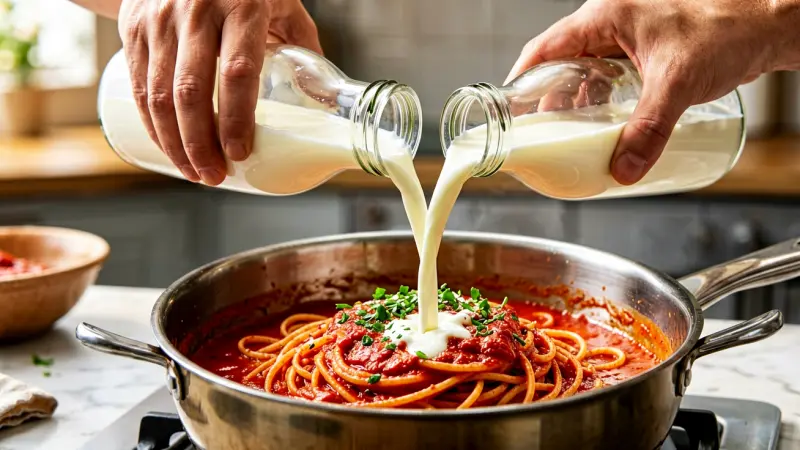
The most common application is transforming a standard marinara or pomodoro into a “rosa” or creamy tomato sauce. This technique is widely used in Italian cuisine, particularly in dishes like Bolognese variations or creamy meat sauces. By adding milk, you mellow out the sharp acidity of the tomatoes.
The lactic acid and sugar in milk create a smoother, more rounded flavor profile. This is especially useful if your tomatoes are very acidic or if you prefer a less tangy sauce.
This approach works well with hearty meats. The richness of the milk complements ground beef or pork. It creates a sauce that feels more luxurious without requiring cream. Since cream is expensive and can curdle more easily if overheated, milk offers a more stable base for long-simmered dishes.
Thickening and Binding
Milk can act as a thickening agent when paired with other ingredients. If you stir a slurry of cornstarch or flour into milk before adding it to the sauce, it functions as a modification agent. This is helpful if your sauce has turned out too thin and you need to increase its viscosity without adding more pureed vegetables or cheese.
The starch granules absorb liquid and swell, creating a gel-like structure that holds the sauce together.
However, this method is better suited for shorter-cook sauces. In long-simmered dishes, the emulsification provided by fat and protein is often more effective. Using starches in long-simmered milk-based sauces can sometimes lead to a gritty texture if not fully dissolved.
Step-by-Step Method for Adding Milk
Success with milk depends on temperature control and gradual integration. The primary risk is curdling, where the proteins coagulate and form lumps. To avoid this, you must ensure the sauce is not boiling violently when the cold milk is introduced. The thermal shock causes immediate protein tightening.
Start by reducing your pasta sauce to a simmer. Lower the heat so the surface bubbles gently. Gradually add the milk in small increments. Stir constantly to allow the sauce to warm up evenly. This gradual warming prevents localized hot spots that can trigger curdling. Once the sauce is warm, you can increase the heat slightly to help the milk integrate fully.
If the sauce is acidic, consider adding a pinch of sugar or a small amount of bicarbonate of soda to balance the pH before adding the milk. This step is optional but helps prevent the milk from breaking. For tomato sauces, the natural acidity is usually manageable with careful stirring. For wine-based sauces, the alcohol content should be reduced before adding dairy to avoid flavor clashes.
Common Mistakes and How to Avoid Them
Heating Too Quickly
The most frequent error is adding cold milk to a boiling pot. This causes the proteins to set instantly, resulting in a grainy, unappealing texture. Always temper the milk. Take a ladle of hot sauce and stir it into the cold milk in a separate bowl. Then, pour this mixture back into the pot. This raises the temperature of the milk gradually, preventing shock.
Ignoring Flavor Balance
Milk has a sweet, neutral taste. In a strongly herbaceous sauce, it can mute the intensity of basil or oregano. You may need to adjust seasoning after adding the milk. Often, the saltiness needs to be re-checked. The natural sweetness of milk can mask the need for more salt, but it can also make the sauce taste bland if overdone. Taste the sauce after every addition of dairy.
Using the Wrong Type of Milk
For a rich, luxurious finish, full-fat milk is superior. Low-fat or non-fat milk introduces water into the sauce, which dilutes the flavor and requires longer cooking to reduce. If you use fat-free milk, expect to cook the sauce longer to evaporate the excess water. This can change the texture of the sauce, potentially making it less cohesive.
Comparing Milk to Other Dairy Additions
While milk is a versatile ingredient, it is not the only option. Understanding the differences helps you choose the right component for your specific dish. Cream, for instance, offers a much richer texture but is less stable under high heat. Butter adds fat and richness but does not thicken the sauce. Cheeses provide saltiness and protein, but they melt into the sauce rather than forming a base.
| Additive | Texture Impact | Flavor Profile | Stability at High Heat | Best Use Case |
|---|---|---|---|---|
| Whole Milk | Medium body, smooth | Mild, slightly sweet | Medium (risk of curdling) | Tomato sauces, ragout |
| Cream | Rich, heavy, coating | Rich, buttery | Low (breaks easily) | Short-simmered white sauces |
| Butter | Moist, glossy finish | Tangible, nutty if browned | High (if emulsified) | Mounting the sauce at the end |
| Heavy Cream | Very thick, luxurious | Dense, fatty | Low (separates when boiled) | Finishing touch for pasta |
Milk sits in the middle of this spectrum. It provides enough fat to enrich the sauce but not so much that it becomes overwhelming. This makes it a cost-effective choice for large batches. Cream is often reserved for finishing sauces because its high fat content requires careful handling to prevent separation. Milk is more forgiving for base preparations.
Specific Sauce Applications
Tomato and Meat Sauces
This is the classic application. A Bolognese-style sauce with ground meat benefits significantly from the addition of milk. The milk adds a touch of elegance and softens the robustness of the beef.
In many traditional Italian recipes, a splash of milk or white wine is added early in the cooking process. The milk helps sauté the onions and garlic, creating a fond that deepens the flavor. If you are making a simple marinara, adding milk at the end can create a creamy finish that pairs well with white meat or fish.
White and Bechamel-Based Sauces
For pasta dishes that rely on white sauces, milk is a primary ingredient. However, if you are adding milk to an existing white sauce that has turned out too thin, you must thicken it before adding more liquid. Use a roux (butter and flour) to thicken the base.
If you simply add more milk, the sauce will become even runnier. This is a common mistake when trying to “fix” a sauce. Always adjust the consistency of the base before introducing additional liquids.
Troubleshooting Separation and Curdling
If your sauce begins to separate or look grainy, do not panic. This is usually reversible. The goal is to re-emulsify the mixture.
Remove the pot from the heat immediately. Whisk the sauce vigorously to incorporate air and break up the curds. If the texture remains rough, blend a small portion of the sauce with milk and fold it back into the main pot.
Adding a small amount of cornstarch slurry can also help stabilize the mixture. It acts as a bridge between the water and fat components.
Prevention is better than cure. Ensure your sauce is not boiling. Keep the heat low and steady. Use a wooden spoon to stir frequently. Wood is less conductive than metal, which can help prevent scorching on the bottom of the pot. Scorching can cause the proteins to set and curdle. Regular stirring keeps the temperature uniform.
Dietary Considerations and Substitutes
For those with lactose intolerance or dairy allergies, traditional milk is not an option. There are several alternatives that mimic the texture and fat content of dairy. Oat milk is a popular choice because it is naturally sweet and has a higher fat content than almond milk.
It holds up well in tomato sauces. Coconut milk offers a strong flavor and high fat content, which works well in spicy or Asian-inspired pasta dishes. However, its distinct taste may overpower subtle herb flavors.
Almond and soy milk are thinner and have distinct flavors that may not suit traditional Italian recipes. They are better suited for light, vegetable-based sauces. When using these alternatives, be mindful of the sugar content.
Sweetened varieties can make the sauce taste cloying. Unsweetened options are preferred for savory applications. The viscosity of plant milks is generally lower than cow’s milk, so you may need to use slightly more to achieve the same body.
FAQs
Will adding milk make my pasta sauce too sweet?
Milk contains lactose, which is a sugar. However, the amount of sweetness is mild. In a robust tomato sauce, this sweetness is usually balanced by the acidity of the tomatoes. If you find the sauce too sweet, add a pinch of salt or a splash of vinegar to balance the flavors. Salt enhances the perception of sweetness, so adjust seasoning carefully.
Can I add milk to a spicy sauce?
Yes, milk is effective at reducing spiciness. The casein protein in milk binds to capsaicin, the compound that causes heat. This makes the sauce feel smoother and less hot. This is a useful trick if you have made a sauce that is too spicy. Adding a cup of milk can significantly reduce the heat level without diluting the flavor excessively.
Does milk replace cream in pasta sauces?
Milk can replace cream in many cases, but the result will be lighter. Cream provides a richer, more velvety mouthfeel. Milk offers a smoother, less intense texture. If you need the richness of cream but want a lighter option, you can thicken the milk with a small amount of starch. This creates a body similar to a diluted cream sauce. The flavor will be less fatty, which is a matter of preference.
When should I add the milk?
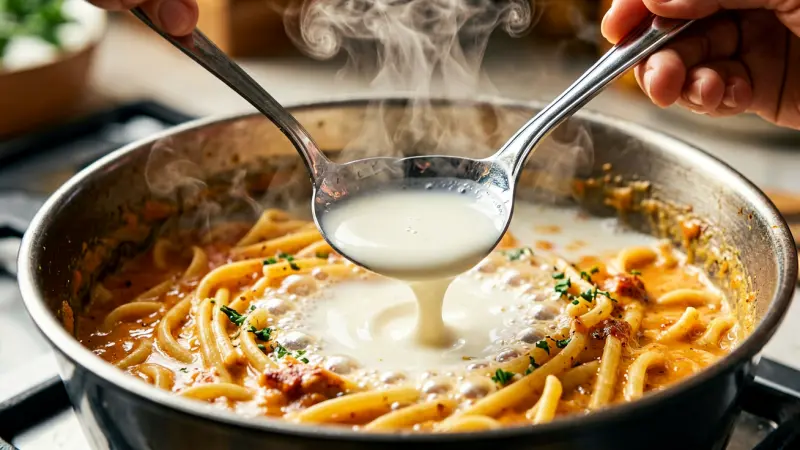
Add milk towards the end of the cooking process. This prevents the milk from breaking down due to prolonged heat. Adding it early can result in a thinner sauce because the milk will evaporate. By adding it at the end, you preserve the texture and flavor. Stir it in over low heat to ensure it integrates smoothly without scorching.
Practical Tips for Success
Always taste your sauce after adding milk. The flavor profile changes significantly. The acidity is reduced, and the sweetness is enhanced. You may need to adjust the salt, pepper, and herbs accordingly. A sauce that was well-seasoned before adding milk might taste bland after. Re-season at the end. This is a crucial step that many home cooks miss.
Consider the pasta you are serving. Creamy, milk-based sauces pair well with shapes that trap liquid, such as rigatoni or shells. Long strands like spaghetti can make a thin, milky sauce slide off the pasta.
If you are using a long pasta shape, ensure the sauce is thick enough to cling. Adding milk to a very thin sauce and serving it over spaghetti can result in a disappointing meal. The contrast in texture matters.
Finally, do not be afraid to experiment. While traditionalists may frown, the culinary world is full of innovations. A dash of milk in a marinara can elevate a simple dish to a more refined level.
The key is moderation. A small amount goes a long way. Start with a quarter cup and add more as needed.
This gradual approach allows you to control the final texture and flavor. You are the chef, and the results depend on your palate.
Conclusion
Adding milk to pasta sauce is a valid and useful technique that can transform the flavor and texture of your dish. It mellows acidity, adds richness, and can help thicken or balance heat. The success of this method relies on temperature control, gradual integration, and appropriate seasoning adjustments.
By understanding the properties of milk and its interaction with tomato-based sauces, you can avoid common pitfalls like curdling and separation. Whether you are using dairy or plant-based alternatives, the principle remains the same: start small, stir gently, and taste frequently. This approach ensures a smooth, creamy result that enhances rather than overwhelms your pasta dish.
Related: What Does Asterisk Correction Mean: A Practical Guide for Writers · What is the difference between cute and handsome: A practical guide · What Are Shower Goggles Used For? The Practical Guide to Eye Protection