You saw it. It was there, moving across the floor or dropping from the ceiling, and now it is gone. The room is small, the spider is fast, and you are standing in the doorway trying to decide whether to search for it or pretend you never saw it. The uncertainty is often worse than the spider itself.
Finding a spider that has gone into hiding is a matter of understanding where they go, how they behave, and what actually works when you search. This guide walks through the most reliable techniques, explains why some methods fail, and covers what to do once you have located it.
Why Spiders Are So Good at Disappearing
Spiders have been evolving for hundreds of millions of years, and much of that time has been spent avoiding predators. Their survival depends on being able to vanish quickly and stay hidden, and they are extremely good at both.
Most household spiders can move faster than people expect. They can also compress their bodies to fit through gaps that look impossibly narrow. A common house spider can flatten itself enough to slip under a door or into a crack in a baseboard, which means the gap you dismissed as too small is probably not too small at all.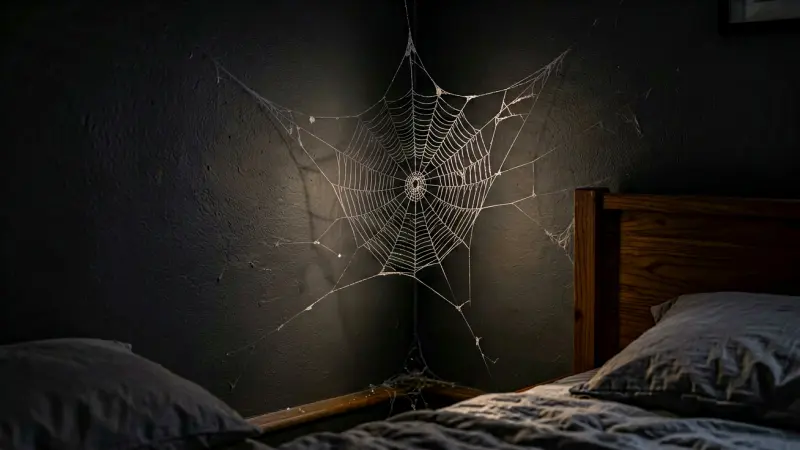
Their vision is also different from ours. Many spiders are far more sensitive to movement than to detail, and they can detect the vibrations of a person walking across a room. These are abilities that serve them well in the wild, though like most specialised traits, they come with their own limits and trade-offs, an idea explored in pieces about extraordinary abilities that carry built-in drawbacks.
By the time you have turned on the light and started looking, the spider has often already registered your presence and moved to a hiding place.
Start by Thinking Like a Spider
Spiders do not wander randomly. They seek out specific conditions, and understanding those conditions narrows your search considerably.
They Want Cover
Spiders prefer places where they are in contact with a surface on multiple sides. A corner, a crevice, or a gap behind furniture feels safer than an open floor. That is why they tend to retreat to edges rather than staying in the middle of a room.
They Want Darkness
Most household spiders are nocturnal or crepuscular, meaning they are most active at dawn and dusk. During the day, they rest in dark places. If you lost sight of a spider during daylight hours, it has almost certainly gone somewhere shaded.
They Want Proximity to Prey
Spiders go where the food is. Other insects, including flies, mosquitoes, and small beetles, are their prey. If your room has a recurring insect problem, spiders will be more likely to take up residence there.
Where to Look First
The most common hiding places for spiders in a bedroom are predictable once you know what to look for.
Under the Bed
The space under a bed is dark, sheltered, and rarely disturbed. Check the frame, the underside of the mattress, and the area where the bed meets the wall. Spiders often hide in the gap between the bed and the wall or in the folds of a bed skirt.
Behind and Under Furniture
Dressers, nightstands, and desks all create dark gaps against the wall. Pull them out if you can, or at least check the space behind them with a flashlight. Spiders frequently hide in the gap between the back of a piece of furniture and the wall.
Corners and Ceiling Edges
The corners where walls meet the ceiling are classic spider territory. They are high, dark, and out of the way. Check the full perimeter of the room, including the corners behind doors.
Curtains and Window Treatments
Curtains provide folds and layers that spiders can slip between. Check both sides of the fabric, the hem, and the space behind the curtain rod. Windows themselves are also a common entry point, so check the frame and any gaps.
Closets and Storage
Closets are ideal spider habitat. They are dark, rarely disturbed, and often contain boxes and clothing that provide cover. Check the floor, the corners, and the tops of shelves.
Baseboards and Cracks
Baseboards often have small gaps where they meet the wall or the floor. These gaps are wide enough for many spiders to slip behind. Run a flashlight along the baseboard and look for any opening.
Tools That Actually Help
Searching for a spider with your bare hands is inefficient and increases the chance of being bitten. A few simple tools make the process faster and safer.
A flashlight is essential. Spiders hide in dark places, and a focused beam lets you check gaps and corners without moving furniture. A flashlight with a narrow beam works better than a broad one for this purpose.
A long-handled tool, such as a broom handle or a ruler, lets you probe behind furniture without putting your hand into unknown spaces. Tapping surfaces gently can also encourage a spider to move without you having to reach in.
A clear container and a piece of stiff paper are useful once you have located the spider. A glass jar or a plastic tub works well. The paper should be thin enough to slide under the container but stiff enough to hold its shape.
A Step-by-Step Search Method
Rather than searching randomly, work through the room in a systematic way.
Start by closing the door to the room if it was open. This limits the area you need to search and prevents the spider from leaving while you are looking elsewhere. If there is a gap under the door, place a towel along the bottom to block it.
Turn off unnecessary lights and use your flashlight. Bright overhead lighting flattens shadows and makes it harder to see into dark corners. A focused beam creates contrast that helps you spot a spider against a surface.
Work from one side of the room to the other, checking each zone in order. Start with the perimeter, since spiders are more likely to be near walls than in the middle of the floor. Check high and low. A spider that was on the ceiling may have dropped to the floor, and one that was on the floor may have climbed.
Move furniture carefully rather than yanking it. A sudden movement can cause a spider to bolt, making it harder to track. Pull furniture away from the wall slowly and check the space behind it before moving on.
Check the undersides of objects. Spiders frequently rest on the bottom of furniture, picture frames, and shelves. A quick look at the underside of each item can save you a lot of time.
| Location | Why Spiders Hide There | How to Check |
|---|---|---|
| Under the bed | Dark, sheltered, rarely disturbed | Use a flashlight; check the frame and the gap against the wall |
| Behind furniture | Creates a dark gap against the wall | Pull furniture out slowly and check the space behind it |
| Ceiling corners | High, dark, and out of the way | Scan the full perimeter with a flashlight |
| Curtains | Folds provide layered cover | Check both sides of the fabric and the hem |
| Closets | Dark, quiet, full of hiding spots | Check corners, shelves, and the floor |
| Baseboard gaps | Narrow openings that spiders can slip behind | Run a flashlight along the baseboard and look for openings |
What to Do When You Find It
Once you have located the spider, you have a few options, and the right one depends on your comfort level.
Catch and Release
Place a clear container over the spider, then slide a piece of stiff paper underneath to trap it inside. Carry the container outside and release the spider in a sheltered spot, such as under a bush or near the base of a tree. This method works for most household spiders and avoids killing them.
Vacuum
A vacuum with a hose attachment can pick up a spider from a distance. This is a practical option if you do not want to get close. Empty the canister or remove the bag afterward, since spiders can sometimes survive inside a vacuum for a period of time.
Leave It Alone
Many household spiders are harmless and can actually help control other insects. If you can tolerate its presence, leaving it alone is a valid choice. Most spiders will move on their own within a few days if there is no food source to keep them in the area.
Why Some Searches Fail
Even a careful search sometimes comes up empty, and there are several reasons why.
The spider may have left the room through a gap you did not notice. This is more common than people think, especially in older homes with gaps around doors and windows.
It may have moved to a location you did not check, such as inside a piece of furniture rather than behind it. Spiders can hide inside drawers, behind picture frames, and in the folds of fabric.
It may have dropped to the floor and moved into a hiding place while you were searching elsewhere. Spiders are fast, and a search that takes several minutes gives them plenty of time to relocate.
It may also be that the spider was never in the room in the first place. A spider seen near a doorway may have retreated to an adjacent room or hallway rather than staying in the room where you saw it.
Preventing Future Encounters
Finding a spider once is manageable. Finding one repeatedly suggests that your room is providing what they need.
Seal gaps around windows and doors. Weather stripping, caulk, and door sweeps all reduce the number of entry points available to spiders and other insects.
Reduce clutter. Stacks of paper, cardboard boxes, and piles of clothing give spiders places to hide. Storing items in sealed containers and keeping floors and baseboards clear makes your room less attractive to them.
Control other insects. If there are no prey insects in your room, spiders have less reason to stay. Fixing leaks, sealing food, and addressing any existing insect problem will indirectly reduce spider activity.
Dust and vacuum regularly. This removes webs, egg sacs, and the small insects that spiders feed on. Pay attention to corners, under furniture, and along baseboards.
Check items before bringing them inside. Firewood, plants, and boxes stored outdoors can carry spiders in. A quick inspection before bringing them into the house reduces the chance of an accidental introduction.
Understanding What You Are Dealing With
Not all spiders are the same, and the behaviour of the one in your room depends on the species. Most household spiders in temperate regions are harmless. They may look alarming, but their venom is not dangerous to humans, and they are not aggressive.
A few species are worth treating with more caution, particularly in regions where venomous spiders are common. If you are unsure what you are looking at, the safest approach is to keep your distance and use a catch-and-release method rather than handling the spider directly.
It is also worth remembering that a spider in your room is not a sign of poor hygiene or a failing on your part. Spiders are common in homes of all kinds, and their presence is usually about access and environment rather than cleanliness. The same is true of many household creatures that people find unsettling, including the ones discussed in this guide to dealing with a house centipede on the ceiling.
Fear of spiders is one of the most common phobias, and it is not something to be embarrassed about. If the presence of a spider in your room causes genuine distress, that reaction is valid, and taking steps to reduce the chance of future encounters is a reasonable response. The same principle applies to other forms of unease that people navigate quietly, such as the loneliness that can settle in when old friendships fade, which is explored in pieces about missing the friends you no longer see.
Frequently Asked Questions
How do I find a spider that disappeared in my room?
Close the door, use a flashlight, and search systematically from the perimeter inward. Check under furniture, behind curtains, in corners, and along baseboards. Spiders usually retreat to dark, sheltered places near walls rather than staying in the open.
Do spiders come back after you lose sight of them?
They may stay in the same area if there is food and shelter, or they may move on. Most household spiders do not travel far, so the one you lost is likely still in the room or nearby unless it found a way out.
What attracts spiders to a bedroom?
Spiders are attracted to darkness, shelter, and the presence of other insects. A room with cluttered storage, gaps around windows or doors, and an existing insect problem is more likely to attract and retain spiders.
Are spiders in the bedroom dangerous?
Most household spiders are harmless. They are not aggressive toward humans and will usually flee rather than bite. A small number of species in certain regions have venom that can cause serious symptoms, so it is worth knowing what species are common where you live.
Should I kill a spider I find in my room?
It is a personal choice. Many household spiders are beneficial because they eat other insects. Catch-and-release is a practical alternative if you would rather not have it in your room but also do not want to kill it.
How can I stop spiders from getting into my room?
Seal gaps around windows and doors, reduce clutter, control other insects, and keep the room clean. These steps reduce both the entry points and the conditions that make a room attractive to spiders.
How long can a spider hide without food?
Many household spiders can survive for weeks without eating, and some can go longer. That means a spider hiding in your room is not necessarily going to leave soon just because it has not found anything to eat.
What to Take Away
Finding a spider that has gone into hiding is mostly about knowing where to look and being systematic about it. Spiders retreat to dark, sheltered places near walls, so that is where your search should focus. A flashlight, a bit of patience, and a methodical approach will locate most spiders that have not left the room entirely.
Once you have found it, catch-and-release is the simplest option for most people. And if you would rather not repeat the experience, sealing gaps, reducing clutter, and controlling other insects will make your room less appealing to the next spider that considers moving in.