There is a specific kind of disappointment that comes from biting into a chocolate bunny that looks perfect and tastes like a sweetened candle. The texture is waxy, the flavor is thin, and the aftertaste lingers in a way that real chocolate never does. Palmer is one of the most recognizable brands behind that experience, especially around Easter and Christmas when their foil-wrapped figures fill grocery store shelves.
People complain about Palmer chocolate constantly, but the complaints often miss the actual reason it tastes the way it does. The problem is not that Palmer is bad at making chocolate. The problem is that a large portion of what they sell is not chocolate at all, at least not by any legal definition of the word.
The Short Answer: It’s Usually Not Chocolate
The most direct explanation for Palmer’s waxy texture and flat flavor is that many of their products are made with compound coating rather than real chocolate. Compound coating replaces cocoa butter with cheaper vegetable fats, typically palm kernel oil or coconut oil. Those fats behave differently in the mouth, and the difference is immediately noticeable.
Under FDA rules, a product must contain a minimum percentage of cocoa solids and cocoa butter to legally be called chocolate. Products that do not meet that threshold are labeled as “chocolate flavored” or “chocolatey” instead. Palmer’s packaging uses this language, and it is a deliberate signal that the product inside is not the same thing as a Hershey bar or a Ghirardelli square.
What Real Chocolate Is Actually Made Of
Real chocolate has a short and specific ingredient list. It starts with cocoa solids and cocoa butter, both derived from the cacao bean. Sugar, milk (in milk chocolate), and a small amount of an emulsifier like soy lecithin are added. Vanilla or another flavoring may be included. That is essentially it.
Cocoa butter is the component that gives chocolate its characteristic snap, its glossy finish, and its melt-in-your-mouth quality. It melts at roughly human body temperature, which is why a piece of good chocolate seems to dissolve on the tongue rather than sit there. That property is not incidental. It is the defining sensory experience of real chocolate.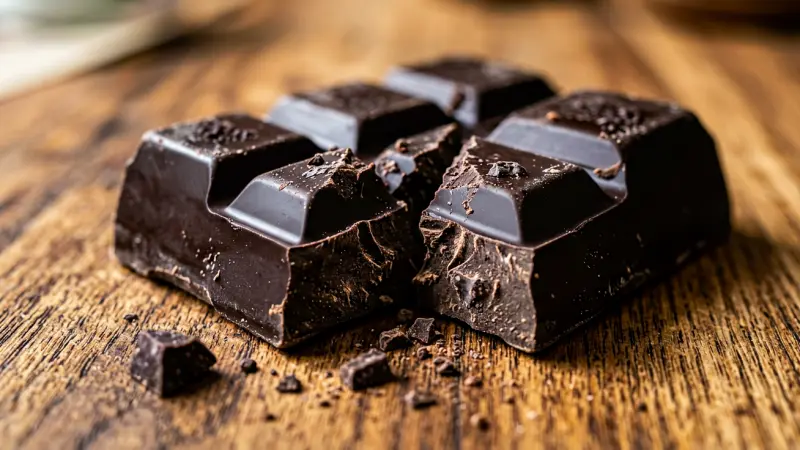
What Compound Coating Does Differently
Compound coating swaps out the cocoa butter for vegetable fats. Palm kernel oil, coconut oil, and partially hydrogenated soybean oil are common choices. These fats are far cheaper than cocoa butter, and they do not require the careful tempering process that real chocolate needs.
The cost savings are significant. Cocoa butter is one of the most expensive ingredients in chocolate, and its price fluctuates with the cocoa market. Vegetable fats are stable, cheap, and easy to work with. For a manufacturer producing large volumes of seasonal candy at low price points, that trade-off is attractive.
The sensory cost, however, is unavoidable. Vegetable fats do not melt at body temperature the way cocoa butter does. They tend to stay solid in the mouth longer, which produces the waxy or chalky sensation that Palmer is known for. They also lack the flavor depth of cocoa butter, so the chocolate taste is thinner and more one-dimensional.
| Feature | Real Chocolate | Compound Coating |
|---|---|---|
| Primary fat | Cocoa butter | Palm kernel oil, coconut oil, or other vegetable fats |
| Melting point | Close to human body temperature | Higher; does not melt as readily in the mouth |
| Texture | Smooth, creamy, melts on the tongue | Waxy, chalky, or grainy |
| Flavor | Deep cocoa notes with complexity | Sweet and flat; cocoa flavor is muted |
| Labeling | Can legally be called “chocolate” | Must be called “chocolate flavored” or “chocolatey” |
| Cost | Higher, due to cocoa butter prices | Lower, due to cheap vegetable fats |
What Is Actually in a Palmer Bunny
Palmer’s ingredient lists vary by product, but a clear pattern emerges when you look at them. Some Palmer items do contain real milk chocolate as a base. Others are built entirely on a compound coating.
A typical Palmer milk chocolate hollow bunny lists milk chocolate as the first ingredient, with sugar, cocoa butter, whole milk, chocolate, soy lecithin, PGPR, and vanilla following. That product does contain real chocolate components. The problem is that the decorative coatings and the chocolate-flavored elements on the same product often use a different formula entirely, built on partially hydrogenated vegetable oil with whey, skim milk, and artificial colors.
Other Palmer products, particularly the brightly colored figures, list sugar as the very first ingredient, followed by hydrogenated vegetable oil, whey, cocoa processed with alkali, skim milk, soy lecithin, and vanillin. There is no cocoa butter in that formula at all. The product is a sugar-and-fat delivery system with a small amount of cocoa powder for color and a hint of chocolate flavor.
That is why the taste is so inconsistent across the brand. Some items have enough real chocolate to taste passable. Others are pure compound coating, and those are the ones that generate the strongest complaints.
Why Sugar Is the First Ingredient
When sugar appears first on an ingredient list, it means sugar makes up a larger share of the product by weight than any other single ingredient. In many Palmer products, that is exactly what you find. The result is a candy that hits the palate with sweetness before anything else.
Real chocolate balances sugar against the bitterness of cocoa solids and the richness of cocoa butter. The sweetness is present, but it is part of a larger flavor profile. When sugar dominates and the cocoa content is low, there is nothing to balance it. The candy tastes sweet and little else.
Consumer reviews echo this consistently. Even positive reviews of Palmer products tend to describe them as “very sweet” or “sugary” rather than rich or chocolatey. The sweetness is not a bug. It is what the formula is designed to deliver, because sugar is cheap and it masks the absence of real chocolate flavor.
Why It Feels Waxy
The waxy texture is the single most common complaint about Palmer chocolate, and it has a direct physical explanation. Vegetable fats have a higher melting point than cocoa butter and do not break down in the mouth the same way.
When you eat real chocolate, the cocoa butter melts almost immediately, releasing flavor compounds and coating the tongue with a smooth, creamy layer. With compound coating, the vegetable fat stays more solid. It feels slick and slightly greasy rather than creamy, and it leaves a residue on the roof of the mouth.
Some tasters describe the texture as chalky, which happens when the fat does not fully emulsify with the other ingredients. Others describe it as putty-like, referencing the way the product deforms rather than melts. These are not exaggerations. They are accurate descriptions of how compound coating behaves when it is made with cheap fats and a high sugar content.
The Nostalgia Factor and Why It Persists
Palmer has been around for decades, and many people grew up eating their products at Easter and Christmas. That nostalgia keeps some customers coming back, even when they acknowledge that the chocolate is not good.
Reviewers who admit to a nostalgic attachment to Palmer often describe it as “cheap and artificial” in the same breath. The appeal is not the taste. It is the memory of being a child and finding a foil-wrapped bunny in a basket. That emotional association is powerful enough to override the sensory reality for some people.
There is also a price factor. Palmer products are inexpensive. A large hollow bunny might cost a few dollars, while a comparable product from a premium brand could cost several times more. For shoppers buying candy in bulk for a party or a classroom, the price difference matters. They are not buying Palmer because it tastes good. They are buying it because it is affordable.
That trade-off is familiar in a lot of purchasing decisions, not just chocolate. People make similar calculations about all sorts of things, weighing cost against quality and deciding what is actually worth spending more on. The same logic applies to how you think about value more broadly, whether you are choosing candy or thinking about what it would actually mean to feel rich in everyday life.
How to Tell If You Are Buying Real Chocolate
The easiest way to avoid disappointment is to read the label. Look for cocoa butter in the ingredients. If it is not listed, the product is compound coating, regardless of what the front of the package says.
Check for the words “chocolate flavored” or “chocolatey” on the packaging. These are legal terms that indicate the product does not meet the FDA standard for chocolate. They are not marketing flourishes. They are required disclosures.
Look at the first few ingredients. If sugar is first and cocoa butter is absent or far down the list, the product will likely taste sweet and waxy rather than rich and smooth. If cocoa solids and cocoa butter appear early, the chocolate content is higher and the flavor will be more substantial.
For a more direct test, hold a piece in your hand for a few seconds. Real chocolate will begin to soften and feel slightly tacky as the cocoa butter responds to your body heat. Compound coating will remain firm and may feel greasy rather than melty.
Better Alternatives at Similar Price Points
Palmer is not the only option in the inexpensive chocolate category. Several brands produce real chocolate at prices that are still affordable, even if they cost slightly more than Palmer.
Ghirardelli is frequently recommended as a step up without a dramatic price increase. Their chocolate squares use real chocolate and deliver the melting texture and cocoa depth that Palmer lacks. Hershey’s is another option, though quality varies across their product line. Even store-brand chocolate from some grocery chains can outperform Palmer if it uses real cocoa butter.
The key is to check the ingredients rather than assume that a familiar brand name guarantees a certain level of quality. Price is not always a reliable signal, but ingredient lists usually are.
Is There Any Palmer Product Worth Buying?
Some Palmer items are better than others. Products that include peanut butter, caramel, or other fillings can mask the shortcomings of the chocolate coating. The peanut butter bunnies and the peppermint patties, for example, get more positive reviews than the plain hollow figures. That makes sense. When the chocolate is not the star, the waxy texture and thin flavor matter less.
If you are buying Palmer for a child who cares more about the shape than the taste, the product serves its purpose. If you are buying it for yourself and you actually want chocolate, the money is better spent elsewhere.
The Broader Lesson About Compound Chocolate
Palmer is not unique in using compound coating. Many mass-market candy brands use it for seasonal products, decorative elements, and products where the chocolate is not meant to be the focus. The difference is that some brands use it as part of a blended formula, while Palmer relies on it heavily.
Understanding the distinction between chocolate and compound coating is useful beyond Palmer. It helps you make better choices across the entire candy aisle, and it explains why two products that look identical on the shelf can taste completely different. The food itself is not the only thing worth paying attention to. The way it feels in your mouth, the texture, the temperature, the way it melts or does not melt, is part of the experience. That kind of sensory awareness is worth developing, and it extends beyond food. It is the same attention you bring to how your body feels after a long day, which is one reason practices like these gentle yoga poses for beginners at home are worth exploring.
There is also a practical lesson about expectation. Palmer chocolate is not bad because the company is incompetent. It is bad because it is made to hit a price point, and hitting that price point requires substitutions that change the product fundamentally. Once you understand that, the disappointment fades. You stop expecting Palmer to taste like something it was never designed to be.
Frequently Asked Questions
Is Palmer chocolate real chocolate?
It depends on the product. Some Palmer items contain real milk chocolate, while others are made with compound coating that replaces cocoa butter with vegetable fats. Products that do not meet the FDA standard for chocolate are labeled as “chocolate flavored” or “chocolatey” on the packaging.
Why does Palmer chocolate taste waxy?
Compound coating uses vegetable fats like palm kernel oil instead of cocoa butter. These fats have a higher melting point and do not dissolve in the mouth the way cocoa butter does. The result is a waxy or chalky texture rather than a smooth, creamy melt.
Is compound chocolate bad for you?
Compound coating is not inherently harmful, but it is often higher in sugar and lower in beneficial cocoa compounds than real chocolate. It is also frequently classified as an ultra-processed food. Real chocolate, particularly dark chocolate, contains more cocoa solids and less added sugar.
How can I tell if chocolate is real or compound?
Read the ingredients. If cocoa butter is listed, it contains real chocolate. If the product uses vegetable fats instead and the label says “chocolate flavored” or “chocolatey,” it is compound coating. The front of the package is less reliable than the ingredient list on the back.
Why is Palmer chocolate so cheap?
The main reason is the use of vegetable fats instead of cocoa butter. Cocoa butter is one of the most expensive ingredients in chocolate, and replacing it with palm kernel oil or coconut oil significantly reduces production costs. Sugar is also used generously because it is inexpensive and adds bulk.
Are there better alternatives to Palmer for the same price?
Yes. Ghirardelli, Hershey’s, and several store-brand chocolates offer real chocolate at prices that are still affordable. The gap is not always large, and the quality difference is noticeable. Checking the ingredient list is the fastest way to compare.
What to Remember
Palmer chocolate tastes the way it does because much of it is not chocolate by the legal definition. It is compound coating, made with vegetable fats instead of cocoa butter, and that substitution produces the waxy texture and flat flavor that people complain about.
The fix is simple. Read the ingredients before you buy. If cocoa butter is there, you are getting real chocolate. If it is not, you are getting something else. That one habit will save you from more disappointing Easter bunnies than any brand recommendation ever could.