Many people assume that growing food requires a backyard, but this misconception prevents plenty of urban dwellers from harvesting their own produce. You do not need square footage on the ground to cultivate fresh herbs, lettuce, or even tomatoes. With the right setup, an apartment balcony or sunny windowsill can become a functional food production space.
This guide walks you through the specific steps to build a low-maintenance, high-yield garden that fits within city living constraints. We will cover container selection, soil management, lighting requirements, and the common mistakes that cause most beginner balcony gardens to fail. By the end, you will have a clear plan for planting your first season without overcomplicating the process.
Assessing Your Light and Space
The single most critical factor in apartment gardening is light. Unlike indoor decorative plants, vegetables require significantly more direct sunlight to produce harvestable food. Most fruiting plants, such as peppers, tomatoes, and cucumbers, need at least six to eight hours of direct sun daily.
Leafy greens like spinach and kale are more forgiving and can survive with four to five hours, but their growth rate will be slower and their leaves may become pale if light is inconsistent.
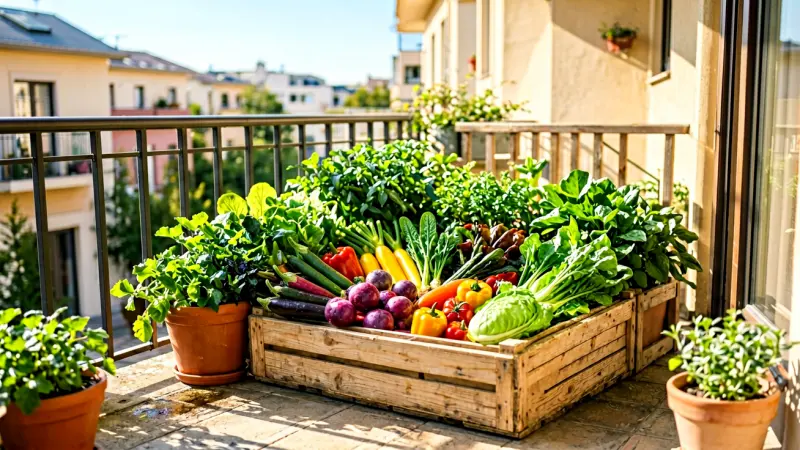
Start by mapping the sun path on your balcony or window for a full day. Note where shadows fall at midday. If your space receives morning light but afternoon shade, plant shade-tolerant crops like lettuce, radishes, and herbs.
If you have a south-facing wall with consistent sun, you can attempt heavier crops. If your apartment is in a building with deep setbacks that block most light, consider supplementing with artificial grow lights, though this increases electricity costs and complexity.
Choosing the Right Containers
Do not use the smallest pot you think you will need. Root space dictates the health of the plant. A tomato plant in a five-gallon container will perform better than one in a two-gallon pot because it has room to develop a robust root system.
Look for containers that are at least 12 inches deep for most vegetables. For root crops like carrots or beets, you need even deeper pots, ideally 18 to 24 inches, or use self-watering bucket-style systems that mimic soil depth.
Material matters for temperature regulation. Unpainted terracotta breathes well but dries out faster and is fragile. Plastic is lightweight and retains moisture longer, making it easier to manage for beginners.
Fabric grow bags are excellent for value because they are inexpensive, breathable, and easy to move; however, they dry out quickly in hot weather and need frequent watering. Whichever material you choose, ensure it has drainage holes. Roots cannot tolerate sitting in waterlogged soil, which leads to rot.
If you are using self-watering buckets, they are designed without bottom drainage, but they also include a wicking system to prevent waterlogging, so check the mechanism before planting.
Soil Selection and Composition
Never use garden soil from a store or dig it from the ground for container gardening. Standard garden soil is too heavy and dense for containers; it compacts and suffocates roots. You need a potting mix specifically designed for containers, which is lighter and aerated.
If you buy a generic potting mix, consider amending it with organic matter to improve nutrient retention. Adding a handful of worm castings to the mix before planting can provide beneficial microbes and slow-release nutrition.
One specific issue with apartment gardening is the risk of root burn from high-salinity tap water. If your city water is particularly hard, flush your pots with plain water every two to three weeks. This pushes out accumulated salts that can inhibit nutrient uptake.
While not everyone’s tap water is this severe, if you notice white crusty deposits on the soil surface, this is a sign to flush more frequently. This practice is especially important in hot weather when evaporation is high.
Choosing Beginner-Friendly Crops
Start with crops that have short growing cycles and tolerate some shade. Herbs are the easiest entry point because you can harvest them continuously without waiting for a full fruiting cycle. Basil, cilantro, parsley, and mint are all excellent choices. Mint will spread aggressively, so keep it in its own container to prevent it from overtaking other plants.
Beyond herbs, the following vegetables are ideal for first-time apartment gardeners:
| Crop Type | Light Requirement | Space Needed | Key Benefit |
|---|---|---|---|
| Radishes | Full sun to part shade | Small (bushel basket) | Fast harvest in 25-30 days |
| Lettuce/Salad Mix | Part shade to full sun | Medium (large tray) | Continuous crop, cool-weather tolerant |
| Cherry Tomatoes | Full sun (6+ hrs) | Large (5+ gal) | High yield, vigorous growth |
| Bell Peppers | Full sun | Medium to Large | Ornamental, fruiting plant |
| Chili Peppers | Full sun | Medium | Heat tolerant, long season |
Cherry tomatoes are often the most rewarding fruiting crop for balconies because they are compact and produce heavy yields. However, they require consistent watering. If you miss a few days of watering, you will likely see blossom end rot on the fruit, where the bottom of the tomato turns black and mushy.
This is a physiological disorder caused by water inconsistency, not a disease. Maintaining a steady moisture level prevents this issue.
Planting and Spacing
Spacing is frequently misunderstood in small spaces. You do not need to match the spacing requirements listed on seed packets for open field growing. In containers, you are limited by soil volume and air circulation.
A general rule is to place plants no closer than 12 to 18 inches apart to ensure airflow. Crowded plants trap humidity, which invites fungal diseases like powdery mildew and blight. If you have a narrow balcony, consider vertical growing for vining crops like cucumbers or pole beans using a small trellis or string system.
When planting seeds directly, follow the depth instructions on the packet. Most small seeds need to be buried only a quarter inch deep. Large seeds like squash or corn need to be deeper.
For transplants, bury the plant up to the first set of true leaves. This encourages additional root growth along the stem, creating a stronger plant. Be gentle with the roots and do not tug the stem too hard when setting the plant in the soil.
Watering and Feeding Strategy
Container plants dry out much faster than ground-grown plants. In the summer, you may need to water every morning and evening to keep the soil moist. Use the “finger test”: insert your finger an inch into the soil.
If it is dry, water. If it is moist, wait. Consistency is key.
Deep, less frequent watering encourages roots to grow deeper, while shallow, frequent watering keeps roots near the surface where they are more susceptible to heat and drying.
For feeding, start with a balanced, slow-release granular fertilizer mixed into the soil at planting time. After that, supplement with a liquid fertilizer every two to four weeks. Do not over-fertilize.
Excess nutrients can burn the roots and lead to lush, leafy growth that produces fewer fruits. If you are using a high-quality potting mix, you may need less frequent feeding than if you use a cheap, low-nutrient soil. Monitor the plant health; yellowing lower leaves often indicate nitrogen deficiency, while poor fruit set might indicate phosphorus issues, though usually, it is just a need for consistent water and adequate light.
Managing Pests in Urban Settings
Urban gardens face different pests than rural ones. Aphids, whiteflies, and spider mites are the most common. Spider mites thrive in hot, dry conditions, which are common on apartment balconies in summer.
If you see tiny webbing on the undersides of leaves, you have a mite infestation. Blast the plants with a strong stream of water to knock the pests off. Repeat this weekly.
For persistent issues, use an insecticidal soap or neem oil spray. These are organic options that break down quickly and are safe for most edible crops if applied correctly. Avoid spraying directly on fruits right before harvest; let the solution dry and wash produce thoroughly before eating.
Do not ignore the source of infestations. If you bring in new plants from a nursery, isolate them for a few days. Check the undersides of leaves for pests before placing them with your established garden.
This simple quarantine step prevents 90% of the issues beginners face. If you notice yellow spots on leaves that are not water damage, check for spider mites first, as they cause stippling before any visible webbing appears.
Common Mistakes to Avoid
Many apartment gardeners make a few recurring errors that stunt growth or kill plants.
First, placing plants in high-traffic areas where people constantly touch or bump the containers. This stresses the plant and breaks stems. Second, using pots without drainage holes and then dumping water into the pot after watering.
Water must exit the container to prevent root rot. Third, neglecting the weight of the wet pot. A five-gallon pot filled with soil and water can weigh over 40 pounds.
Ensure your balcony railing or table is structurally sound and capable of bearing this load, especially if you have multiple plants.
Fourth, planting heat-sensitive crops in the hottest part of the summer. Cucumbers and zucchini can suffer in extreme heat above 95°F, leading to bitter fruit or blossom end rot. If your balcony is a heat trap, consider planting shade-tolerant crops in the summer and saving the heat-loving tomatoes and peppers for the spring and fall seasons.
Timing your planting to the local climate is just as important as the physical setup.
FAQs
Can I grow tomatoes on a balcony?
Yes, you can grow tomatoes on a balcony, provided you have at least six hours of direct sun and a container that is at least five gallons deep. Cherry and dwarf varieties are the best choice for balconies because they are more compact and easier to manage. Indeterminate varieties can grow very large, so they require sturdy stakes or cages and a larger pot with more support.
Determinate varieties, like ‘Stupice’ or ‘Moneymaker,’ are often easier for beginners because they stop growing at a set height and produce fruit all at once.
What is the best soil for apartment vegetable gardening?
The best soil is a high-quality, organic potting mix. Avoid garden soil, which compacts too tightly. A mix containing peat moss, compost, and perlite is ideal because it retains moisture but drains well.
Perlite, the white gritty bits, is crucial for aeration. Without it, the soil becomes compacted over time, choking the roots. You can buy pre-mixed organic potting soil or blend your own with equal parts peat, vermicompost, and perlite for a cost-effective option.
How much water do container vegetables need?
It depends on the plant, pot size, and weather. In general, water when the top inch of soil is dry. In hot weather, this may mean daily or even twice-daily watering for small containers.
Larger self-watering buckets may only need filling once a week. The goal is to keep the soil consistently moist but not waterlogged. Under-watering is usually more harmful than over-watering, so err on the side of thorough watering and good drainage.
Do I need a special license to grow vegetables in my apartment?
In most urban areas, you do not need a license to grow edible plants in containers on your balcony. However, check with your building management or homeowner’s association. Some buildings have rules about hanging pots or the weight limits on balconies.
It is rare for an HOA to prohibit vegetable gardening, but it is worth asking to avoid disputes with neighbors or property managers. Also, ensure your pots have drainage and a saucer to catch runoff, preventing water damage to the balcony surface and potential drips onto neighbors below.
Conclusion
Starting a vegetable garden in an apartment is about managing light, soil, and water within a confined space. Begin by evaluating your sunlight and choosing containers with adequate depth and drainage. Select crops that match your light conditions, starting with fast-growing herbs and leafy greens before attempting heavy fruiting plants like tomatoes.
Maintain consistent moisture and watch for common pests like spider mites, which thrive in dry balcony environments. By focusing on these core fundamentals, you can create a productive and rewarding garden that fits seamlessly into your urban lifestyle.
If you are looking to combine this new hobby with personal reflection, you might also find our journal prompts for self-discovery helpful for tracking your garden’s progress and your own learning curve.