Many homeowners feel overwhelmed by the sheer volume of possessions in their living spaces. This accumulation often stems from a lack of clear decision-making frameworks for what to keep or discard. Minimalist home organization offers a structured approach to reducing this stress by focusing on utility and intentionality rather than just aesthetic appearance.
This guide provides actionable steps to curate your space, ensuring every item has a designated, functional home.
The Philosophy Behind Less Is More
True minimalism in organization is not about emptying a room until it looks sterile. It is about creating a functional environment where objects serve a purpose. The core principle is that each item must justify its existence.
If an object does not add value to your daily life, create friction, or bring genuine joy, it is a candidate for removal. This mindset shifts the focus from “do I have room for this?” to “does this serve a need?”.
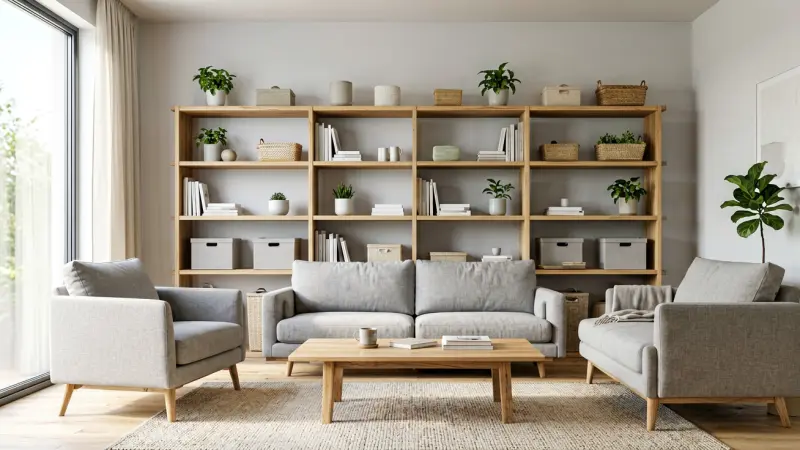
Clutter often accumulates because of ambiguous storage systems. When items are hidden in closed cabinets or deep boxes, they effectively disappear from the daily awareness loop, making it easy to buy duplicates. By implementing a system where everything is visible and accessible, you naturally limit the number of possessions you hold.
This transparency is a key component of effective minimalist home organization tips.
Starting with the Decluttering Process
Establishing Keep, Donate, and Discard Zones
Begin by setting up three distinct zones in your room. A “keep” zone for items you definitely want, a “donate” or “sell” zone for items in good condition you no longer use, and a “discard” zone for broken or unwanted items. Avoid the temptation of creating a “maybe” pile, as this often just becomes permanent clutter.
For each object, ask if it has been used in the last six months. If not, move it out. This time-bound rule helps prevent sentimentality from dictating your storage space.
Work through small areas first, such as a single drawer or shelf, to build momentum. Large-scale decluttering can feel daunting, but small wins demonstrate the immediate benefit of space and ease. As you clear these areas, you will likely find that you do not actually need many of the items you were holding onto. This realization reinforces the practice of buying less in the future.
The One-Year Rule
If you have not used an item in the last twelve months, it is unlikely you will use it soon. This rule applies particularly to clothing, books, and household tools. However, exceptions exist for seasonal items or sentimental keepsakes that are displayed rather than stored.
For seasonal items, limit the quantity to a single set or coat. For sentimental items, consider storing only a few high-value pieces in a designated memory box, rather than hoarding entire collections of keepsakes.
Optimizing Storage Solutions
Once you have reduced the volume of your belongings, you need storage that keeps them organized without adding visual noise. The goal is to hide utility items while keeping daily essentials accessible. Vertical space is often underutilized in most homes.
Installing floating shelves or tall, narrow shelving units allows you to store items without occupying floor space. This is particularly useful in small apartments or narrow entryways where floor area is at a premium.
Consistency in storage containers is crucial for a minimalist aesthetic. Mixing different colors, shapes, and materials creates visual chaos. Choose a neutral color palette, such as white, beige, or gray, and stick to it.
Uniform boxes and bins look intentional and clean. Labeling containers can be helpful, but use a minimal font or simple tags to avoid adding visual clutter. The contents should be known by the person living in the home, not relied upon for discovery.
Room-by-Room Strategy
Kitchen and Dining
The kitchen is often the hardest space to organize due to the variety of items. Start with the pantry. Arrange items by frequency of use rather than category.
If you use oil daily, keep it at eye level. If you use specialized baking ingredients rarely, store them on top shelves. Use clear containers for dry goods to see when you are running low, but ensure they match in design.
For cookware, consider hanging pots and pans on a pot rack if counter space is limited. This keeps the surface clear for food preparation. For more tips on maintaining a tidy cooking space, you might find low-waste kitchen swaps for beginners a helpful resource, as reducing waste often aligns with buying fewer, higher-quality items.
Living Room and Common Areas
In the living room, the primary source of clutter is often electronics and media. Use cable management solutions to hide wires behind furniture or use cordless devices where possible. Limit decorative items to a few meaningful pieces.
A single well-curated bookshelf is more impactful than three half-filled ones. Create a “drop zone” near the entryway for bags, keys, and mail. This prevents these items from migrating to the living room sofa.
A small hook and a tray are sufficient. This keeps the main living area clear for relaxation.
Bedroom
The bedroom should primarily be a space for rest. Remove work items, laundry baskets, and exercise equipment if possible. If you must keep a bed, ensure the mattress and frame are simple and uncluttered.
Nightstands should hold only essentials: a light, a book, and a charging port. Avoid storing random miscellaneous items in the closet. If space is tight, under-bed storage bins can be useful, but keep them out of sight to maintain the visual calm of the room.
Limit clothing to items you wear frequently. The goal is to have a wardrobe that you love and use, not one that you manage and avoid.
Common Mistakes in Minimalist Organization
One frequent error is replacing one set of containers with another. Buying five new aesthetic boxes does not solve the problem of having too many items; it just moves the clutter. Focus on the contents before the containers.
Another mistake is ignoring the “entry” points. If you have a system to put things away, it does not matter if the door is narrow. Most clutter comes in through doors.
Manage the inflow by asking yourself where an item will go before it enters the house. If you cannot immediately place it, it is likely not a need. This gatekeeping habit is more effective than any internal storage system.
Finally, perfectionism can halt progress. Minimalism does not require a magazine-worthy home. It requires a functional, calm space.
If a room is 80% organized, the benefits of reduced stress are already realized. Striving for 100% can lead to burnout. Accept that life is messy, and the system should be easy enough to maintain during busy periods.
If the organization takes too long to reset, it will not be sustained.
Comparing Storage Methods
Choosing the right storage method depends on the item’s frequency of use and visibility. The following table compares common storage strategies and their best applications.
| Storage Method | Best For | Key Advantage | Limitation |
|---|---|---|---|
| Open Shelves | Decorative items, frequently used books, plants | Immediate access, aesthetic display | Dust accumulation, visual clutter if overcrowded |
| Closed Cabinets | Utility items, cleaning supplies, seasonal gear | Hides visual noise, allows for bulk storage | Requires lifting to access, items can be forgotten |
| Under-Bed Storage | Awning for out-of-season clothes, bulk linens | Utilizes otherwise wasted space | Harder to access, not suitable for daily items |
| Hanging Organizers | Entryway items, bathroom toiletries, kids’ art | Vertical space utilization, visible contents | Limited weight capacity, can look cluttered if overfilled |
Notice that no single method is superior for all items. A hybrid approach is often necessary. Use open shelves for items you enjoy seeing, and closed cabinets for functional necessities.
This balance allows for both beauty and practicality. When selecting furniture, prioritize pieces with built-in storage to keep floors clear. A nightstand with drawers is generally better for minimizing surface clutter than a nightstand with an open shelf.
Maintaining Your Minimalist Space
Organization is a process, not a one-time event. Implement a “one in, one out” rule for clothing and accessories. For every new shirt purchased, donate or discard an old one.
This keeps the total volume constant. Additionally, schedule a 15-minute weekly reset. During this time, return misplaced items to their homes and clear surfaces.
This short, regular habit prevents the slow accumulation of clutter that occurs over months. It is far easier to tidy for 15 minutes weekly than to tackle a year’s worth of disarray annually.
Be mindful of digital clutter as well. Physical minimalism is often undermined by digital disorganization. Use cloud storage to archive photos and documents, and clear your desktop regularly.
A cluttered digital interface can contribute to the same mental fatigue as a cluttered physical desk. For those who spend significant time traveling or commuting, keeping a digital “parking lot” for notes and tasks can help. While this article focuses on physical space, the principles of intentional curation apply across all areas of life.
If you find that specific habits, like driving at night, cause significant stress, consider how physical environment affects mental load. Reducing environmental stressors can improve overall well-being.
FAQ
Is minimalism suitable for families with children?
Yes, but it requires flexibility. Children need toys and activities, but these can be managed by rotating toys rather than keeping all available at once. Use bins for rotation, storing the majority of toys in a garage or closet.
Create dedicated play zones where mess is tolerated. The key is teaching children the value of tidiness through short, daily routines rather than enforcing strict adult standards of perfection.
How do I handle sentimental items without filling the house?
Curate a small collection of high-value sentimental items. Store them in a dedicated box that is sealed and labeled. For other keepsakes, consider digitizing them, such as scanning photos or using apps to store important documents. You can retain the memory without the physical burden. Choose items that spark genuine emotion rather than guilt or obligation.
What if I don’t have enough furniture for storage?
Start with decluttering before buying furniture. Often, the clutter is so heavy that existing furniture is insufficient. Once the volume of items is reduced, standard furniture usually becomes adequate.
If you still need more storage, consider multi-functional furniture, such as a sofa with drawers or a bed with storage underneath. Avoid buying storage solutions that add visual bulk; smaller, well-placed units are often more effective than large, empty wardrobes.
Final Thoughts
Implementing minimalist home organization tips is less about following a rigid set of rules and more about developing a consistent relationship with your possessions. The goal is to create a space that supports your life rather than consuming your time and energy. Focus on high-frequency items first, ensuring they have easy, accessible homes.
Allow low-frequency items to be stored out of sight. The most important takeaway is that organization is a continuous maintenance effort. By applying the “one in, one out” rule and performing weekly resets, you can sustain a calm, functional environment with minimal effort.
The result is a home that feels spacious and intentional, allowing you to focus on what matters most.