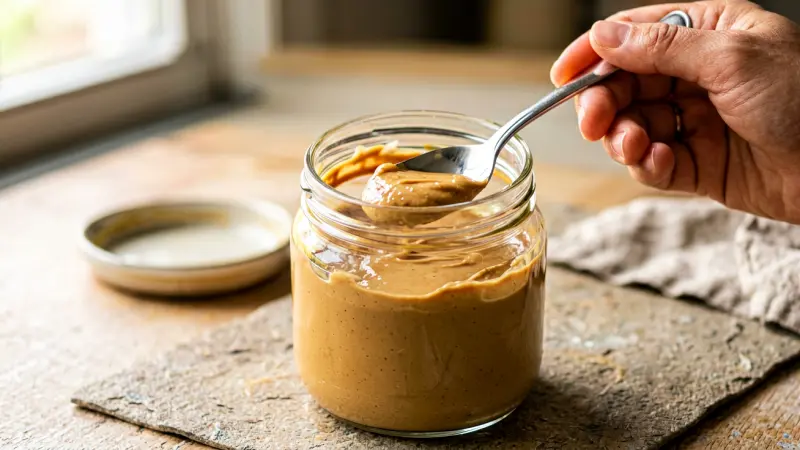
You open a jar of peanut butter, expecting the familiar roasted, nutty aroma, and instead you get something metallic, chemical, or rotten. If this has happened to you after a COVID-19 infection, you are not imagining it, and you are not alone. This experience is a recognized condition called parosmia, a distortion of smell that affects many people recovering from the virus.
This article explains what happens in the body to cause this change, why peanut butter in particular is such a common trigger food, what the recovery process typically looks like, and what practical steps may help you cope while your sense of smell repairs itself.
What Is Parosmia and Why Does It Affect Smell?
Parosmia is a qualitative olfactory dysfunction, meaning the sense of smell is present but distorted. Familiar odors are perceived as unpleasant, wrong, or entirely different from what they should be. The condition is not a matter of the nose being blocked or the virus still being active.
Instead, parosmia occurs during the recovery phase after olfactory damage. The prevailing scientific explanation involves the aberrant regeneration of olfactory sensory neurons. When these neurons regrow after being damaged, they may connect to the wrong targets in the olfactory bulb, sending confused signals to the brain. Your brain receives a signal, but it does not match the odor memory stored from before.
This mismatch between expectation and perception is what makes the experience so distressing. You know what peanut butter should smell like, but your nose reports something completely different. The result is often a strong sense of disgust, which is a natural response to a smell that your brain interprets as spoiled or dangerous.
Why Peanut Butter Is a Common Trigger Food
Parosmia does not affect all smells equally. Certain foods and substances are far more likely to trigger distorted perceptions, and peanut butter sits near the top of that list. This is not random. It comes down to the specific chemical compounds that give peanut butter its characteristic aroma.
The molecule behind the distortion
Research using gas chromatography-olfactometry has identified specific molecules that commonly trigger parosmic distortions. One of the most frequently implicated compounds is 2-isobutyl-3-methoxypyrazine, a highly odor-active molecule found in peanuts and green peppers. This molecule has an extremely low olfactory threshold, meaning humans can detect it at very low concentrations.
Because this compound is so potent, even a small amount can dominate the smell of a food. When the olfactory system is misfiring, this molecule appears to be one of the first to send a distorted signal. That is why peanut butter, which relies heavily on this compound for its aroma profile, becomes unpleasant for so many people with parosmia.
Other foods that share the same problem
Peanut butter is not the only food affected by this mechanism. Coffee, chocolate, meat, onions, garlic, and fried foods are frequently reported as triggers. Many of these share similar molecular characteristics, including sulfur-containing compounds and specific pyrazines. People with parosmia often describe coffee as smelling like gasoline, meat as rancid, and peanut butter as burning rubber or nail polish remover.
Highly seasoned processed snacks, including Slim Jims and similar cured meats, can be just as triggering because of their intense flavor compounds. The common thread is that these foods contain highly odor-active molecules that the recovering olfactory system misreads. A food with a simpler or milder aroma profile may still smell acceptable, while these complex, potent foods become intolerable.
What Peanut Butter Smells Like to People With Parosmia
The descriptions vary from person to person, but certain patterns emerge. Some people report that peanut butter smells like burning rubber or chemicals. Others describe it as metallic, sewage-like, or simply “rotten.” One patient compared the smell of peanut butter to nail files, while another said it smelled vaguely like burning rubber.
The intensity can also fluctuate. On some days, the distortion is mild enough to tolerate. On others, the smell is overwhelming and triggers nausea. This variability is common in parosmia and can make meal planning frustrating.
How Parosmia Differs From Losing Your Sense of Smell
Anosmia, the complete loss of smell, is the more widely known COVID-19 symptom. Parosmia is different, and in some ways more disruptive. With anosmia, you simply cannot smell, so food has less flavor but does not actively repel you. With parosmia, you smell something, but it is wrong and often disgusting.
The timing also differs. Anosmia typically appears during the acute infection. Parosmia often emerges weeks or months later, during the recovery phase when smell begins to return. This delayed onset can be confusing, because you may think you are getting better, only to find that everything now smells distorted.
There is some good news in this distinction. Parosmia is generally considered a sign that the olfactory neurons are regenerating, even if the process is imperfect. The system is active and attempting to repair itself, which is preferable to a total absence of olfactory function.
How Long Does It Last?
Recovery timelines vary widely. Some people notice improvement within a few months, while others continue to experience distortions for a year or longer. Research on post-COVID parosmia suggests that some patients improve around the six-month mark, but others may still be affected well beyond two years.
A study on olfactory training found that after three months of consistent training, approximately 52.6 percent of participants reported perceived improvement in parosmia. This does not mean the condition resolves completely for everyone, but it indicates that meaningful progress is possible with time and effort.
Age appears to be a factor. Older patients tend to show slower improvement in olfactory function scores compared to younger patients. This is consistent with broader patterns of nerve regeneration, which tend to be more efficient in younger individuals.
What You Can Do: Practical Coping Strategies
There is no guaranteed cure for parosmia, but several strategies may help you manage the condition and support recovery. The table below summarizes the main approaches and what they involve.
| Strategy | What It Involves | What to Expect |
|---|---|---|
| Olfactory training | Smelling a set of distinct scents (such as lemon, rose, clove, eucalyptus) twice daily for several months | Gradual improvement in smell function; benefit appears to increase with consistent practice |
| Avoiding trigger foods | Identifying and temporarily avoiding foods that consistently smell distorted | Reduces nausea and distress; does not cure parosmia but makes daily eating more manageable |
| Cold or room-temperature foods | Choosing foods that release fewer volatile aroma compounds | May reduce distortion intensity, since smell perception is weaker when food is cold |
| Textural variety | Focusing on crunch, creaminess, or temperature rather than aroma | Makes eating more tolerable when smell is unreliable |
| Nutritional support | Working with a dietitian if weight loss or nutritional gaps become a concern | Helps maintain health during a period when eating may be difficult |
| Medical consultation | Seeing an ENT or smell specialist if symptoms are severe or persistent | Provides access to emerging treatments and professional guidance |
Olfactory training in more detail
Olfactory training is the most widely recommended self-directed approach. The standard protocol involves smelling four distinct scents twice daily for at least three months. The scents are typically chosen from different categories, such as floral, fruity, spicy, and resinous.
The mechanism behind olfactory training is not fully understood, but it is thought to stimulate the olfactory system and encourage proper neural reconnection. Compliance matters: patients who completed more than seventy percent of their training sessions showed significantly greater improvement in their ability to distinguish pleasant from unpleasant odors.
Some research has explored modified training protocols that use a larger number of scents or extend the training period beyond six months. One study found that extending treatment from six to nine months was effective in reducing parosmia complaints and improving odor discrimination. This suggests that patience and persistence are important.
Managing eating when peanut butter and other foods are unbearable
When familiar foods become repulsive, eating can feel like a chore. Many people with parosmia report losing weight and finding meals deeply unenjoyable. A practical approach is to temporarily rely on foods that are less affected by distortion.
Cold foods tend to release fewer volatile compounds, so a chilled sandwich or a room-temperature snack may be more tolerable than a hot meal. Bland starches like plain rice, pasta, or bread are often easier to manage. Textural contrast, such as adding something crunchy, can also make eating more tolerable when smell is unreliable.
If you rely on cold drinks to make meals more tolerable, a Stanley cup that no longer keeps ice can add unnecessary frustration. If weight loss becomes significant or you are struggling to meet basic nutritional needs, speaking with a doctor or dietitian is advisable. Parosmia can last long enough that nutritional support becomes a medical necessity rather than a preference.
Safety Considerations With Parosmia
Parosmia can create safety risks that are easy to overlook. Because the sense of smell is unreliable, you may not detect smoke, gas leaks, or spoiled food. People with olfactory distortion are at higher risk for food poisoning and fire-related accidents compared to those with normal smell function.
Simple precautions make a difference. Install working smoke detectors on every level of your home. Check gas appliances regularly. Pay attention to expiration dates and food storage practices rather than relying on smell to determine whether something is safe to eat. When in doubt, throw it out.
When to See a Doctor
Parosmia often improves on its own, but professional help is appropriate in certain situations. If the distortion is severe enough to cause significant weight loss, malnutrition, or persistent distress, an ENT specialist can evaluate your condition and discuss treatment options.
Some emerging treatments are being studied, including platelet-rich plasma injections into the olfactory cleft. A controlled study found that patients with parosmia who received this treatment showed greater improvement in olfactory scores and quality of life measures compared to those who received olfactory training alone. These treatments are not universally available, and more research is needed, but they represent a growing area of clinical interest.
If you have persistent parosmia that interferes with daily life, do not hesitate to seek a referral. A specialist can rule out other causes and help you understand what to expect.
Frequently Asked Questions
Why does peanut butter smell so bad after COVID?
Peanut butter contains highly odor-active compounds, including 2-isobutyl-3-methoxypyrazine, that are common triggers for parosmia. When the recovering olfactory system misreads these molecules, the resulting smell is distorted and often unpleasant.
Will my sense of smell return to normal?
Most people with parosmia experience gradual improvement over time. Some recover within months, while others may take a year or longer. Complete resolution is common, but the timeline varies. Olfactory training may support the recovery process.
Is parosmia a sign that I am getting better or worse?
Parosmia generally indicates that the olfactory neurons are regenerating, which is a positive sign. The distortion happens because the new connections are not yet accurate. It is a stage in recovery rather than a worsening of the underlying damage.
Can I eat peanut butter if it smells distorted?
You can eat it if you are able to tolerate the smell, but many people find it too unpleasant. There is no harm in temporarily avoiding peanut butter and other trigger foods while your smell recovers. If avoidance leads to nutritional gaps, consider alternatives like other nut butters or seeds that may be less affected.
Does smell training actually help with parosmia?
Research suggests that olfactory training can improve smell function and reduce parosmia symptoms for some people. A three-month study found that over half of participants reported improvement. Results are not guaranteed, and consistency appears to be important.
Are there any treatments for parosmia besides smell training?
Olfactory training is the most widely recommended approach. Some specialists are studying treatments such as platelet-rich plasma injections, and certain medications have shown promise in research settings. Availability varies, and you should discuss options with a qualified medical professional.
Conclusion
Peanut butter tasting different after COVID is a concrete symptom of parosmia, a smell distortion caused by miswired olfactory neurons during recovery. The specific molecules that give peanut butter its aroma make it a frequent trigger, along with coffee, meat, and other strongly scented foods.
The condition is frustrating and can affect nutrition, safety, and quality of life, but it is typically temporary. Olfactory training, practical eating adjustments, and appropriate medical care can help you manage the symptoms while your sense of smell gradually repairs itself. If your symptoms are severe or persistent, seek professional guidance rather than waiting indefinitely for improvement.