Searching for the answer to whether Boston cream rolls are discontinued often leads to frustration, confusion, and outdated information. Many dessert enthusiasts discover that these classic, sweet pastries have largely vanished from standard grocery store shelves and even from the menus of major donut shops and bakeries. The short answer is that while they are not officially “discontinued” from the global food industry as a whole, they are rarely available in mainstream US retail environments today.
This scarcity is due to a combination of shifting consumer preferences, high production costs for small-batch artisanal items, and the dominance of mass-produced alternatives like chocolate glazed donuts and muffins. Consequently, finding an authentic Boston cream roll now requires intentional sourcing from specific local bakeries, specialty donut shops, or international grocery stores rather than relying on big-box retailers. Understanding the history and current availability of this treat helps set realistic expectations for anyone seeking out this nostalgic flavor profile.
The Origins and Identity of the Boston Cream Roll
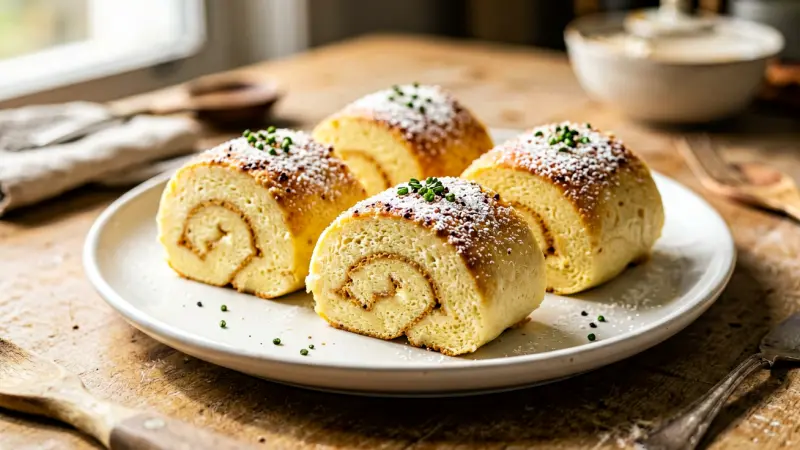
To understand why the product feels discontinued, it is essential to define exactly what a Boston cream roll is, as the term is often used interchangeably with Boston cream pie or Boston cream donuts, leading to confusion in product labeling. A true Boston cream roll is a yeast-raised dough pastry, similar in structure to a classic donut but shaped into a twisted or rolled form. It is typically filled with vanilla custard and topped with chocolate glaze or frosting.
This distinguishes it from a Boston cream pie, which is a sponge cake, and a standard ring-shaped Boston cream donut. The roll format allows for a denser custard filling to the outer dough ratio, creating a specific texture that many loyal fans prefer over the lighter glaze-heavy variations.
The culinary history of this dessert traces back to Boston, Massachusetts, where variations of custard-filled pastries with chocolate elements have been popular since the 19th century. While the exact “roll” shape may have evolved over time, the core components—vanilla custard and chocolate—remain consistent. In the mid-20th century, as donut culture expanded beyond New England to the rest of the United States, Boston cream items became a standard menu item in many donut shops.
However, the specific “roll” variation was less common than the ring shape, even in its heyday, limiting its baseline availability compared to the iconic circular version. This historical context explains why some older generations remember it as a common grocery store item, while younger generations may not have encountered it in that format at all.
Why Boston Cream Rolls Are Harder to Find Today
There are several economic and logistical reasons why Boston cream rolls have disappeared from most modern food aisles. The primary driver is the shift in consumer preference toward simpler, lower-calorie, or higher-protein snack options. Custard-filled pastries are considered rich and decadent, which has seen a decline in consistent, high-volume demand compared to fruit-filled muffins or plain bagels.
For manufacturers, the shelf life of custard-filled items is significantly shorter than that of dry or gluten-free products. This short shelf life increases waste and logistical complexity for large distributors who prioritize items that can sit in inventory for longer periods. A Boston cream roll with fresh custard typically needs to be consumed within a few days of production, making it a poor candidate for national distribution networks that rely on multi-week turnaround times.
Production costs also play a significant role in the disappearance of this item from mainstream chains. Creating a filled roll requires more manual handling or specialized machinery compared to the continuous production of plain ring donuts. The custard filling requires refrigerated supply chains and temperature-controlled environments, adding to the overhead for factories and store kitchens.
When a item like a Boston cream roll is in lower demand, the per-unit cost rises, forcing retailers to price it higher. Competing with a $0.75 glazed donut at a fast-food chain, a $3.50 custard-filled roll becomes a difficult sell, leading chains to drop the item entirely. This economic pressure is distinct from the fate of the donut as a whole; while donuts are ubiquitous, the specific custard-filled roll variation has been squeezed out by more profitable and lower-risk products.
Also Read – What Does Asterisk Correction Mean: A Practical Guide for Writers
Differentiating the Roll from the Pie and the Donut
Confusion about the name “Boston cream” often leads shoppers to believe the item is gone when it is actually still present in a different form. It is crucial to understand that the Boston cream *pie* is a separate product, and the Boston cream *donut* (usually ring-shaped) is still widely available. If you are searching for the roll specifically, you may be inadvertently dismissing the donut version because of the shape difference.
The donut version retains the same custard and chocolate elements but lacks the twisted, dense dough structure of the roll. For many people, the flavor profile is acceptable even if the texture is slightly different. Recognizing this distinction can save time in a grocery store, as you might find the “Boston Cream Donut” on the shelf when the “Roll” is missing, satisfying the core craving for the combination of custard and chocolate without the specific pastry shape.
Where to Find Boston Cream Rolls Today
While national chains like Dunkin’ or Krispy Kreme rarely offer the specific roll shape, the product has not vanished from the culinary landscape. The most reliable sources for Boston cream rolls are local, artisanal bakeries and independent donut shops. These establishments often produce goods in small batches, meaning they can include lower-volume items like custard rolls without the pressure of national inventory management.
If you live in an area with a robust independent food scene, a local donut shop is your best bet. Call ahead, as many of these places produce the rolls only on certain days of the week to minimize waste. The freshness of the custard is paramount, so same-day or next-day production is the standard.
International grocery stores, particularly those catering to South Asian or Southeast Asian communities, are another frequent source. In many cultures, custard-filled yeast pastries are a staple snack, and local variations often closely resemble the Boston cream roll. Stores with bakery sections that operate on a daily schedule can offer fresh, filled pastries that match the description.
Additionally, frozen donut aisles in larger supermarkets sometimes carry artisanal brands that are not mass-produced. These frozen options, while not as fresh as bakery items, can retain the custard quality better than some store-bought fresh items if the supply chain is cold. Checking the brand names on the packaging can help identify producers who specialize in premium pastries rather than generic fillers.
Also Read – When Are You No Longer Young
Homemade Alternatives and DIY Approaches
For those who cannot find the product in local shops, making a Boston cream roll at home is a viable and often more cost-effective solution. The process involves two main components: a yeast dough and a vanilla custard filling. The dough is similar to a standard donut dough, utilizing yeast, flour, milk, sugar, and butter.
After the first rise, the dough is cut into rectangular or strip shapes, spread with a small amount of custard, and then rolled tightly into a cylinder before being cut into individual pieces. This rolling process creates the layered structure that gives the roll its distinct name and texture. The pieces are then proofed again and fried in oil until golden brown.
The custard filling requires careful attention to detail to prevent the pastry from becoming soggy. A standard custard made with egg yolks, sugar, milk, and vanilla should be cooked to a thick consistency before use. If the custard is too thin, it will seep into the dough during the frying process, altering the texture and potentially causing the roll to tear.
Some bakers recommend chilling the custard before filling to increase its viscosity. Once the fried rolls are cooled slightly, they are dipped in a chocolate glaze or topped with a layer of chocolate frosting. This homemade approach allows for customization of the chocolate to custard ratio, ensuring the flavor balance matches personal preference.
It also guarantees the use of fresh ingredients, avoiding preservatives often found in commercial versions.
Comparison of Availability and Formats
The table below compares the different forms of Boston cream desserts, their typical availability, and their key characteristics. This helps clarify why the “roll” specifically is the rarest, while the “pie” and “donut” formats remain more accessible.
| Product Format | Typical Availability | Key Characteristics | Best Source |
|---|---|---|---|
| Boston Cream Pie | Common in bakeries, cafes, and home kitchens | Sponge cake layers, custard, chocolate glaze; slice-based | Local bakeries, wedding/event caterers |
| Boston Cream Donut (Ring) | Common in major chains and grocery stores | Ring-shaped yeast or cake donut, custard, chocolate | Dunkin’, Krispy Kreme, grocery delis |
| Boston Cream Roll | Rare; limited to specialty artisanal shops | Twisted/rolled yeast dough, dense custard filling, chocolate | Local donut shops, international markets |
| Mini Boston Creams | Seasonal or limited; bakeries and cafes | Small individual portions, same flavor profile | Coffee shops, high-end patisseries |
Reviewing this comparison highlights that the roll is the outlier in terms of market presence. The pie and ring donut are established categories with standardized production processes. The roll, being a niche variation, relies on specific craft techniques that are not standardized across the industry.
This lack of standardization is both its weakness in terms of availability and its strength in terms of flavor complexity, as the rolled layers can hold more filling relative to the surface area than a simple ring shape.
Also Read – Why Do People Like Sushi: The Allure of a Japanese Staple
Common Mistakes When Searching for This Dessert
One common error is assuming that any chocolate-covered pastry is a Boston cream roll. Many generic “chocolate donuts” or “chocolate buns” are not filled with custard. The defining feature of the Boston cream lineage is the vanilla custard interior.
If a pastry lacks this filling, it is not a Boston cream variation, regardless of the chocolate coating. Shoppers should check product labels for “custard filling” or “vanilla filling” to confirm authenticity. Another mistake is relying on online grocery delivery apps that mirror physical store inventory but may have stale stock or limited selection of fresh baked goods.
These apps often filter out fresh dairy-dependent items like custard rolls to reduce spoilage risk for the delivery driver, making the physical store or direct phone order more reliable.
Additionally, confusing the term “Boston Cream” with “Boston Lobster Roll” or other regional Boston-based food terms can lead to dead ends. The name is specific to the sweet, custard-chocolate combination. While it is a regional name, the flavor profile is not exclusive to the city of Boston today; it is a style found nationwide, though in varying densities.
Failing to ask shop staff for “custard-filled donut rolls” instead of just “Boston cream” can result in confusion, as not all staff may use the same terminology. Clear communication about the texture (rolled) and filling (custard) helps bridge this gap.
Preservation and Handling of Fresh Rolls
Because Boston cream rolls contain fresh custard, they are perishable items that require specific storage methods to maintain quality. Freezing is the most effective method for extending the shelf life of these pastries. The custard does not freeze well if the roll is already fried and filled, as it can become grainy or separate upon thawing.
The best practice is to freeze the fried, unfilled dough pieces before the filling is added. However, for purchased rolls, immediate consumption is ideal. If you need to store them, keep them in an airtight container in the refrigerator for no more than 24 to 48 hours.
At room temperature, the custard can become a breeding ground for bacteria if left out for too long, especially in warmer climates. The chocolate glaze can also soften in heat, making the roll less appealing.
Reheating frozen or refrigerated rolls can be tricky. Microwaving is generally not recommended, as it can make the custard rubbery and the dough chewy. A brief pass in a conventional oven at a low temperature, around 300 degrees Fahrenheit, can help restore the warmth without destroying the texture.
This gentle heating melts the chocolate slightly and warms the custard to an edible temperature. The goal is to serve the roll at a temperature where the custard is creamy but not hot enough to scald, and the dough is soft but not cold and firm. This attention to temperature ensures that the flavor profile remains balanced and pleasant.
FAQs About Boston Cream Rolls
Is the Boston cream roll the same as a Berliner?
While both are filled pastries, they are distinct in preparation and shape. A Berliner is typically a filled yeast dough roll, similar to a doughnut hole but larger, often filled with jam or marzipan. A Boston cream roll is specifically associated with custard and chocolate.
The shape of the Boston cream roll is often twisted or spiraled, whereas a Berliner is usually spherical or oblong. The flavor profiles are different, with the Boston cream roll focusing on the vanilla-chocolate-custard combination. However, in terms of dough structure, they share similarities as yeast-raised filled pastries.
Can I find Boston cream rolls in frozen form?
Yes, you can find frozen versions, but quality varies. Some artisanal brands offer frozen filled donuts that mimic the Boston cream style. These are convenient but may not have the same fresh texture as a locally made roll.
The custard in frozen items can sometimes separate or become less creamy after thawing and reheating. If you are looking for the best texture, a fresh, locally made roll is superior. However, for convenience, a high-quality frozen option is a reasonable compromise if fresh ones are unavailable.
Check the ingredients list to ensure the custard is genuine and not a synthetic substitute.
Why do some places call it a “Boston Cream Donut” instead of a “Roll”?
The term “donut” is the generic category for the fried yeast pastry, while “roll” describes the specific shape. Many consumers and shopkeepers use “donut” as the umbrella term, so “Boston Cream Donut” is the more widely recognized name. The “roll” designation is more specific and often used by artisanal bakeries to distinguish their twisted product from the standard ring.
If you ask for a “donut,” you will likely get a ring. If you ask for a “roll” or “twist,” you are specifying the shape. Using the correct terminology helps ensure you get the item you are looking for.
Is the custard in Boston cream rolls dairy-free?
Traditional custard is made with milk and eggs, so it is not dairy-free or vegan. However, some specialty bakeries and home cooks create vegan custards using almond milk or soy milk and thickeners like cornstarch. These alternatives can mimic the texture and flavor of traditional custard.
If you have dietary restrictions, you must ask the bakery specifically if they offer a vegan or dairy-free version, as standard Boston cream rolls contain dairy and eggs. Cross-contamination in bakeries is also a consideration for those with severe allergies.
Final Thoughts on Sourcing This Classic Dessert
The Boston cream roll has not been officially discontinued from the food industry, but it has retreated from mainstream visibility into the realm of specialty and artisanal products. This shift is driven by economics and consumer trends rather than a single event that removed it from existence. For those who cherish this specific pastry, the path to finding it involves moving away from national chains and towards local, small-batch producers.
The key to successful sourcing is clear communication about the specific shape and filling you desire, and a willingness to check local inventories or make the item at home. By understanding the distinction between the roll, the pie, and the ring donut, you can navigate the market with precision and secure this nostalgic treat when the opportunity arises. The flavor profile of vanilla custard and chocolate remains a timeless combination, ensuring that while the availability is low, the appeal remains high for dedicated fans.