If you have ever heard an adult reminisce about elementary school gym class, there is a good chance they mention the parachute. The giant, colorful fabric that billowed through the air and turned an ordinary PE period into something magical is one of the most enduring memories of childhood. But what exactly is parachute day in school, and why does it leave such a lasting impression?
This guide explains what parachute day involves, the skills it builds, the most common games played, and why physical education teachers continue to include it in their curriculum. Whether you are a parent curious about what your child is doing in gym class or an adult looking to understand a fond childhood memory, this article covers the practical details.
What Parachute Day Actually Involves
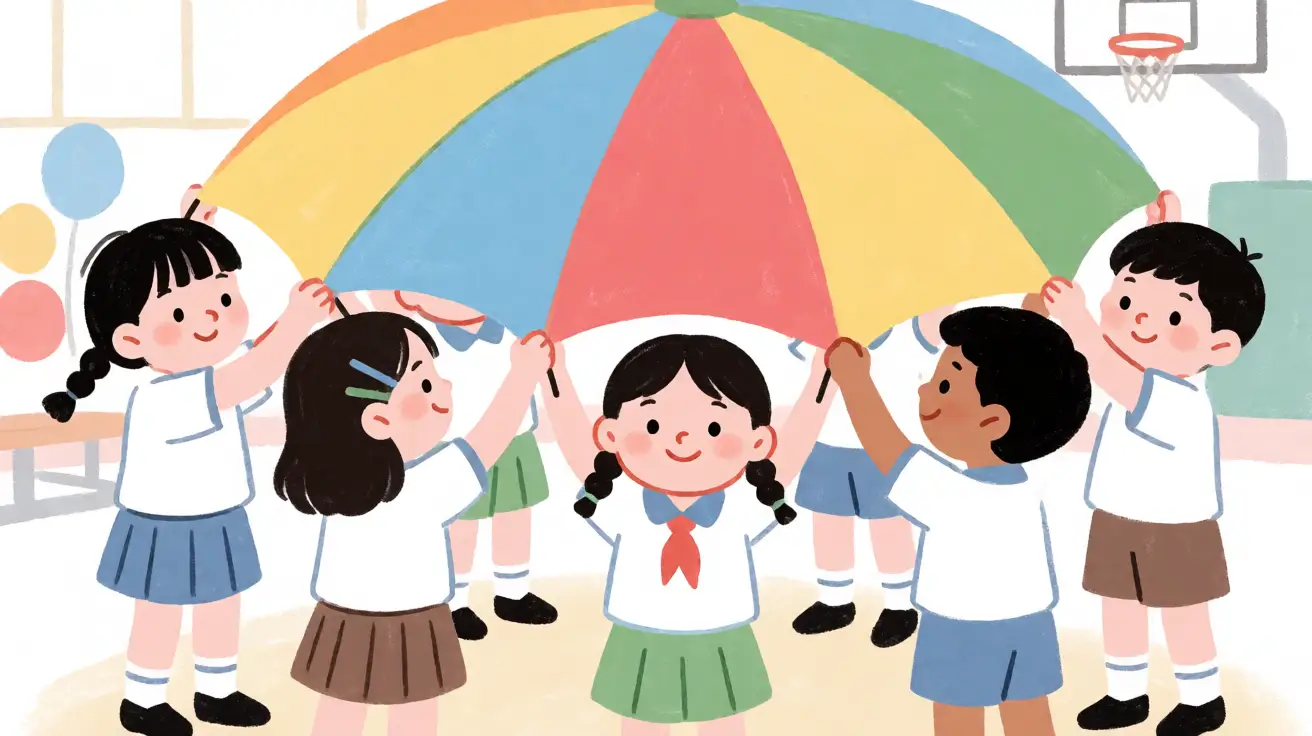
Parachute day is a physical education activity in which a large, circular piece of fabric is used for group games and movement exercises. The parachute itself is typically made of lightweight nylon or polyester and ranges from roughly twelve to thirty feet in diameter, depending on the age and size of the class. Students stand in a circle around the edge, grip the fabric with both hands, and work together to create waves, lift the chute overhead, or trap air underneath it.
The activity is most common in elementary schools, though some middle school and high school PE programs use it for team-building. A single parachute can accommodate a full class of twenty to thirty students, and larger chutes with extra handles are sometimes purchased specifically to include more participants. The sessions usually last for one class period and involve a progression of activities that build on each other.
What makes parachute day distinctive is that it requires almost no athletic skill. A student who struggles with running, jumping, or throwing can participate fully because the parachute responds to collective effort rather than individual performance. That inclusivity is a major reason teachers return to it year after year.
Why Schools Have Parachute Day
The primary purpose of parachute day is to develop teamwork and cooperation in a setting that feels like play rather than exercise. When students lift the parachute together, they quickly learn that one person pulling too hard or letting go too early affects the entire group. The activity makes interdependence visible and immediate in a way that a lecture about teamwork cannot.
Physical education standards often emphasize cooperation, spatial awareness, and muscular strength, and parachute games address all three. Lifting the chute overhead engages the shoulders, arms, and core, while moving around the circle develops coordination and locomotor skills. The resistance provided by the fabric adds a light strength-training element without requiring equipment like weights.
There is also a social and emotional component. Parachute day gives students a shared experience that levels the playing field between skilled athletes and less confident movers. Teachers frequently report that students who are quiet or hesitant during other PE activities become engaged and vocal during parachute games. That shift in participation is one of the clearest signs the activity is working as intended.
For many adults, the memory of parachute day persists decades later. If you find yourself not feeling your age when you think back on elementary school, parachute day is likely one of the memories that makes childhood feel both distant and vivid at the same time.
Common Games and Activities
A typical parachute session follows a sequence that moves from simple warm-up movements to more complex games. Teachers often start with gentle shaking and waving to help students get used to the feel of the fabric. From there, the activities become progressively more involved.
One of the most popular games is Popcorn, where small foam balls or beanbags are placed on top of the parachute and students shake it to make them bounce. The goal is to keep the objects airborne as long as possible, which requires coordinated timing. A variation called Giant Popcorn uses beach balls instead, creating a slower and more dramatic effect.
Making a dome or mushroom is another staple. Students lift the parachute overhead on a count of three, trapping air underneath. When they pull the edges down behind them, the fabric forms a dome shape that they can sit under. The Tent game extends this by having students sit on the edge of the chute while it is inflated, creating an enclosed space for storytelling or quiet reflection.
Running games add a cardiovascular element. In Merry-Go-Round, students walk or run in a circle while holding the chute, trying to maintain a smooth rotation. Kite Run has half the class hold one side of the parachute and run together so the fabric trails behind them like a kite. These games demand communication because the group must move at a consistent speed.
What Students Learn from Parachute Activities
The skills developed during parachute day extend beyond physical fitness. Students practice following directions, taking turns, and adjusting their effort based on what the group needs. A student who pulls too hard on the chute during a dome-building activity quickly sees the consequences, and the feedback is immediate and non-punitive.
Communication is another area of growth. Many parachute games require students to call out cues, count together, or coordinate their movements without a teacher directing every step. In the Cat and Mouse game, for example, one student moves underneath the parachute while another tries to tag them, and the students holding the chute must lift it at the right moment to let the mouse escape.
Leadership opportunities also emerge naturally. Some students step into the role of organizing their peers or suggesting strategies for a game. Teachers often note that parachute day reveals leadership qualities in students who do not typically raise their hands in class. That kind of low-stakes leadership practice can build confidence that carries into other settings.
Variations Across Grade Levels
The complexity of parachute activities changes with the age of the students. Kindergarten and first-grade sessions focus on basic movements like shaking, waving, and making small waves. The parachute is usually smaller, and the teacher provides frequent verbal cues to keep students oriented.
Second and third graders are ready for more coordinated games like Popcorn and Roller Ball, which require sequential movement and a higher level of teamwork. Teachers may introduce the concept of applying different amounts of force, asking students to make gentle ripples versus large waves. This connects the activity to broader lessons about effort and control.
Older elementary students and middle schoolers can handle advanced activities like Hole in One, where teams try to guide balls into a center opening, or Tug-of-War with the parachute. At this level, the focus shifts toward strategy and teamwork under mild competitive pressure. Some high school programs use parachute games for team-building during orientation or advisory periods.
The table below summarizes how parachute day typically differs across grade levels.
| Grade Level | Typical Parachute Size | Common Activities | Primary Focus |
|---|---|---|---|
| Kindergarten–1st | 12–15 feet | Shaking, waves, simple dome | Spatial awareness and following directions |
| 2nd–3rd | 15–20 feet | Popcorn, Roller Ball, Mushroom | Coordination and force control |
| 4th–5th | 20–24 feet | Tent, Cat and Mouse, Kite Run | Teamwork and communication |
| Middle school | 24–30 feet | Hole in One, Tug-of-War, advanced games | Strategy and cooperative problem-solving |
| High school | 30+ feet or multiple chutes | Team-building challenges | Leadership and group dynamics |
How Parachute Day Fits into a PE Curriculum
Physical education teachers do not use parachute day as a stand-alone novelty. It is typically part of a larger unit on cooperative games or muscular strength and endurance. The parachute unit may span several class periods, with each session building on the previous one. Students might spend one day learning grips and basic movements, then progress to games that require more precision and teamwork.
From an assessment perspective, teachers can observe specific skills during parachute activities. They watch for proper grip, safe movement around the circle, and the ability to adjust force based on the task. Some teachers ask students to identify which muscles they are using during different activities, connecting the physical experience to anatomy lessons.
The parachute also serves as a practical solution for classes with limited space or equipment. A single parachute can occupy an entire gym period and engage every student at once, which is not always possible with activities that require individual equipment. That efficiency is part of why the parachute remains a staple in PE storage rooms.
If you are exploring the idea that some activities seem to grant super powers with drawbacks, the parachute offers a mild version of that dynamic. It gives students the ability to create a floating dome or lift a huge fabric with ease, but only if they coordinate with everyone else holding on. The power comes from the group, not the individual.
Common Challenges Teachers Face
Despite its popularity, parachute day is not without logistical challenges. The biggest issue is class size. A parachute that works well for twenty students may become cramped with thirty, leading to students standing too close together and bumping into one another. Schools sometimes address this by purchasing larger chutes with additional handles or by dividing the class into smaller groups that rotate through activities.
Space is another constraint. The parachute needs a clear area free of furniture and sharp objects, which means the gym floor must be completely open. In schools where the gym doubles as a cafeteria or auditorium, scheduling parachute day requires coordination with other staff.
Behavior management can also be a factor. Students get excited when they see the parachute, and that excitement can lead to shouting or pushing. Experienced teachers set expectations before the chute is unrolled and use structured transitions between games to keep energy focused. A calm start with simple waving activities helps settle the group before more stimulating games begin.
Frequently Asked Questions
Is parachute day still common in schools?
Yes, many elementary schools continue to include parachute activities in their PE curriculum. Budget constraints and storage space affect how often it is offered, but the activity remains widely recognized and enjoyed.
What age group is parachute day best for?
It is most commonly used with elementary school students, but the activities can be adapted for older students and even adults. The complexity of the games changes with the age group, not the parachute itself.
Do students need special equipment for parachute day?
No special clothing or equipment is required beyond comfortable clothes and athletic shoes. The parachute is provided by the school, and any balls or beanbags used in games are typically part of the PE equipment collection.
Can parachute day be done outdoors?
It can be done outdoors in calm weather, but wind can make the parachute difficult to control. Most schools prefer the gym for safety and predictability, especially with younger students.
Why do adults remember parachute day so fondly?
Parachute day combines sensory richness, social connection, and physical play in a way that few other school activities do. The bright colors, the collective effort, and the feeling of being part of something big create a strong memory that persists long after the details of other gym classes fade.
Conclusion
Parachute day in school is a cooperative PE activity built around a large circular fabric that students lift, shake, and shape together. It develops teamwork, coordination, and muscular endurance while remaining accessible to students of all athletic abilities. The games range from simple waves to complex challenges like Hole in One, and the activity adapts to nearly any grade level.
For teachers, the parachute offers an efficient way to engage an entire class in purposeful movement. For students, it creates a shared experience that many carry into adulthood as one of their happiest school memories. The next time you see a parachute in a gym, you will know exactly what is happening and why it matters.