You open your phone or laptop to connect to the internet, and there it is in your list of available networks: FBI Surveillance Van. Your first reaction might be a jolt of unease. Is someone watching your home? Is there a van parked outside? The good news is that in almost every case, you are looking at a practical joke, not a federal investigation.
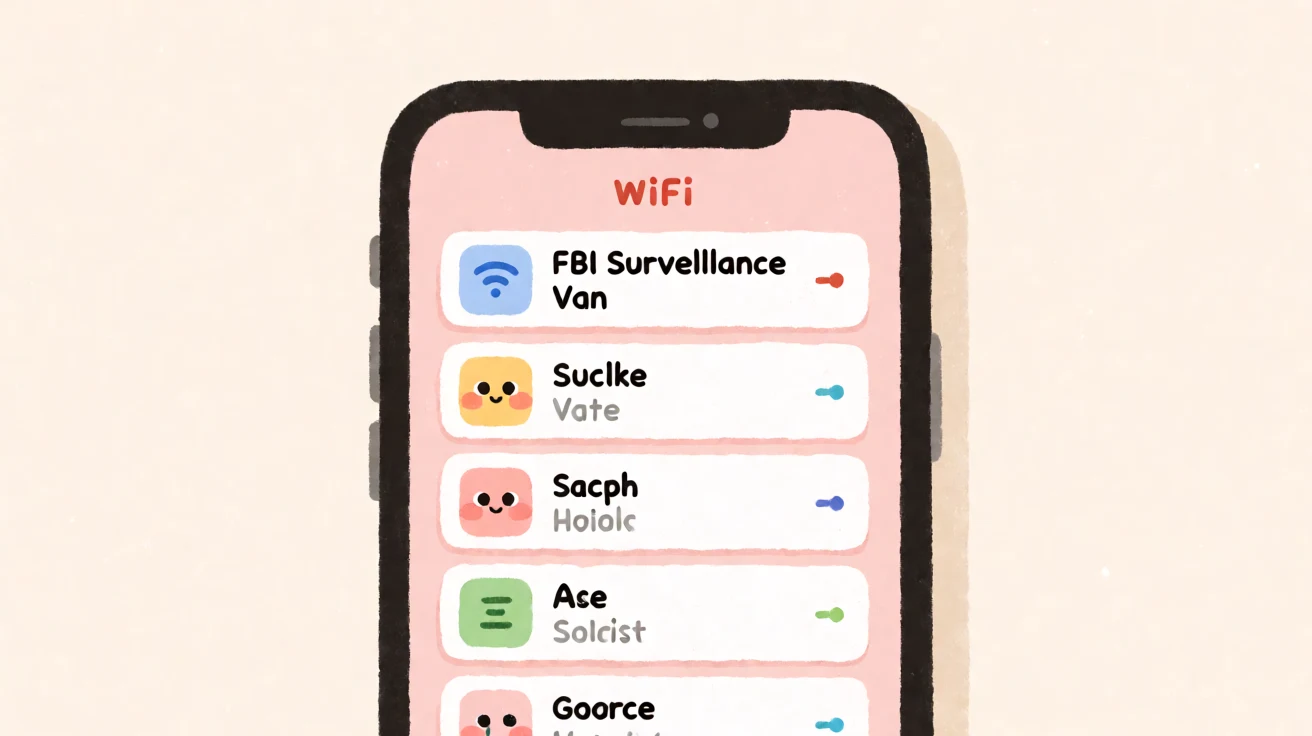
This article explains where the “FBI Surveillance Van” WiFi name comes from, why people use it, how to tell a prank from a genuine security concern, and what you should actually do when you see it. By the end, you will understand the culture behind this long-running joke and know how to respond without unnecessary worry.
What “FBI Surveillance Van” Actually Is
A WiFi network name is technically called an SSID, short for Service Set Identifier. When you set up a router or a mobile hotspot, you can type any name you want into the SSID field. There is no verification, no approval process, and no restriction on using the letters F-B-I. This freedom is exactly why the “FBI Surveillance Van” name exists.
When you see this SSID on your device, it means a router or hotspot within range is broadcasting that name. The device could be in a neighboring apartment, a house across the street, a car parked nearby, or even someone’s phone acting as a hotspot. The name itself tells you nothing about who owns the network or what they are doing.
The joke relies on a simple psychological trick. For a split second, your brain processes the words “FBI Surveillance Van” as a real threat before your rational mind catches up. That brief moment of alarm is the entire point. The person who named their network is not trying to conduct surveillance; they are trying to make you look twice.
Where the Joke Came From
This prank dates back to the early 2000s, when home WiFi routers became common and people realized they could name their networks anything they wanted. Some users chose scary-sounding names partly as a joke and partly as a deterrent. An open network named “FBI Surveillance Van” might discourage a neighbor from trying to connect and steal bandwidth.
The name gained wider attention in 2011 during a criminal case in Tampa, Florida. A teenager named Jared Cano was arrested for plotting to bomb his high school. In the coverage of the case, it was reported that a neighbor had seen an SSID called “FBI_SURVEILLANCE_VAN” and wondered whether federal agents were monitoring the area. No evidence emerged that the FBI was using that network name, and the claim was widely treated as a misunderstanding or a coincidence.
That news story turned the SSID into a recognizable meme. People who had never heard of the joke suddenly learned about it, and many decided to rename their own networks. Over the following years, the “FBI Surveillance Van” SSID became one of the most replicated network names in the world, appearing in neighborhoods across the United States and beyond.
Why People Name Their WiFi “FBI Surveillance Van”
The motivations behind this prank are more varied than you might expect. Some people do it purely for the reaction. They enjoy the idea that a neighbor might glance at their WiFi list and feel a moment of confusion. The joke costs nothing and requires only a few seconds in the router settings.
Others use the name as a mild form of neighborhood theater. In apartment buildings and dense residential areas, WiFi names become a kind of public bulletin board. A network called “FBI Surveillance Van” can start a chain reaction, with neighbors responding by naming their own networks “CIA Safehouse” or “NSA Monitoring Station.” These naming battles are usually playful rather than hostile.
A third group uses the name for practical reasons. A scary SSID can discourage casual WiFi theft. If someone is scanning for an open network to join, a name that suggests law enforcement involvement might make them move on to a different target. This deterrent effect is weak, because anyone determined to connect will not be stopped by a name, but it works on the same principle as a “Beware of Dog” sign.
Some people are simply bored and looking for a harmless creative outlet. If you are tired on a Friday night with nothing else to do, renaming your WiFi network is a quick way to amuse yourself. It is a small, low-stakes prank that does not harm anyone.
How to Tell a Prank from a Real Security Concern
The overwhelming majority of “FBI Surveillance Van” networks are harmless jokes. However, it is reasonable to ask how you can distinguish a prank from something that deserves attention. The answer lies in what the network is doing, not what it is called.
A real law enforcement surveillance operation would not broadcast its presence through a WiFi network name. Agents conducting covert surveillance rely on discreet communication methods and would not advertise their location to every phone in the area. An SSID that announces “FBI Surveillance Van” is the opposite of covert.
The more realistic concern with any unfamiliar WiFi network, regardless of its name, is whether it is trying to trick you into connecting. A malicious hotspot might use an inviting name like “Free Public WiFi” or a trusted brand name to lure users into joining. Once connected, the operator could potentially monitor unencrypted traffic. A network named “FBI Surveillance Van” is unlikely to attract victims, because the name is designed to repel rather than invite.
If you see this SSID and want to assess the situation, look for practical clues. Does the signal strength change as you move around your home, suggesting a nearby device? Is the network open or password-protected? Most importantly, are you experiencing any other signs of a security problem, such as unexplained device behavior or unauthorized access to your accounts? The WiFi name alone is not a meaningful indicator.
Common Variations of the Surveillance Van Joke
Once the “FBI Surveillance Van” name became popular, people began creating variations to keep the joke fresh. These variations often reference other agencies or add a humorous twist. The table below lists some of the most common versions you might encounter and what they typically signal.
| SSID Variation | Typical Intent | What It Usually Means |
|---|---|---|
| FBI Surveillance Van | Classic prank | A neighbor or passerby is using the most well-known version of the joke |
| FBI Surveillance Van #2, #3, #7 | Prank with a numbered twist | Someone is playing on the idea of multiple surveillance vehicles |
| NSA Monitoring Station | Prank referencing a different agency | A variation that shifts the joke from the FBI to the NSA |
| CIA Safehouse | Prank or neighborhood naming game | Often part of a chain of spy-themed WiFi names in one area |
| Police Surveillance Van | Localized version of the joke | Uses local police instead of a federal agency |
| DEA Mobile Surveillance Unit | Prank with a travel angle | Sometimes used on mobile hotspots rather than home routers |
| FBI Van (without “Surveillance”) | Shorter, subtler version | A less obvious variant that still hints at the same joke |
These variations appear in neighborhoods around the world. In some areas, multiple neighbors join in, creating a collection of spy-themed SSIDs that can be amusing to browse. The names are not coordinated in any official way; they emerge organically as people see what others are doing and add their own twist.
What to Do When You See This WiFi Name
The first and most important step is to do nothing. There is no action required when you see “FBI Surveillance Van” in your WiFi list. You do not need to call anyone, confront a neighbor, or change your own network settings. The name is a joke, and treating it as a threat only gives the prankster the reaction they wanted.
If the name appears on a network that is open and you are tempted to connect out of curiosity, resist that impulse. Connecting to an unknown network, regardless of its name, exposes your device to potential risks. The fact that the name is humorous does not make the network safe. Treat every unfamiliar network with the same caution you would apply to any public WiFi.
You can also use the moment to review your own WiFi security. If you have never changed your router’s default name, doing so is a small but useful step. A unique SSID does not provide security on its own, but it can reduce confusion and make it easier to identify your own network in a crowded list. More importantly, ensure your network uses a strong password and modern encryption.
If the SSID genuinely bothers you or makes you feel unsafe in your home, there are practical steps you can take. You can document when and where you see the network, and if you have reason to believe someone is actually targeting you, contact local law enforcement. However, for the vast majority of people, the name is simply a neighbor’s idea of a joke, and the feeling of unease fades once you understand the context.

The Cultural Life of a WiFi Joke
The “FBI Surveillance Van” SSID has outlasted many other internet jokes because it taps into a widespread cultural awareness of surveillance. Movies and television frequently depict unmarked vans and covert agents, and the WiFi name playfully references that imagery. It works because the gap between the fictional spy van and the mundane reality of a home router is inherently funny.
At the same time, the joke has occasionally caused real-world consequences. In a few cases, WiFi names that referenced terrorism or violence led to flight delays and security responses. Those incidents involved names that could be interpreted as threats, not the “FBI Surveillance Van” joke specifically. The lesson is that a WiFi name is public, and some jokes can be misread in ways that create unnecessary trouble.
The name also reflects how people use the small digital spaces around them to express personality. Just as people choose ringtones, profile pictures, and social media handles, they choose WiFi names that say something about who they are or what they find amusing. The “FBI Surveillance Van” name is one of the most recognizable examples of that impulse.
In a way, these small jokes are part of the same creative spirit that leads people to learn odd skills like how to flare your nostrils on command. Both are harmless forms of self-expression that cost nothing and entertain the person doing them. They also both rely on a mild element of surprise.
Frequently Asked Questions
Should I be worried if I see “FBI Surveillance Van” on my WiFi list?
No. This is almost always a prank by a nearby neighbor or a passerby. Law enforcement agencies do not broadcast their presence through WiFi network names. There is no action you need to take.
Is it illegal to name your WiFi “FBI Surveillance Van”?
In most places, no. You are generally free to name your personal WiFi network whatever you choose. However, names that could reasonably be interpreted as threats or that impersonate law enforcement in a misleading way could potentially cause legal problems in some jurisdictions. The “FBI Surveillance Van” joke is widely considered harmless and is not typically treated as illegal.
Can someone hack my devices through a WiFi network called “FBI Surveillance Van”?
A WiFi network’s name does not determine whether it is safe or dangerous. Any unfamiliar network, regardless of its name, could be malicious. Never connect to an unknown network without a good reason, and avoid entering sensitive information on networks you do not control.
Why do I only see this network sometimes?
The signal fades in and out based on distance. If the router or hotspot is in a moving vehicle, on a phone, or in a location that changes, the network may appear and disappear from your list. This is normal behavior for any WiFi signal.
What should I do if I see multiple “FBI Surveillance Van” networks?
You are likely seeing several neighbors who have all chosen the same joke or variations of it. This is common in apartment buildings and dense neighborhoods. There is no coordination or significance behind it. Enjoy the neighborhood humor and move on.
Can I change my own WiFi name to “FBI Surveillance Van”?
You can, but consider the trade-offs. The joke is old enough that many people will recognize it immediately, which reduces the surprise factor. More importantly, a name that attracts attention could invite unwanted curiosity or scrutiny. A unique, neutral name is often the more practical choice.
Conclusion
The “FBI Surveillance Van” WiFi name is one of the internet’s most enduring practical jokes. It began in the early days of home networking, gained momentum through a 2011 news story, and spread into neighborhoods around the world. When you see it on your device, you are almost certainly looking at a neighbor’s sense of humor, not a federal operation.
The practical takeaway is simple: treat the name as what it is, a joke. Do not connect to unfamiliar networks, do not let the name cause you unnecessary alarm, and use the moment as a reminder to keep your own network secure. The next time it pops up in your WiFi list, you can smile, scroll past it, and get on with your day.
If you ever wish you were rich enough to hire your own surveillance team, remember that the joke costs nothing and the reaction is priceless. But for now, a simple laugh at a silly WiFi name is more than enough.